Written by Granite Guy Inc., Southborough, Massachusetts
Updated: November 13, 2026
What is quartzite? It's a natural stone that starts as sandstone and is turned into a hard, dense rock by heat and pressure underground. It's quarried in blocks and sliced into slabs, and it is not the same thing as quartz, which is made in a factory.
The quick answer: Quartzite is natural, mostly quartz, and one of the hardest stones we work with. True quartzite doesn't etch, and we have not seen heat damage it. Whether it needs sealing depends on the slab, and some stones sold under the name are really marble.
This guide covers the stone itself: what it's made of, where it comes from, how big the slabs run and how to tell the real thing. Our quartzite countertops page covers the slabs we stock in Southborough and how a job runs.
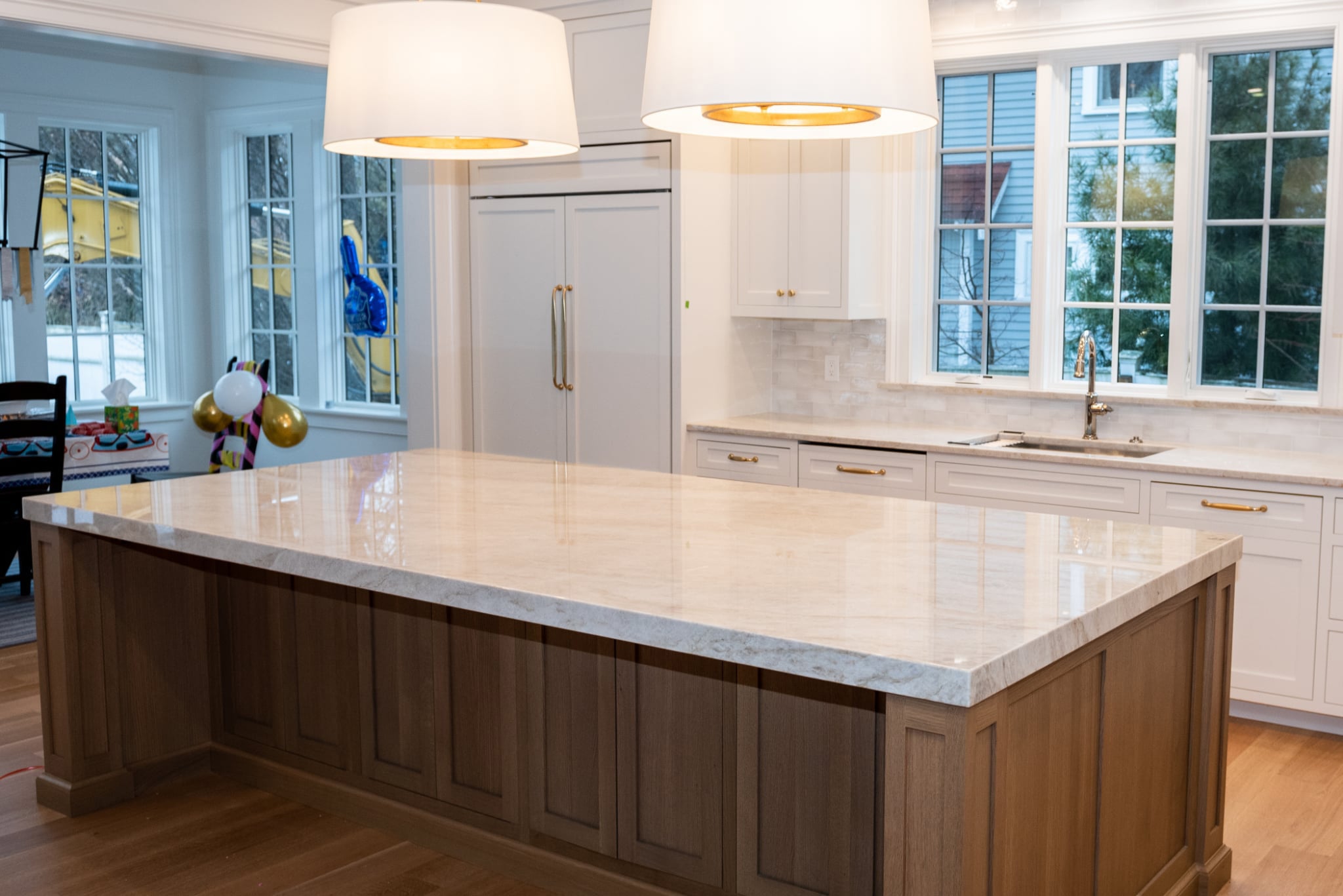
What Is Quartzite Made Of?
Quartzite is made mostly of quartz. It starts as sand, the sand becomes sandstone, and heat and pressure deep underground fuse the grains into one tight, hard rock.
I won't give you a percentage. I don't have a lab, and the amount varies from stone to stone. You can't control how nature makes anything.
What I can tell you is how it behaves. Geology references put quartzite at about 7 on the Mohs hardness scale, and at the saw it earns that number.
Some of them look the part, too. Cristallo and Taj Mahal are almost like a solid crystal, almost like glass.
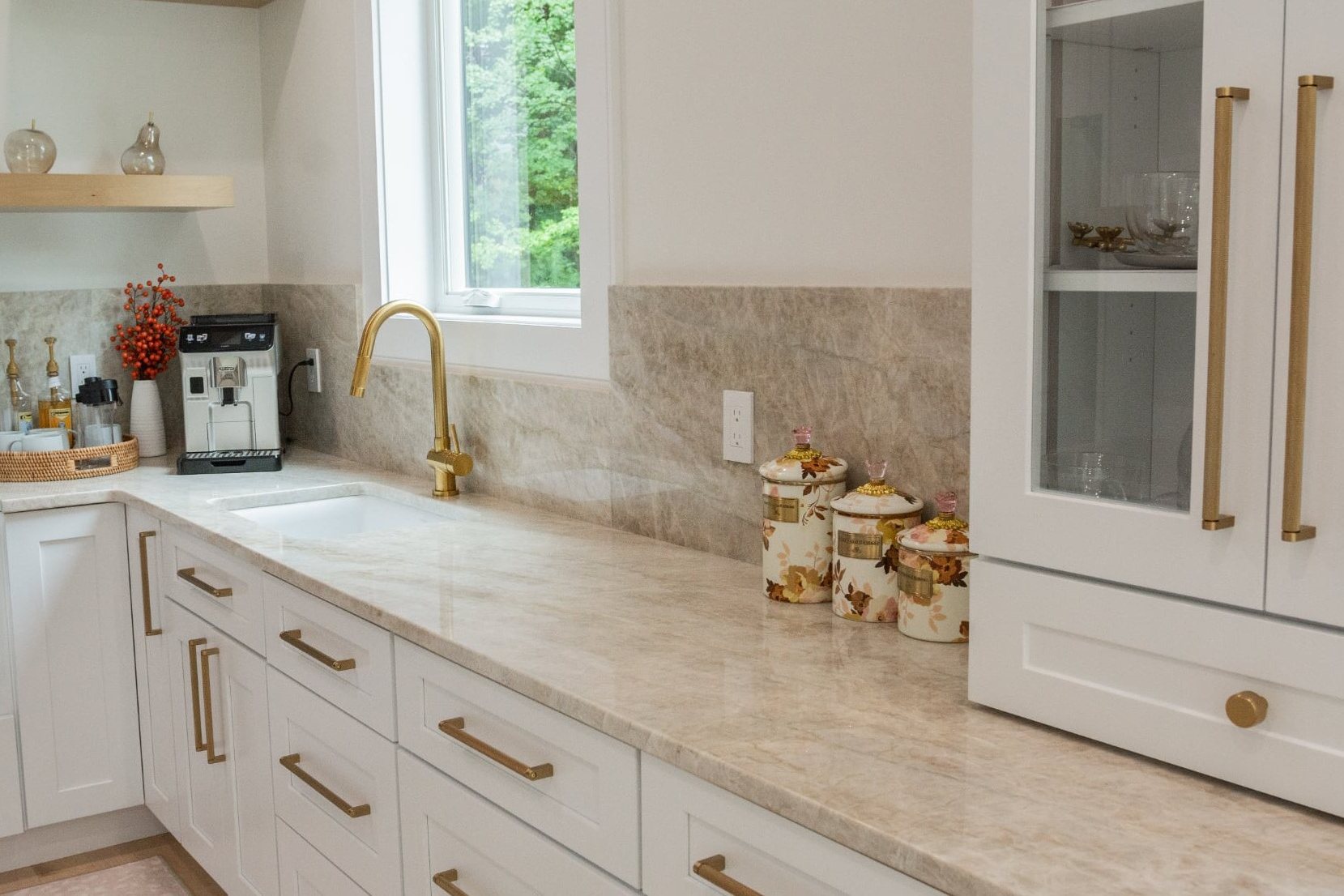
The color comes from whatever else was in the sand. Quartzite typically runs from cream and gold to gray, green and blue, and every block is different, so see the actual slab in person before you commit.
Is Quartzite Man-Made?
No. Quartzite is quarried out of the ground, and nobody mixes it or molds it.
The name is what causes the confusion. Quartz countertops are made in a factory from ground quartz and resin, and our quartz vs quartzite comparison covers how the two differ in a kitchen.
Natural doesn't mean untouched, though. Most slabs get resin at the factory and mesh on the back, which is why I don't call every quartzite slab 100 percent natural.
Where Does Quartzite Come From?
Most of the quartzite on the market comes from Brazil.
Taj Mahal quartzite, the best known of them, is quarried in the state of Ceará in northern Brazil. It doesn't come from a single quarry.
One mountain range has several quarry fronts, and neighboring quarries pull similar stone that sells under the same name. Carrara marble works the same way.
How Quartzite Gets From Quarry to Slab
A slab has been sliced, filled, backed and polished before it reaches a rack in Massachusetts. Each step explains something you'll notice when you stand in front of one.
Fill and Resin
Slabs do not come out of the ground smooth. They have cavities, some big enough to nearly fit a hand.
The factory fills them with crushed stone of the same material and polishes over it. Most homeowners never spot a fill. A fabricator can.
A lot of quartzites are also treated with resin, sometimes top and bottom. Newer methods wrap the whole block and pull resin into every cavity under vacuum, which is why breakage on the saw is a fraction of what it used to be.
Mesh on the Back
The mesh on the back is common on all quartzites. Walk behind a slab and you'll typically see a fiberglass net glued to it.
It's there to support the slab, and it's normal. We see it on marble, granite and soapstone too.
Book-Matching
Book-matching is the standard for natural stone. When a block gets sliced, the factory opens the fresh slabs like the pages of a book.
They don't polish the next face, then the next, then the next. They polish both inside faces of two slabs, like turning the page of a book, then move those out of the way and do the next two.
Set side by side, the two faces mirror each other.
What Quartzite Does at the Saw
Quartzite used to glaze the tooling. The abrasive stopped cutting, the machine pushed harder, and the stone cracked.
Cutting ran several times longer than it did on other stones. Waterjet changed that, because it cuts with no force, only erosion.
The natural weak points sit where two minerals meet: the veins. A vein is a weak point, not a guarantee of a crack.
Quartzite Slab Sizes and Thickness
A typical quartzite slab runs 118 to 130 inches long and 72 to 78 inches tall. That's roughly 10 to 11 feet by 6 to 6 1/2 feet.
Larger slabs exist, close to 80 inches tall and over 130 inches long. They are not common.
Size matters most on an island. I had to do one where the client said, "I will not do it if you cannot do it in one piece." It took a lot of phone calls, but I found a Taj Mahal slab at 136 by 78.
Thickness
3cm, about 1 1/4 inches, is the standard here. In New England, 2cm is not very common, so it's harder to source.
Once in a while we get them. If 2cm is a must-have, it's available out there somewhere; it will need some sourcing.
Pro tip: Bring your island dimensions when you come to look at slabs. The size of the slab tells us right away whether one piece is possible.
How to Tell True Quartzite From Marble
Some slabs sold as quartzite are really marble. You'll hear them called "soft quartzite," and they behave like marble in a kitchen.
Two names come up most. Super White and Brown Fantasy are dolomitic marbles, not true quartzite.
They are good stones, and we're glad to fabricate marble countertops. They etch like marble, though, so know which one you're buying.
I can tell just by looking. If you can't yet, here are three checks:
- Look at the background. If it's a true white background, most of the time it's marble, not quartzite.
- Try acid on a sample. Lemon juice or vinegar on a sample. If it etches, it's not a quartzite.
- Try to scratch it. It takes a lot of effort to scratch a quartzite with a nail, a knife or anything else. You would scratch a marble with less effort.
Warning: Run the acid check on a sample only, never on an installed top. On marble it leaves a dull mark.
How Quartzite Holds Up
Heat
In 30 years, we have not seen heat damage a true quartzite top. Trivets are not necessary for the stone, and they never hurt.
Some slabs carry a resin coating or fill. In theory, extreme heat could affect it. We have never seen it happen.
Our heat guide answers can you put hot pans on quartzite in full.
Etching
True quartzite doesn't etch. Lemon juice and vinegar leave a dull spot on marble, and on a true quartzite they don't.
That's the reason many clients who love the look of marble end up here.
Stains
Quartzite varies more than most other stones. Cristallo and Taj Mahal are so dense I doubt there are even many pores, and I've never seen one stain.
Sometimes I cut a job and leave it on the saw over the weekend. I come in Monday, wash it off, and it's clean. Not a single spot.
That's Taj Mahal, Cristallo and some other dense quartzites. With most natural stones, I don't feel comfortable doing it.
Others, often the ones with a whiter background, tend to be more porous. Day to day, soap and water does the job, and our guide on how to clean quartzite covers the rest.
Sealing
There's no schedule. Every slab is different, and the resin a lot of quartzites carry helps too.
Pro tip: Pour a little water on the top. If it soaks in, the pores are open and it needs to be sealed. Otherwise, you're good.
Our guide on how to seal quartzite walks through the steps.
Darkening Near a Sink
We have seen a quartzite darken from moisture once, on a stone with a whiter background. I can't prove the cause, but here is our explanation, and others in the trade think the same.
The factory resin seals a slab top and bottom. A sink cutout leaves edges with no resin, water splashes on them, and the stone pulls the moisture in.
I call it the wick effect. We now seal cutout edges more than we used to.
Finishes and Where Quartzite Works
Finishes
Quartzite comes polished, honed or leathered. Polished is glossy, honed is matte, and leathered has a texture you can feel.
The finish changes how a slab reads, so look at it in person. We compare the first two in honed vs polished quartzite, and leathered quartzite has its own guide.
Where It Works
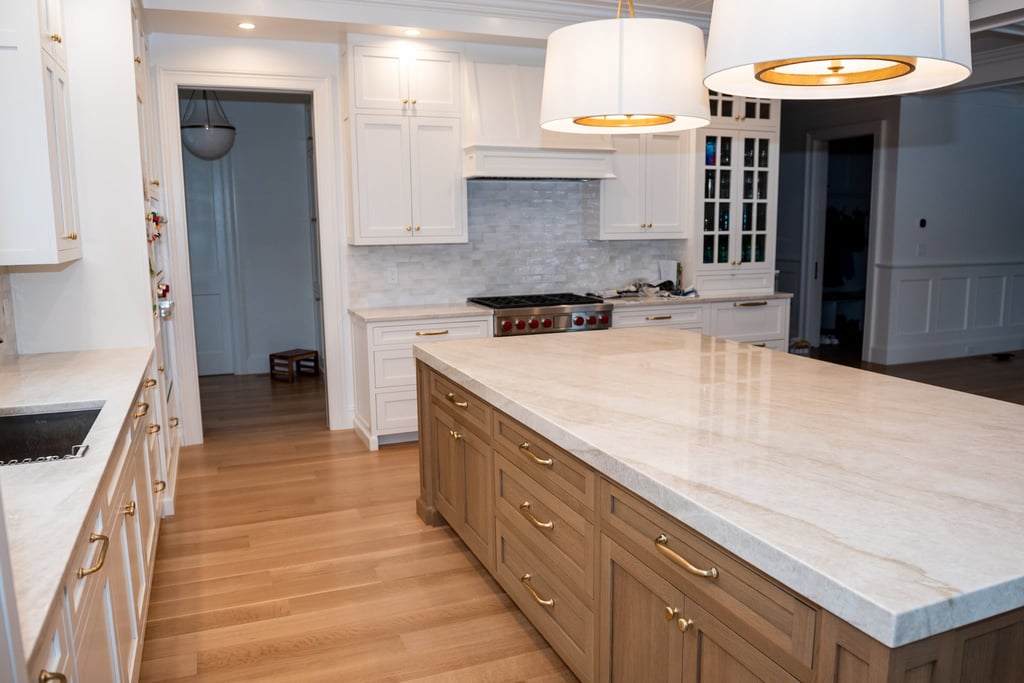
Quartzite suits the rooms that get used hard. In MetroWest and Greater Boston homes we fabricate it for kitchen countertops, islands, vanities and quartzite fireplace surrounds.
It goes outside, too. For an outdoor kitchen in New England, granite is our first pick and quartzite is second.
Leathered is the safer finish outdoors for any slab that carries resin.
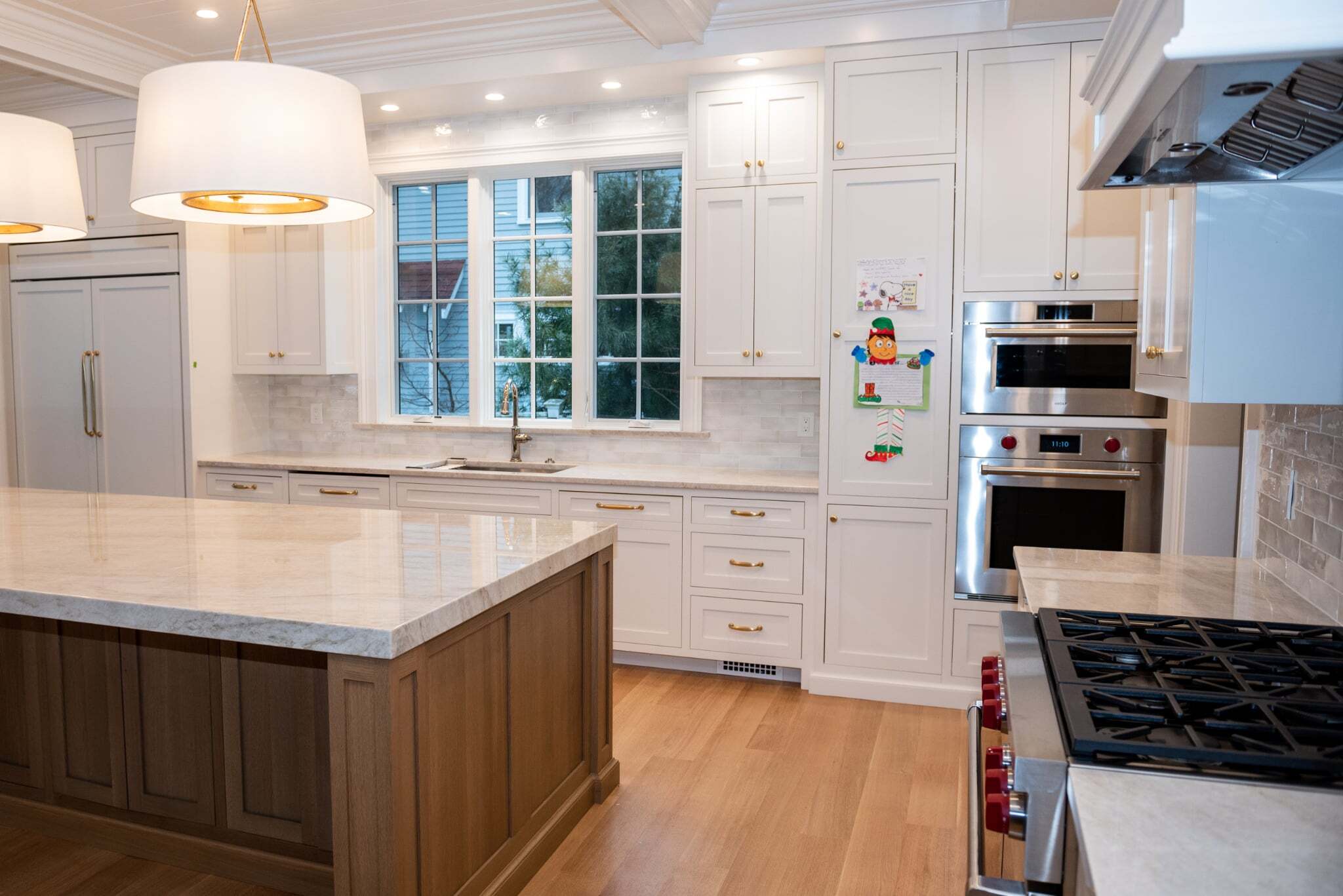
Quartzite vs Quartz, Granite and Marble
Here is the short version of each comparison:
- Quartz: made in a factory to a spec, so it looks the same slab to slab and never needs sealing. Quartzite is quarried, and every slab is its own.
- Granite: also natural, and it comes in more colors and patterns. Quartzite typically carries veining closer to the look of marble. See quartzite vs granite, or our granite countertops page.
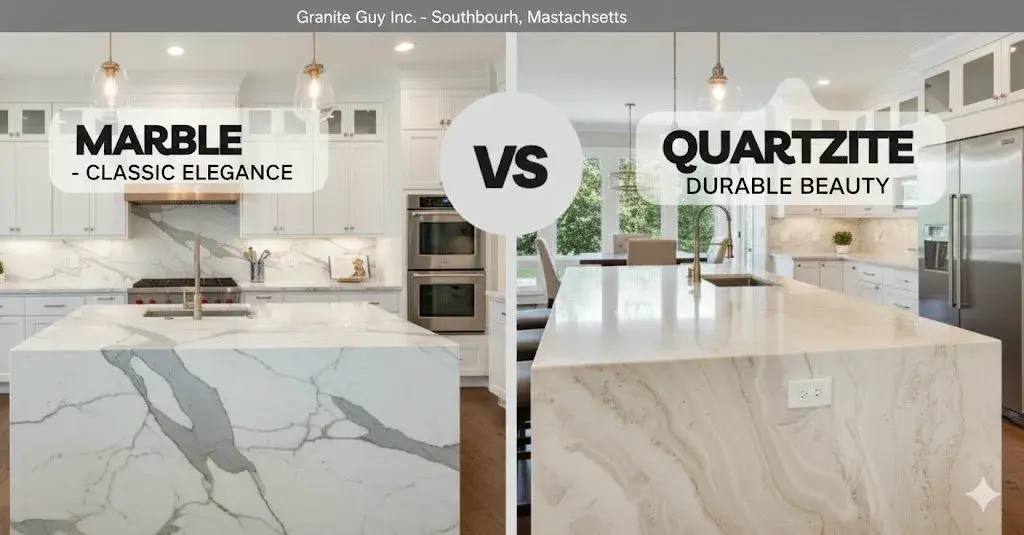
- Marble: marble etches and true quartzite doesn't. Our quartzite vs marble post covers the rest.
Quartzite Pros and Cons
Choose quartzite if:
- You want a natural stone that doesn't etch
- You like veining and want a slab nobody else has
- You're happy to pick your actual slab in person
Consider something else if:
- You never want to think about sealing: quartz and porcelain don't need it
- You want the same look slab to slab: quartz and porcelain are made to a spec
- You'd rather not check what a stone really is: the name gets used loosely
My Recommendation
If you love the look of marble and you cook hard, quartzite is where I'd point you. Pick a true one.
I've been fabricating and installing countertops in Massachusetts since 1995, with 10,000+ projects completed, and my advice hasn't changed. Don't buy the name on the tag. See the slab and check a sample.
Browse our quartzite slabs in stock, then come see them in person.
How Much Does Quartzite Cost?
Quartzite pricing comes down mostly to which variety you choose. Cristallo and Blue Macaubas are naturally rare and run well above the rest.
Our quartzite cost guide goes deeper on the stone. The rest, sourcing, size, complexity, waste, is the same for every material, and we break it all down on our pricing page.
Frequently Asked Questions
Q. Is quartzite a natural stone?
A. Yes. It's quarried in blocks and sliced into slabs, though most slabs get resin and a mesh backing at the factory.
Q. Is quartzite the same as quartz?
A. No. Quartzite is quarried, and quartz is made in a factory from ground quartz and resin.
Q. How big is a quartzite slab?
A. Typically 118 to 130 inches long and 72 to 78 inches tall. Larger ones exist, and they are not common.
Q. How thick is a quartzite slab?
A. 3cm, about 1 1/4 inches, is the standard in New England. 2cm exists and takes some sourcing.
Q. Where does quartzite come from?
A. Most of the quartzite on the market comes from Brazil. Taj Mahal is quarried in the state of Ceará.
Q. Does quartzite etch?
A. True quartzite doesn't. If a slab etches from lemon juice or vinegar, it's not a quartzite.
Q. Does quartzite need to be sealed?
A. Only when water soaks in, and there's no schedule. Pour a little water on the top; if it soaks in, it's time to seal.
Q. Is Super White a quartzite?
A. No. Super White is a dolomitic marble, and so is Brown Fantasy.
Q. Can quartzite be used outdoors?
A. Yes. For outdoor kitchens it's our second pick, after granite.
Related Articles
- Quartzite Edge Profiles: Best Styles for MA Kitchens
- Quartzite Backsplash Guide: 4-Inch vs Full-Height Options in Ma.
- Quartzite Bathroom Countertops in MA: 30-Year Fabricator's Guide
Visit Our Southborough Showroom
Still figuring out which stone is right for you? Come see us.
Nothing beats standing in front of the actual slabs, comparing colors, patterns, and finishes in person. That's how you make the right decision.
Stop by our countertop store at 43 Turnpike Road (Route 9), Southborough, MA 01772 during business hours. We keep a large inventory in our heated warehouse, so there's always plenty to see.
Already done your homework and know what you want? Email us or give us a call.
Phone: 508-460-7900
Email: info@graniteguyinc.com