Written by Granite Guy Inc., Southborough, Massachusetts
Published: January 2026
How to clean quartzite countertops: Use mild dish soap and warm water, wipe with a soft cloth, and dry the surface. That's it for daily cleaning.
I've been fabricating and installing countertops across Greater Boston, MetroWest, and all of Massachusetts for over 30 years. In that time, I've watched quartzite go from relatively unknown to one of the most requested stones in Massachusetts kitchens. And with that popularity comes a lot of confusion about how to care for it.
📋 Quartzite Care Cheat Sheet
- Daily cleaning: Dish soap + warm water, wipe, dry
- Stubborn spots: Scrubby pad is fine
- Avoid: Vinegar, citrus cleaners, bleach, ammonia
- Sealing: Use water test to check (no fixed schedule)
- Stains: Baking soda poultice, 24-48 hours
- Heat: Very resistant, but trivets are a good habit
🧽 How to Clean Quartzite Countertops Daily
For everyday cleaning, quartzite is actually pretty easy. Here's what works:
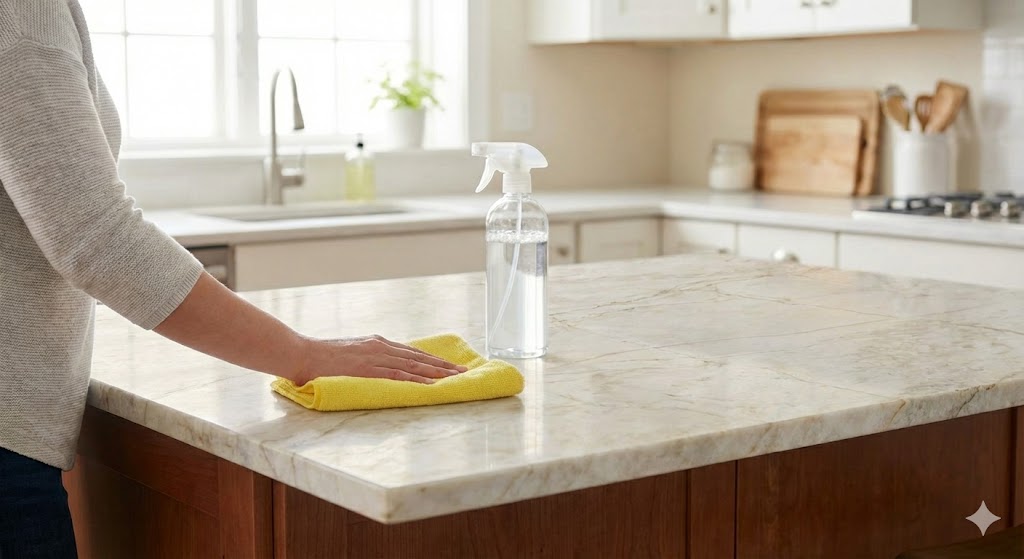
Mild dish soap and warm water. A few drops in a spray bottle handles 95% of daily messes. Spray, wipe with a soft cloth, dry. Done.
For stubborn spots or stuck-on debris: A scrubby pad works great. Quartzite is durable enough to handle it. You don't need to be too careful.
Always dry the surface. Water sitting on stone can leave mineral deposits, especially with the hard water we have in many MetroWest towns. Get in the habit of wiping your counters dry after cleaning.
Clean up spills promptly. Quartzite is more forgiving than marble, but acidic liquids like wine, citrus, or tomato sauce shouldn't sit for hours. A quick wipe prevents potential issues.
💡 Pro Tip: Keep a microfiber cloth near your sink. It takes five seconds to wipe down your counters after cooking, and that simple habit prevents most problems.
🪨 Quartzite Is Natural Stone That Needs Sealing
The biggest issue with quartzite care? People confuse quartzite with quartz. They're completely different materials with completely different care requirements. Read our quartz vs quartzite article to learn the differences.
Quartzite is natural stone that needs sealing. Quartz is engineered and doesn't. That's the key difference for maintenance. If you're cleaning your quartzite like it's engineered quartz, you're missing steps that matter.
🚫 What NOT to Use on Quartzite
Some products will damage your quartzite over time. Avoid these:
✦ Vinegar and Citrus-Based Cleaners
Even though quartzite is harder than marble and more resistant to etching, acidic cleaners can still dull the finish over time and degrade your sealer.
✦ Abrasive Scrubbers
No steel wool, no abrasive pads. Quartzite is hard, but you can still scratch the polish.
✦ Bleach and Ammonia
Occasional use won't destroy your counters, but regular use will strip your sealer and can discolor certain quartzites.
✦ Generic "All-Purpose" Cleaners
Most contain either acids or harsh chemicals. If it doesn't say "safe for natural stone," skip it.
✨ Best Cleaners for Quartzite Countertops
You don't need expensive specialty products for daily cleaning. But if you want options:
Best everyday cleaner: Dish soap and water. Seriously. It's what I recommend to 90% of my customers.
Best commercial option: pH-neutral stone cleaners work well. Look for products labeled for granite or natural stone. Despite names mentioning granite, they're safe for all natural stone including quartzite.
What to look for on the label: "pH-neutral," "safe for natural stone," or "non-acidic." Avoid anything mentioning citrus, vinegar, or "cuts grease."
🧪 Removing Stains from Quartzite
Stains happen, even in the most careful Massachusetts kitchens. Here's how to deal with them:
✦ Oil-Based Stains (Cooking Oil, Grease)
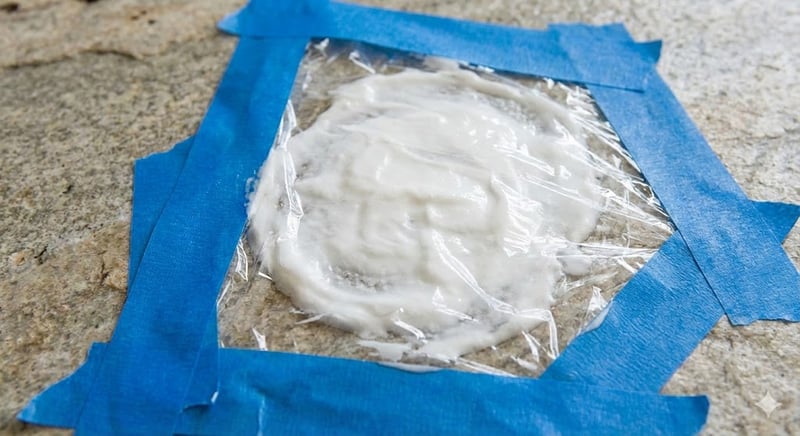
Mix baking soda with acetone to form a paste about the consistency of peanut butter. Spread it over the stain, cover with plastic wrap, tape down the edges, and leave for 24-48 hours.
The poultice draws the oil out as it dries. Scrape off gently and rinse.
✦ Organic Stains (Coffee, Wine, Food)
Same poultice method, but use baking soda mixed with water instead of acetone. You may need to repeat this two or three times for stubborn stains.
✦ Hard Water Spots
These show up as cloudy white marks. A paste of baking soda and water usually works. For stubborn deposits, mineral spirits can work well too. If the stone is dry, you can use fine or double-zero steel wool to gently buff and help restore shine.
⚠️ Warning: Never use regular rust removers or lime scale products on quartzite. Most contain acids that will damage the stone. Always check that any product is specifically labeled safe for natural stone.
🛡️ Sealing Your Quartzite Countertops
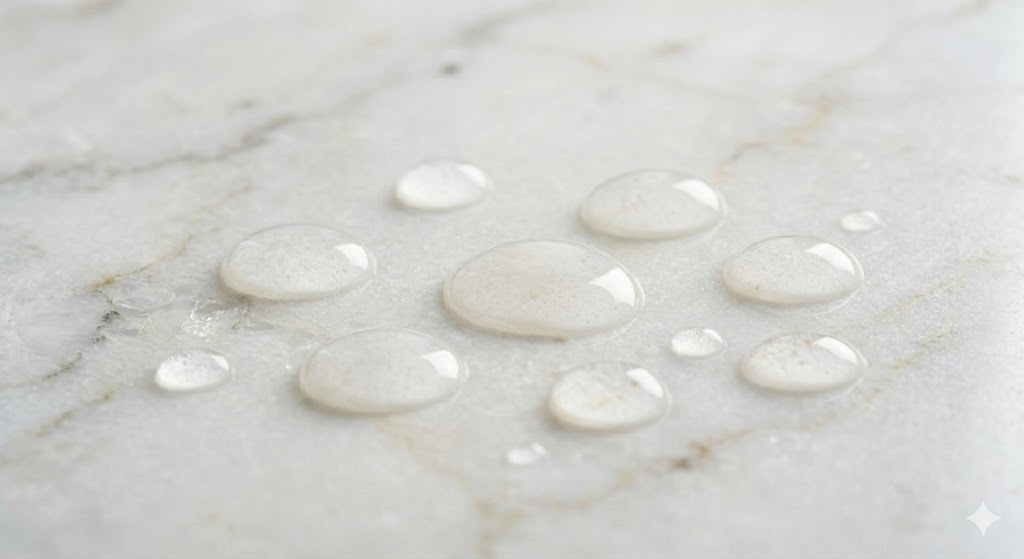
Here's where quartzite differs from engineered quartz: it needs to be sealed.
✦ How Often?
Don't go by a schedule. Some quartzites need resealing regularly, others barely ever need it. Use the water test to know when your quartzite needs resealing.
✦ The Water Test
Sprinkle a few drops of water on the surface. If it beads up, your sealer is working. If it soaks in and darkens the stone within a few minutes, it's time to reseal. Even dense stones like Taj Mahal Quartzite benefit from a water test now and then.
✦ How to Seal
Make sure the surface is clean and completely dry. Apply the sealer per product instructions, let it penetrate, wipe off the excess. Most sealers need 24 hours to cure.
Use a quality impregnating sealer, not a topical coating.
💡 Pro Tip: We seal every quartzite countertop before installation. Ask your fabricator about their sealing process and what they recommend for maintenance.
🔥 Heat Resistance: A Big Advantage
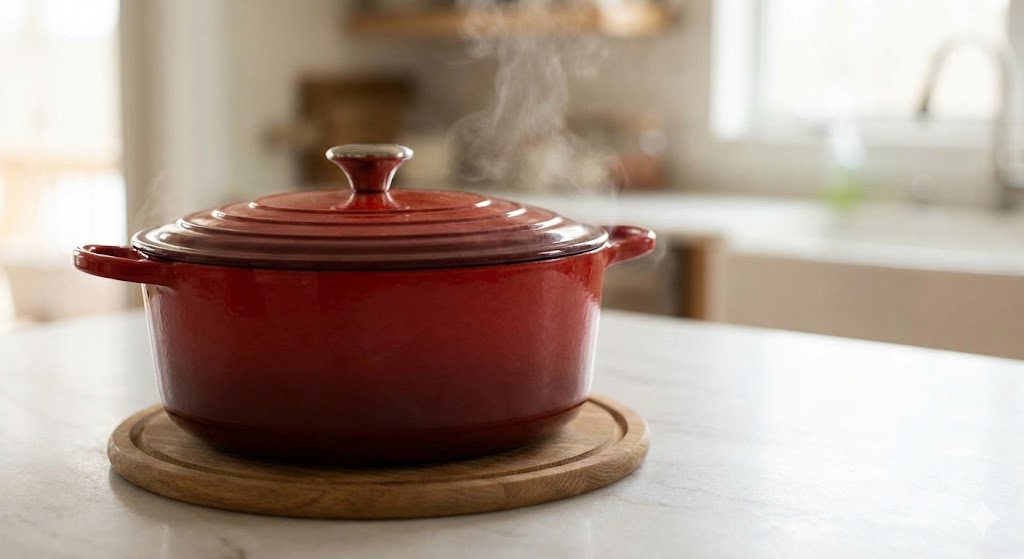
One of the reasons quartzite has become so popular in Greater Boston kitchens is its heat resistance. Quartzite handles hot pots exceptionally well. Soapstone is the only countertop material that's even more heat resistant.
That said, I still recommend using trivets. Extreme temperature changes can theoretically cause thermal shock in any natural stone. Plus, the bottom of pots can have residue that leaves marks.
It's just a good habit, especially during those busy holiday cooking sessions we all know too well in New England.
⚠️ Etching vs. Staining: Know the Difference
If you have true quartzite, you won't experience etching. Quartzite is highly resistant to acids. If you're seeing etch marks on your countertops, you have marble, not quartzite.
Some suppliers mislabel marble as "soft quartzite," which isn't a real thing. The most common offenders are Super White and Fantasy Brown. Both are beautiful stones, but they're dolomitic marble, not quartzite. If you have one of these and you're experiencing etching, that's why.
Staining is the real concern with quartzite. That's when a substance penetrates the porous stone. That's why sealing matters.
🏠 Simple Daily Habits for Massachusetts Homeowners
You don't need to baby your quartzite. A few basic habits go a long way:
Whether you have quartzite kitchen countertops with a detailed edge profile or a simple quartzite bathroom countertop, the care remains the same.
If you opted for a matching quartzite backsplash, you'll find it stays cleaner longer since it doesn't deal with standing water, the main culprit for mineral buildup in New England homes.
Use cutting boards. Not because quartzite can't handle knives, but to keep acidic foods from touching the stone.
Wipe up spills when they happen. This is especially important during summer cookouts and holiday gatherings when wine and tomato-based dishes are everywhere.
Use coasters under glasses, especially wine. Dry counters after cleaning. Don't store bottles with acidic contents directly on the counter.
📞 When to Call a Professional
Most quartzite care is DIY-friendly. But call in help for:
Deep stains that won't respond to poultice treatment after multiple attempts. Dull spots that bother you. Chips or cracks (rare, but they happen). Full surface restoration when you want a fresh start.
If you're in Greater Boston or MetroWest and need help with your quartzite countertops, give us a call.
🎯 The Bottom Line
Quartzite is one of the most durable natural stones you can put in a Massachusetts kitchen. It's harder than granite, more heat-resistant than quartz, and when properly sealed, it handles daily life beautifully.
The key is understanding what it is: natural stone that needs sealing, not engineered quartz that's maintenance-free. Proper care protects your quartzite countertop investment for decades.
Clean it simply. Seal it regularly. Wipe up spills. That's really all there is to it.
❓ Frequently Asked Questions
Q. Can I use Windex on quartzite countertops?
A. I'd avoid it for regular use. Windex contains ammonia which can degrade your sealer over time. Stick with dish soap and water or a pH-neutral stone cleaner.
Q. Is quartzite easier to maintain than marble?
A. Yes. Quartzite is much harder and more resistant to etching and scratching. It still needs sealing like marble, but it's more forgiving of daily kitchen use.
Q. How do I know if my quartzite needs resealing?
A. Do the water test. Sprinkle a few drops on the surface. If water beads up, you're good. If it soaks in and darkens the stone, it's time to reseal.
Q. Can I use Bar Keepers Friend on quartzite?
A. The original formula contains oxalic acid and can damage natural stone. If you want to try it, use only their gentler version, test in an inconspicuous spot first, and don't use it for routine cleaning.
Q. Does quartzite scratch easily?
A. No. Quartzite is one of the hardest natural stones, rating about 7 on the Mohs scale. It's actually harder than granite. Normal kitchen use won't damage it.
Q. Can I put hot pans directly on quartzite?
A. Quartzite handles heat better than almost any countertop material. A hot pan probably won't damage it. That said, I still recommend trivets as a good habit.
Q. What's the difference between cleaning quartzite and quartz?
A. Quartz (engineered) is non-porous and doesn't need sealing. You can use most household cleaners on it. Quartzite (natural stone) is porous, needs sealing, and requires pH-neutral cleaners to protect the sealer and surface.
Q. How often should I clean my quartzite countertops?
A. Wipe them down daily or after cooking. Deep cleaning with soap and water once a week is plenty for most households.
Q. Is there a difference in cleaning honed vs polished quartzite?
A. The cleaning method is the same. Honed finishes have a matte look and can be slightly more porous, so they may show water spots less but could need sealing a bit more often. Polished finishes show fingerprints and water spots more easily, so you'll wipe them down more frequently.
📚 Related Articles
🏠 Visit Our Southborough Showroom
Still figuring out which stone is right for you? Come see us. Nothing beats standing in front of the actual slabs, comparing colors, patterns, and finishes in person. That's how you make the right decision.
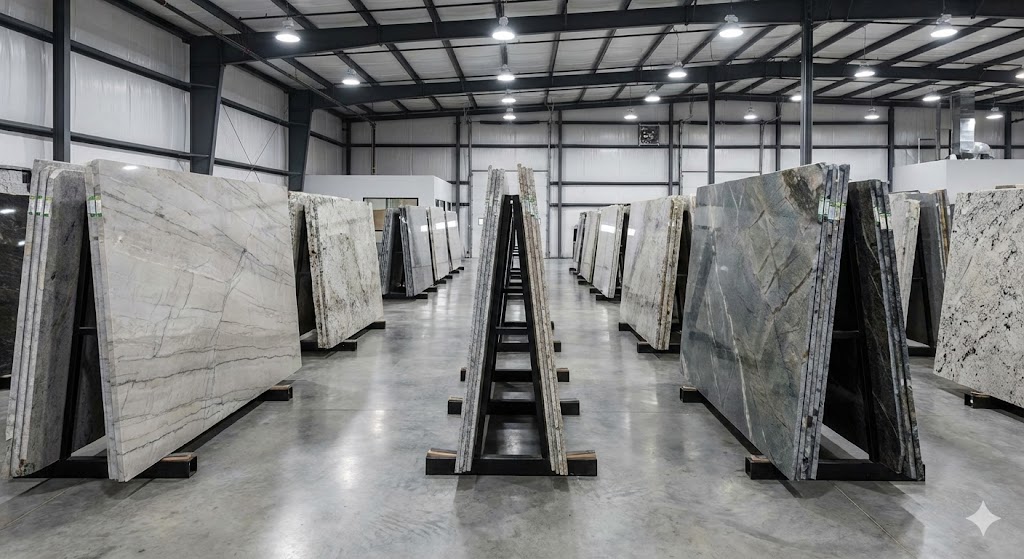
Stop by our countertop store at 43 Turnpike Road (Route 9), Southborough, MA 01772 during business hours. We keep a large inventory in our heated warehouse, so there's always plenty to see.
Already done your homework and know what you want? Email us or give us a call.
📞 508-460-7900
📧 info@graniteguyinc.com