Written by Granite Guy Inc., Southborough, Massachusetts updated: January 2026
TL;DR: Granite is best for busy families, outdoor kitchens, and low-maintenance lifestyles. Marble is best for empty nesters, classic New England aesthetics, and homeowners who value elegance over extreme durability.
Choose honed marble to avoid etching issues with Massachusetts hard water. One often-overlooked advantage: marble is far easier to repair on-site than granite. Both materials are excellent, and it's about matching the right stone to your lifestyle.
In Massachusetts design, two natural stones reign supreme: marble and granite.
After 30 years and 10,000+ projects across MetroWest and Greater Boston, including work on Patrick Ahearn-designed homes, I know exactly which material is right for your home. About a quarter of my work is marble, a quarter granite, with quartzite and quartz making up the rest. Every material has its ideal application.
This is the honest breakdown you won't get from generic national websites.
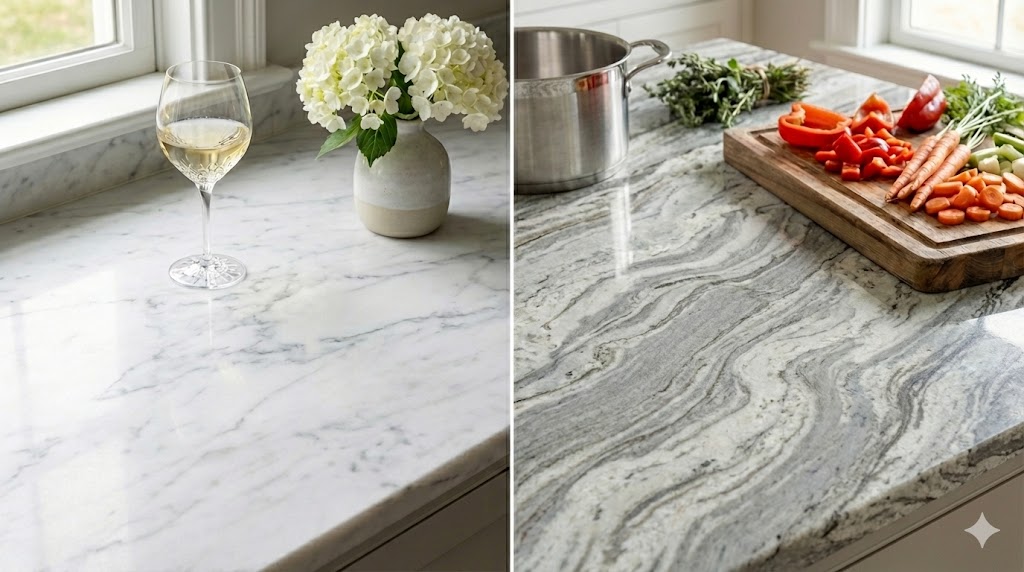
[IMAGE PLACEHOLDER: Hero image showing marble countertop on left, granite countertop on right, side by side comparison. Alt text: "Marble vs Granite Countertops Comparison for Massachusetts Homes"]
🏆 Why Top Massachusetts Designers Choose Marble
In high-end neighborhoods like Wellesley Hills, Concord, Weston, and the North Shore, the trend is unmistakable. Top designers consistently choose marble for luxury kitchens.
The reason is simple: marble has a beauty nothing else can match.
White kitchens, traditional architecture, and New England interiors were practically made for it. Those Boston brownstones, those historic Cape Cod homes, they call for marble's refined elegance.
But here's the surprise: marble isn't only for million-dollar homes.
White Carrara comes from the same Italian region as ultra-luxury Calacatta and Statuario. Same heritage. Same elegance. Much more accessible price.
💰 Real Massachusetts Pricing (2026)
The "Material Myth" Most homeowners believe there is a strict price ladder: Granite is cheap, Quartz is medium, and Marble is expensive. That is completely false.
The Reality: Supply & Demand Rules Everything Pricing isn't determined by geology; it's determined by desirability.
-
The "Bargain Bin" Exists for Everything: I can find you a quartz that is cheaper than granite. I can find you a marble that suppliers are practically giving away because it doesn't have the "trendy" look.
-
The "Premium" Tier Exists for Everything: I can also find you a granite that costs more than high-end marble, and a designer quartz that costs more than both of them.
The $55–150 "Standard" Range About 95% of the materials we sell—whether granite, marble, or quartz—fall into this installed price range. You can find budget, mid-range, and premium options in almost every category.
The Only Real Exceptions The only stones that consistently sit above this range are the "Super Exotics." These include rare stones like Blue Bahia (granite), Blue Macaubas (quartzite), and the Calacatta or Statuario marble families. These typically start at $150–300+ per square foot.
So, How Should You Budget? Don't shop by material name (e.g., "I want granite because it's cheap"). Shop by color and look. Come to the showroom. You might find a marble, a granite, and a quartz all sitting in the same price group because that’s where the market put them today.
Want specific numbers for Marble? For a complete breakdown of white marble costs, see our deep dive on [2026 Carrara Pricing & Options].
🧪 The Lifestyle Test: How to Choose
Choosing marble or granite is about the stone that fits your life. After three decades of consultations, I've developed a simple framework.
✅ Choose Granite for Durability & Peace of Mind
Granite makes sense when you have kids or teenagers at home. It's the right choice when your kitchen sees heavy daily use or when you simply want low maintenance.
It's also ideal if you're building an outdoor kitchen, want excellent heat resistance, or don't want to worry about every spill. Granite is exceptionally heat-resistant, so you can place hot pots directly from the stove without worry.
Busy families need durability. Nobody has time to stress over every glass of orange juice.
💎 Choose Marble for Elegance & Timelessness
Marble makes sense when you're empty nesters who appreciate natural beauty. It's ideal when you value elegance over extreme durability.
Choose marble when you understand it develops character over time. It's perfect when you want classic New England aesthetics or you're working with a designer who loves timeless materials.
Here's what I tell clients: if your kids have moved out and you've been dreaming about that beautiful kitchen for years, now's the time to treat yourself.
🔷 Consider Quartzite as the Middle Ground
Quartzite offers the best of both worlds. You get the marble look with granite's durability. It's still natural stone, without granite's heavy speckling. It sits right in between, elegant but more forgiving.
🛑 The Truth About Marble: Etching vs Staining
The biggest confusion online is the belief that marble "stains constantly."
That's not accurate. Let me set the record straight.
The Real Issue
Staining happens when liquids soak into the stone's pores. With proper sealing, this is prevented and isn't the main concern.
Etching is different. It happens when acids like lemon juice, wine, or vinegar contact marble and dull the polish. This is the real consideration, a chemical reaction on the surface, not absorption.
With proper sealer, marble resists stains just as well as other natural stone. Knowing **how to clean marble countertops** correctly is simple: use pH-neutral cleaners, wipe spills quickly, and keep the surface sealed. Staining isn't a major issue when you follow these basics.
🏆 The Massachusetts Solution: Choose Honed Marble
For homeowners worried about etching, I recommend honed (matte) finish marble.
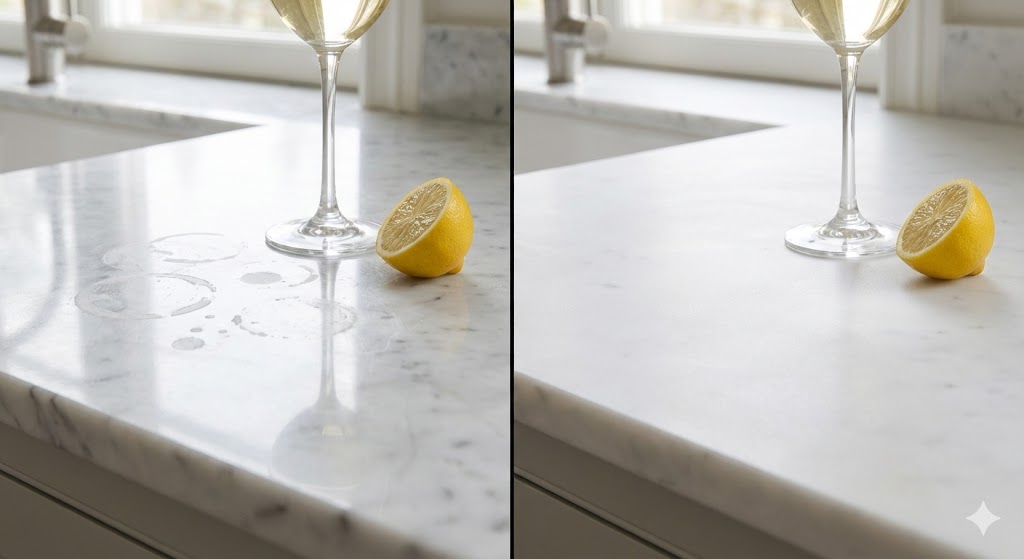
Honed marble has a soft, natural matte appearance instead of a glossy polish. Since it already looks matte, minor acid etching isn't visible.
The muted, elegant look of honed marble is incredibly sophisticated. People love that refined, understated aesthetic.
Hard Massachusetts water leaves spots on polished stone, but honed hides this. It's like starting with an "etched" look, so you don't stress about maintaining perfect shine.
Many of the highest-end homes I work in choose honed specifically for this reason. It's practical luxury.
Smart Sealing Strategy
Forget "seal once a year." Every stone is different.
Apply 2–3 coats in the first three weeks, about one per week, to saturate the pores.
After that, use the water test: if water beads up, the sealer is working. If water darkens the stone, it's time to reseal.
Could be 6 months, could be 2 years. Let the stone tell you.
🏠 Why Nature Favors Marble for White Kitchens
Massachusetts homeowners have long favored white countertops. The clean aesthetic fits New England style perfectly.
The problem: Nature doesn't make much white granite.
The "white" granites available usually feature heavy speckling, dark crystals, and busy movement. Great for some kitchens, but not great for that clean, serene aesthetic many white-kitchen lovers want.
Your realistic options for white kitchens are marble or quartz.
Genuine marble like White Carrara, Imperial Danby, or Italian Calacatta gives you the authentic look. Marble-look quartz offers easier maintenance but lacks the authenticity of natural stone.
If nature made truly white granite, it would dominate the market. But it doesn't, and that's why marble commands such respect in high-end Massachusetts design.
🗻 Vermont Danby: New England's Heritage Marble
No marble discussion in Massachusetts is complete without Vermont Danby.
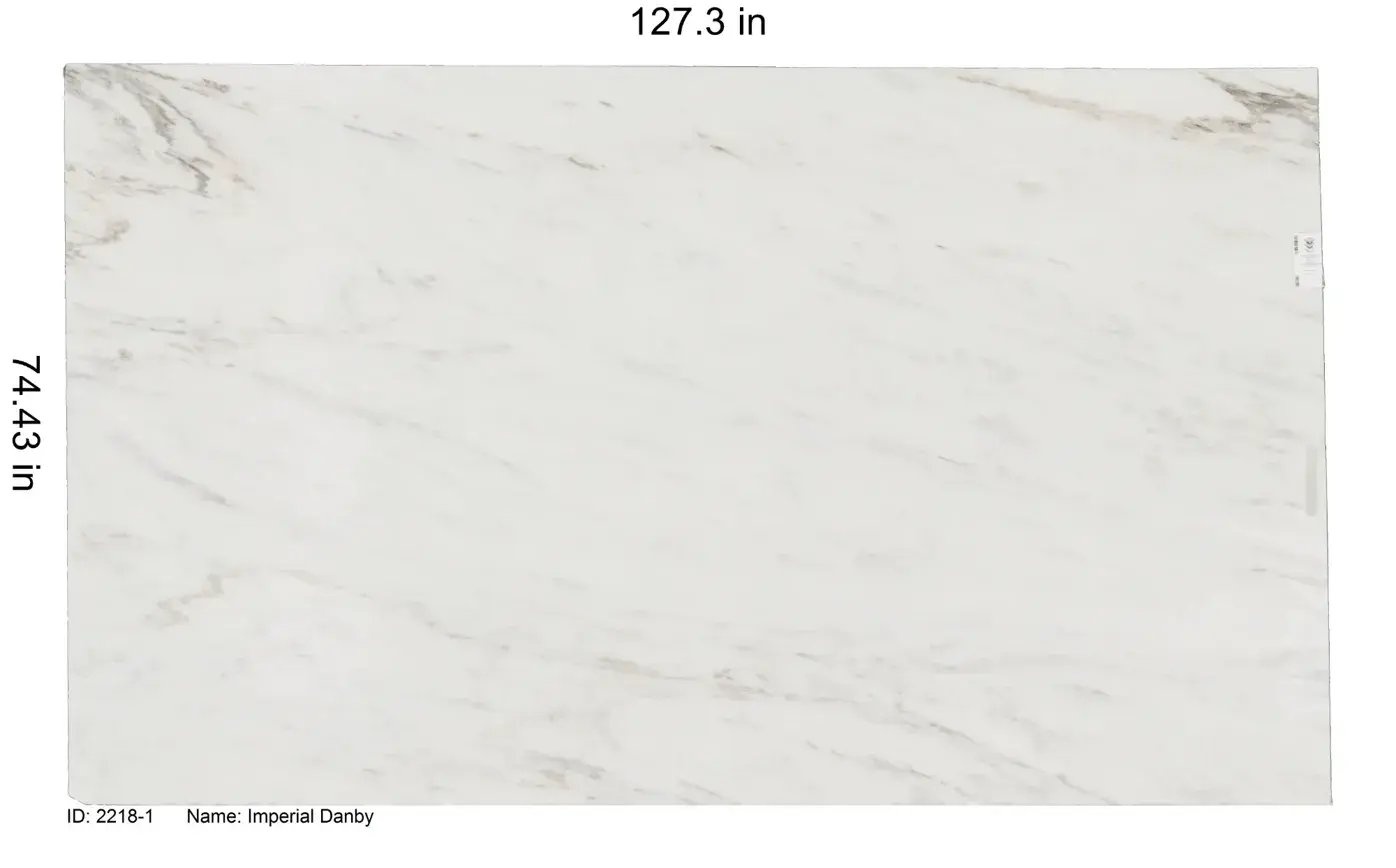
Quarried just a few hours north of Boston in Danby, Vermont, this warm-toned marble has been extracted since the 1800s. It represents true New England heritage and craftsmanship.
Over the past decade, Vermont Danby has become globally famous. Architects and designers worldwide have discovered this treasure, and demand has exploded.
It's proven to be an investment stone, with values increasing significantly as more homeowners recognize its quality and heritage.
Vermont Danby is denser than many European marbles, giving it better durability while maintaining classic marble beauty. The subtle, elegant veining with warm undertones fits perfectly in traditional New England homes. It's American craftsmanship, local pride, and timeless beauty all in one stone.
When clients want something beautiful with New England character, Vermont Danby is usually my first suggestion.
🔧 When Things Go Wrong: Repairability
Most homeowners focus on preventing damage. But what happens when damage actually occurs?
Here's an advantage rarely mentioned in marble vs granite comparisons: repairability.
Marble Is Easier to Repair
Marble is softer than granite. While this means it can scratch or etch more easily, it also means repairs are much simpler.
Scratches, etches, and dullness can be refinished or polished right in your kitchen. A professional with hand tools can restore marble on-site, in your home, without major disruption. Soapstone shares this advantage, and both are among the easiest countertop materials to restore.
Granite Is Harder to Repair On-Site
Granite is harder and denser, which sounds good until something goes wrong.
Small chips are manageable. We fill them with color-matched epoxy, and they're barely noticeable.
But scratches? Extremely difficult to fix in someone's home. The hardness that makes granite durable also makes it resistant to hand polishing. Achieving that factory finish requires industrial equipment and lots of water, which is not practical in a kitchen. While possible with a hand polisher, making a scratch truly invisible is very challenging.
The Bottom Line
Marble shows wear sooner but is easy to restore. Granite is tougher but scratches are harder to fix.
This changes the risk equation significantly. With marble, damage isn't permanent, it's fixable.
📍 Massachusetts-Specific Considerations
Stone behaves differently depending on your environment. Here's what Massachusetts homeowners specifically need to know.
Coastal Areas
Cape Cod, Marblehead, Manchester-by-the-Sea, and the Islands have the same considerations as other Massachusetts areas for indoor countertops.
MetroWest Well Water
Our mineral-rich well water creates challenges for polished surfaces. Calcium and mineral deposits leave spots and film that's frustrating to maintain.
If you have well water in Sudbury, Wayland, Concord, or anywhere in MetroWest, seriously consider honed finishes over polished. The difference in day-to-day livability is significant.
Historic Boston and Cambridge Homes
In older Massachusetts architecture, especially those gorgeous brownstones and historic homes, marble complements the aesthetic beautifully.
Granite's busy, speckled patterns can clash with Victorian or Federal period details. Marble's refined elegance matches what the original builders would have chosen.
Outdoor Kitchens
For outdoor applications, granite wins clearly.
Our New England freeze-thaw cycles stress natural stone significantly. Water gets into tiny pores, freezes, expands, and can cause cracking over time.
Granite's density and hardness handle this better than marble. If you're building an outdoor kitchen in your MetroWest or Greater Boston backyard, choose granite.
💡 My Honest Recommendation After 30 Years
Both marble and granite have earned their place in Massachusetts homes.
For Kitchen Countertops
Marble (honed) wins when elegance is your priority and your lifestyle allows for proper care. If you're past the chaotic years of raising kids, marble rewards that care with lasting elegance that only gets better with age.
Granite wins when durability matters most. Busy households, teenagers, heavy cooking, clients who don't want to think about their countertops, granite delivers peace of mind.
For Other Areas of Your Home
- Outdoor kitchens call for granite, hands down, it handles Massachusetts weather beautifully.
- Laundry rooms and pantries favor granite because practical spaces need practical materials.
- Fireplace surrounds: Both marble and granite work beautifully here. Granite offers durable elegance, while a marble fireplace surround provides a classic, luxurious focal point. Follow your personal design preference.
- Bathroom vanities: This is where marble bathroom countertops truly shine. The lower traffic and desire for a spa-like elegance make it the perfect choice for a master bath or powder room.
- The Real Answer
- It's about matching the right material to your lifestyle, your household, and your design vision. Both marble and granite are excellent choices in the right application.
- ✨ Why Marble Works for Many Massachusetts Homeowners
- The reality is simple: marble works well when your lifestyle fits the material.
- Some families are in their busy years with kids, sports, homework, and chaos. Granite makes sense for them.
- Other homeowners are past that phase or simply prefer a more careful approach to their kitchen. Marble can work beautifully for these situations.
- It's not about being "better" homeowners. It's about matching your material choice to your actual life.
- ❓ Frequently Asked Questions
- Is marble too high-maintenance for Massachusetts kitchens?
- Not if you choose honed or leathered finish, seal properly, and wipe up acidic spills. Many Massachusetts families live happily with marble for decades.
- Which adds more resale value?
- Both add significant value. Marble impresses luxury buyers. Granite appeals to practical families. Know your neighborhood, Wellesley buyers expect different things than Framingham buyers.
- Can I use marble if I have kids?
- I recommend waiting until children are older, or choosing granite or quartzite during the younger years. When the kids move out, that's when many couples finally install their dream marble kitchen.
- How does Vermont Danby compare to Italian marble?
- Vermont Danby offers New England heritage and excellent durability. Italian Calacatta and Statuario offer dramatic luxury at premium prices. White Carrara provides the Italian look at accessible prices.
- What if I want the marble look without the maintenance?
- High-quality quartz designed to mimic marble is a good option. Or look at quartzite, a natural stone with marble-like veining but better durability.
- How do I maintain marble with Massachusetts hard water?
- Choose honed finish to minimize visible spotting. Wipe up standing water. Keep it sealed using the water test method.
- Does marble crack in cold Massachusetts weather?
- For indoor countertops, no. Your home's climate control protects the stone. Outdoors is different, freeze-thaw cycles can damage marble over time, which is why I recommend granite for outdoor kitchens.
- How long do marble countertops last?
- With proper care, marble countertops last a lifetime. Many historic Boston homes still have their original marble from 100+ years ago. The stone develops character over time, which many homeowners consider part of its charm.
- What is the difference between Calacatta vs Carrara marble?
- Both come from Italy's Carrara region, but they're quite different. Carrara marble has a gray background with softer veining and is more affordable. Calacatta has a whiter background with bolder, more dramatic veining and commands premium prices. Same quarry region, different appearance and price point.
- 📞 Ready to Choose Your Perfect Stone?
- Choosing between marble and granite doesn't have to be overwhelming.
- At Granite Guy Inc., we've helped thousands of Massachusetts homeowners since 1995. We're more than just a local countertop store—we're fabricators who actually know stone, not salespeople reading from a script.
- Visit our showroom: 43 Turnpike Rd, Southborough, MA (Route 9)Call us today: 508-460-7900
- We're happy to show you real samples and help you find what works for your home and lifestyle.
- Granite Guy Inc. has served Greater Boston and MetroWest Massachusetts since 1995. With over 10,000 completed installations, we specialize in granite, marble, quartz, quartzite, and soapstone countertops throughout MetroWest, the North Shore, South Shore, and Cape Cod.