Written by Granite Guy Inc., Southborough, Massachusetts
Updated: October 8, 2026
The best countertop for an outdoor kitchen is a natural stone with no resin in it, and in New England, granite is the one I put outside first.
The quick answer: Choose a dense granite and the finish can be polished, honed or leathered. Quartzite and porcelain work outside too. Quartz stays inside.
I have 30+ years of experience and 10,000+ projects completed in Massachusetts, outdoor kitchens included. Our granite countertops page covers the stone itself.
For the full picture on an outdoor kitchen, from grill cutouts to lead time, see our outdoor countertops page.
The Best Countertop for an Outdoor Kitchen, Stone by Stone
Match the stone to the job. This is where I start the conversation with clients across MetroWest.
- For durability: granite.
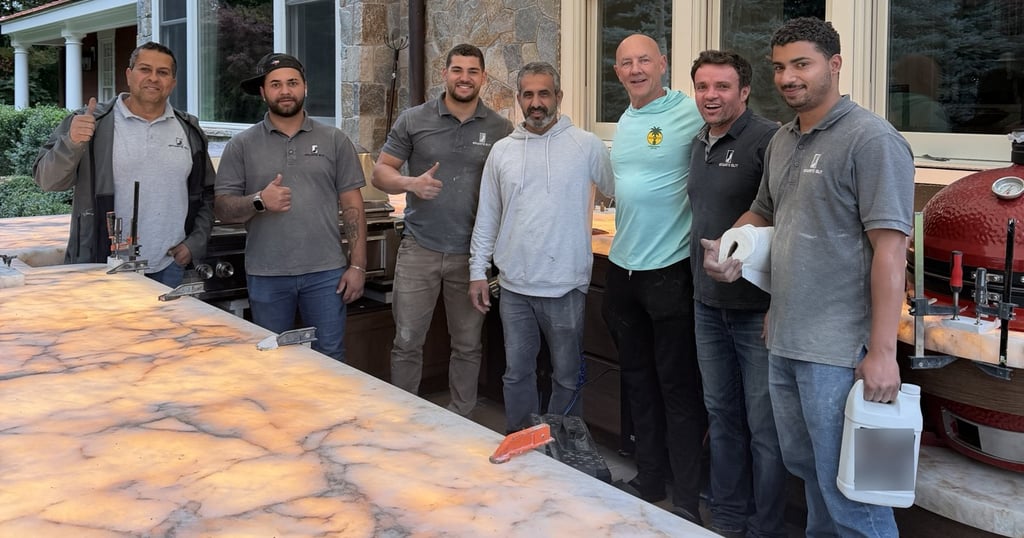
- If you want a statement piece: a quartzite like the backlit Cristallo below, in a leathered finish.
- If staying cooler matters: limestone.
- Possible, with trade-offs: soapstone, and some marbles such as River Blue and Brown Fantasy.
- Inside only: quartz.
Why Resin Is What Fails Outside
In our experience, the damage outdoors comes from the sun's UV rays breaking down resin. A stone with no resin in it is fine outside.
Resin shows up in two places. Quartz is held together by it, and some natural stone slabs get it at the factory.
So the first question I ask about any slab going outside is simple: does it carry resin? The answer decides the stone and the finish.
How to Spot a Resin-Treated Slab
Resin-treated slabs are most often exotics, and most often polished. The resin smooths out natural imperfections in the stone and helps seal the surface.
At the factory, the slab lies flat and the resin is applied on top. Once it hardens, the slab goes on to polishing or another finish, and because the resin went on from the top, the extra often runs over the edge. Look at the edge of the slab for a shiny line.
Why Granite Holds Up Outside
Dense granites such as Absolute Black, Steel Gray and Black Pearl have no resin to break down, so the finish is your choice. Many other granites are the same.
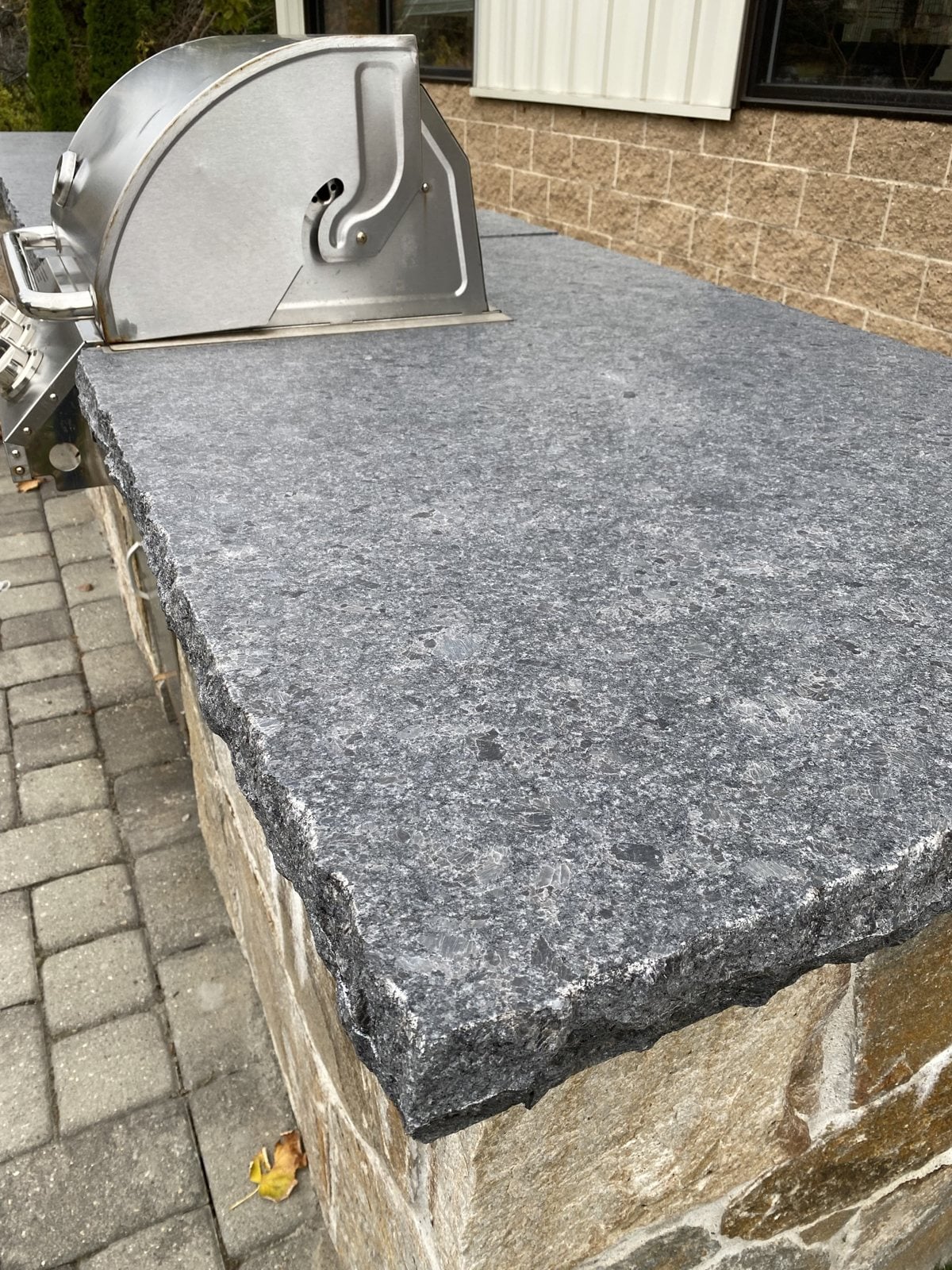
A Steel Gray granite countertop at our own facility in Southborough has been outside for over 10 years and is still in very good condition. It is leathered and sits beside a built-in grill.
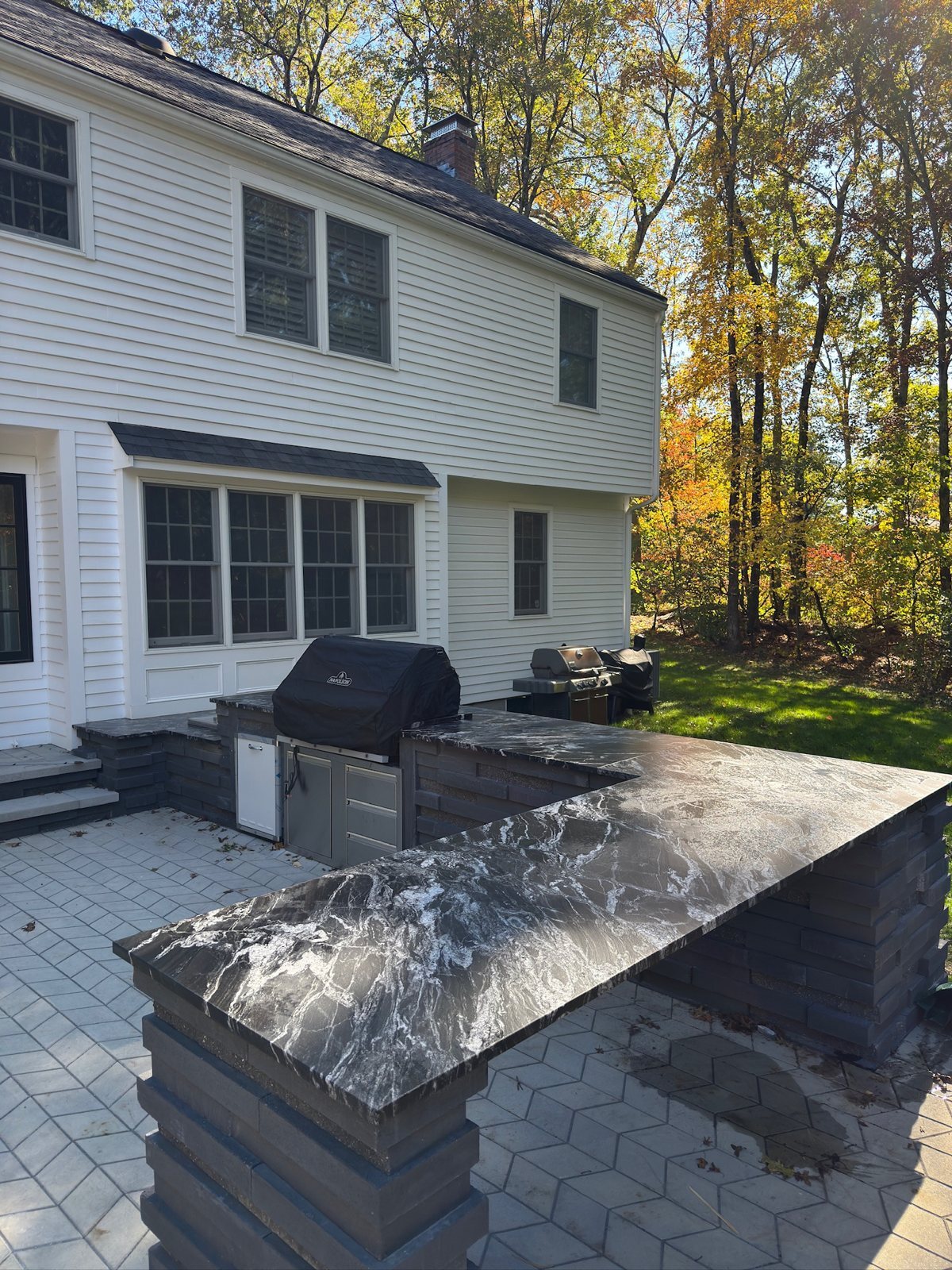
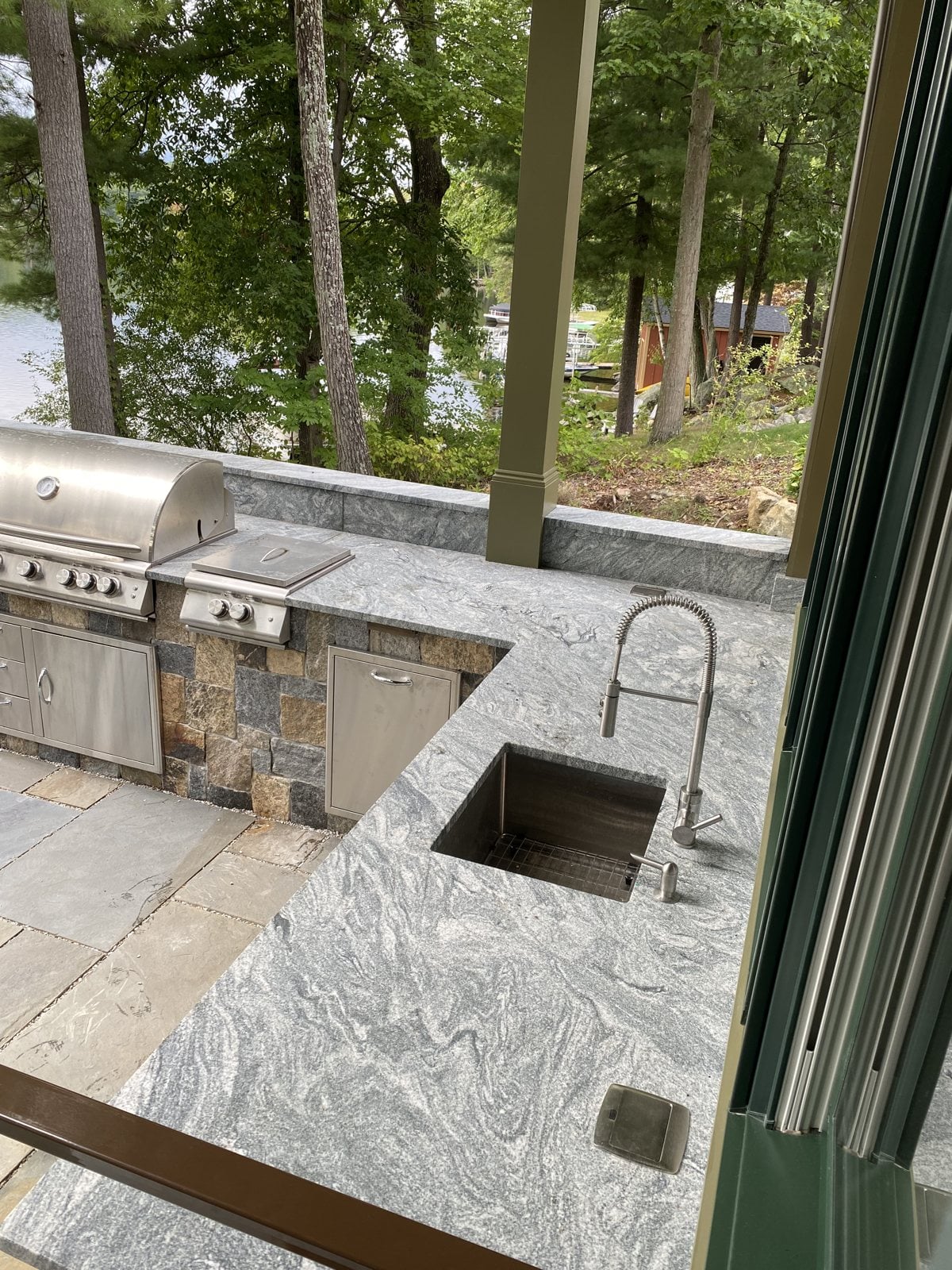
Some of our recent outdoor kitchens show the range: a black Silver Waves granite in Sudbury, a leathered Silver Cloud in Hopkinton and a honed Silver Waves in Lexington.
Which Finish to Choose Outside
Honed outside is no problem. Polished depends on the stone.
A leathered finish is the safer choice for a stone that carries resin. It shows the stone as it came out of the ground, so there is nothing for the sun to break down.
Does Black Granite Get Hot in the Sun?
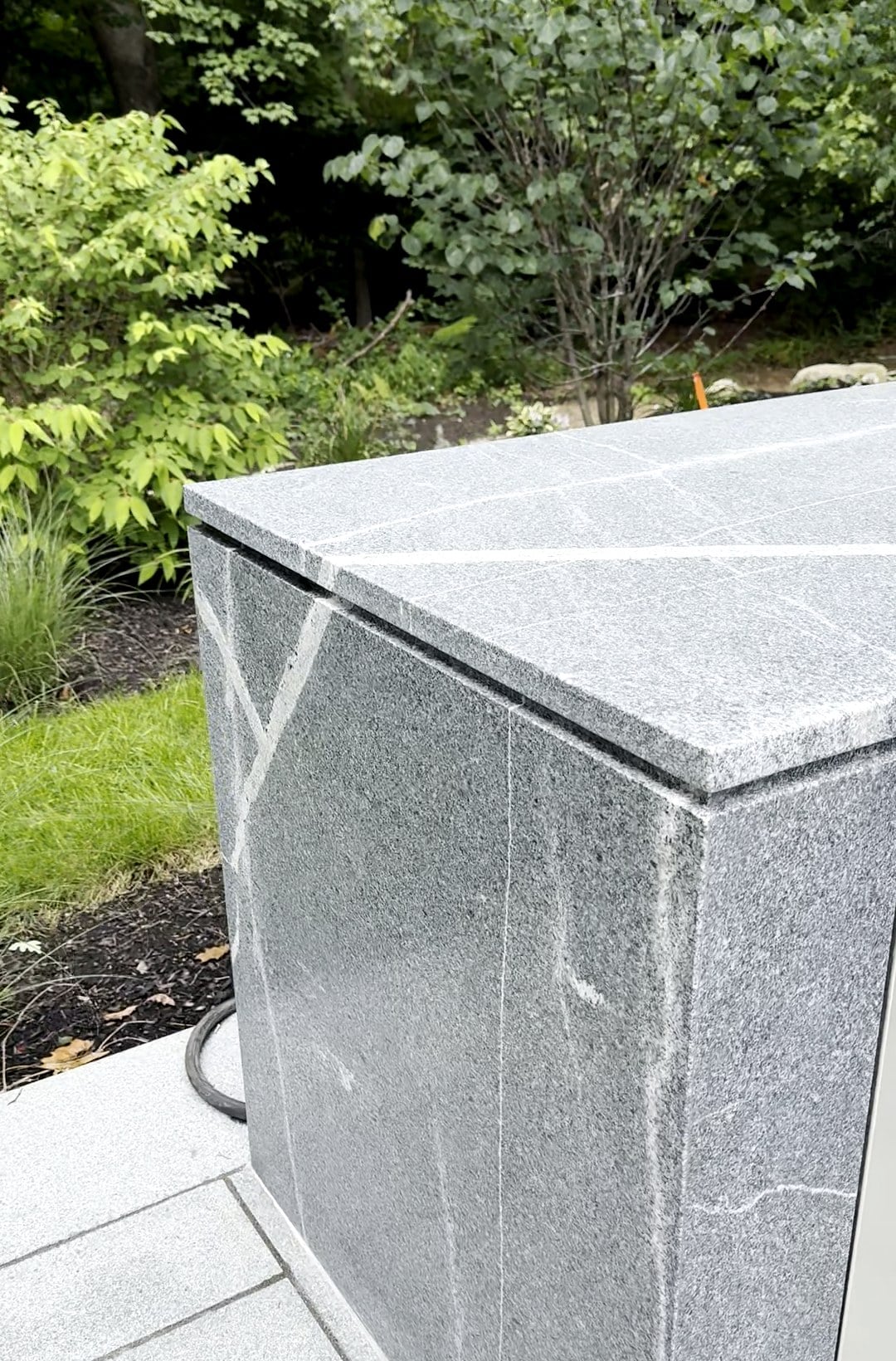
Yes. Black granite gets very hot in direct sun.
If your outdoor kitchen gets full afternoon sun, weigh that before you choose a dark color. Every natural stone varies slab to slab, so see the slab in person before you commit.
Quartzite and Porcelain Outside
Granite, quartzite and porcelain are the better options outside.
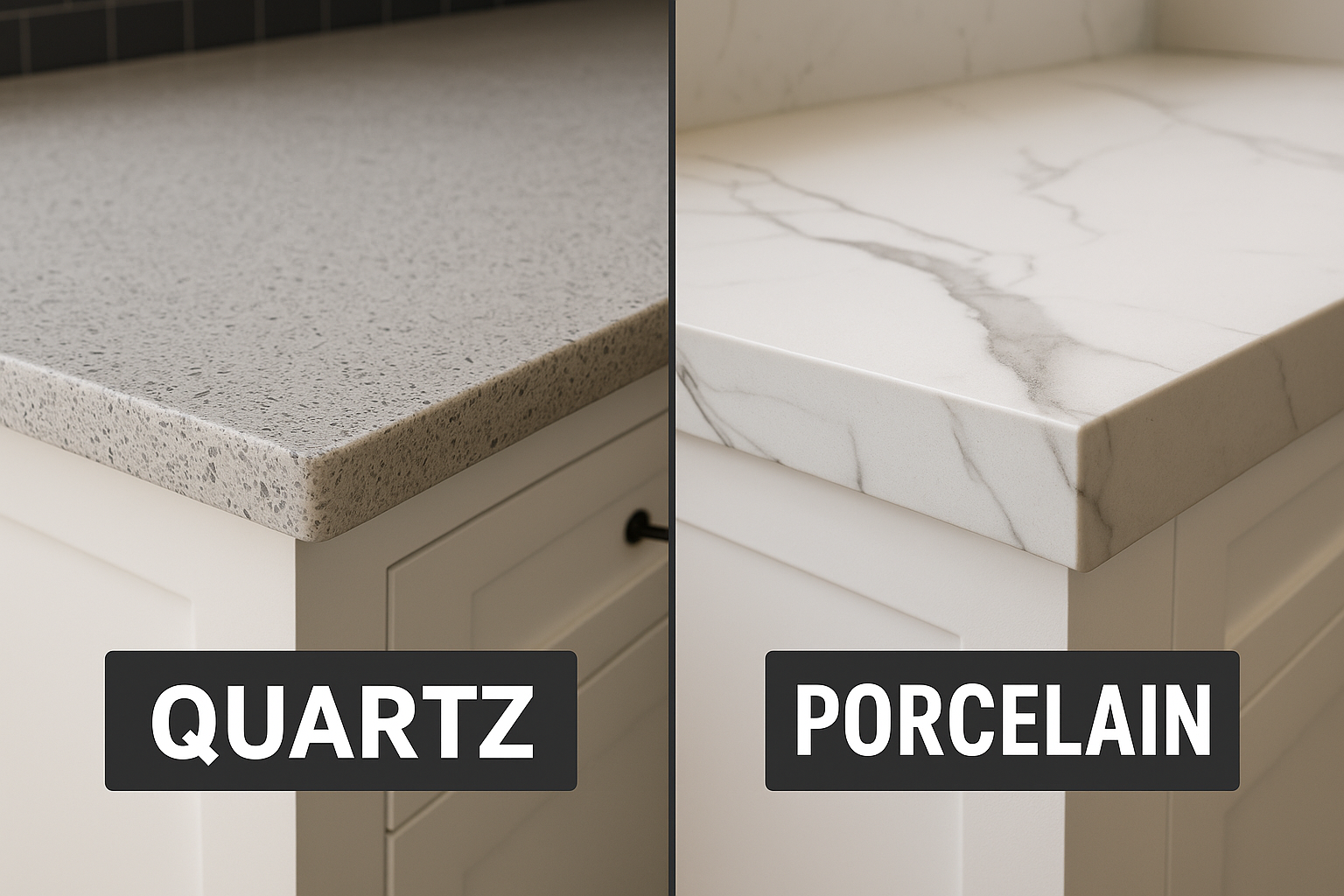
Porcelain's strong point is color. It is a manufactured product, so it comes in colors and patterns a quarry does not give you, like a clean, solid white. Many clients picture white quartz, and quartz stays inside, so porcelain is how we get that look outdoors.
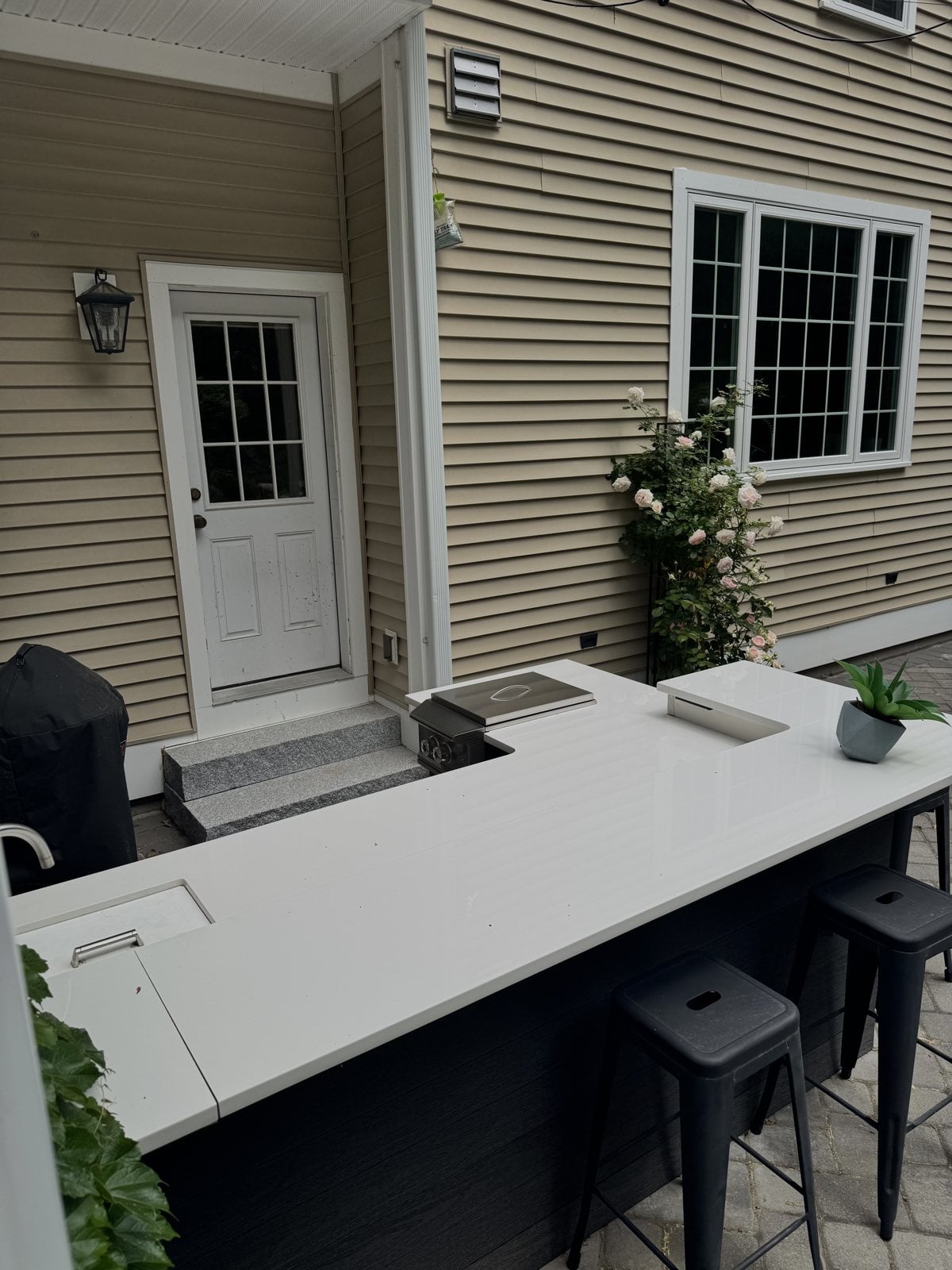
It is fired in a kiln at very high heat, with no resin in it, so the sun has nothing to break down. It resists stains, it does not etch, and it needs no sealing. We install polished porcelain outside, like the white bar top below.
With quartzite, it comes down to the slab. Some carry resin and some do not, so we look at each one.
A Recent Cristallo Quartzite Job
The job in the photo at the top is a backlit Cristallo quartzite outdoor kitchen. The client saw the stone, fell in love with it and asked, "Can I use it outside?"
My answer: yes, as long as it is not polished. The slabs were polished, with resin, and we could not find the stone in stock in a leathered finish.
We can change a finish in our own shop, but three slabs of over 1,000 pounds each on a tight schedule went to a finishing specialist, and our supplier helped by carrying them to and from the finisher. The finish was changed to leathered before we installed it.
Cristallo is a durable quartzite, in the same family as Taj Mahal.
Soapstone, Limestone and Marble Outside
There is no rule of thumb that fits every stone.
Soapstone: soapstone can go outside. It is not the most durable choice for it, so we tell the client everything up front, and we have not had a problem with it. It pairs well with bluestone, a sandstone that is very common in New England hardscape.
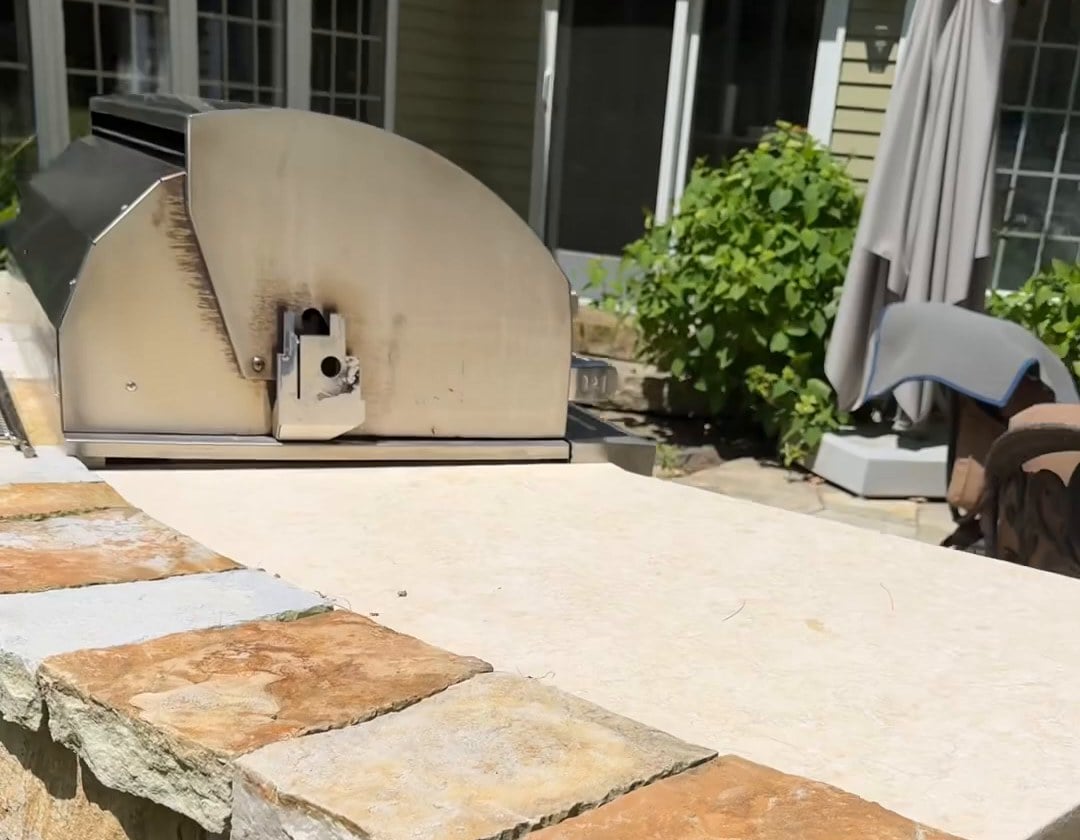
Limestone: we once had almost a whole bundle of Jerusalem Gold limestone left from a large pool job. It sat outside for more than ten years before we sold the last slab, and several became outdoor countertops for clients who were happy with them.
Limestone is known to stay cool in the sun, cooler than most other stones. It is softer than granite, and we say so. One of our Jerusalem Gold tops sits right beside a built-in grill in Weston.
Marble: acidic rain can etch marble, and it develops a patina. But not every marble is the same.
The Indian marbles we use, Brown Fantasy and its blue version River Blue, are harder than most marbles. We install River Blue outside on a regular basis, mostly on Cape Cod, and those clients are happy with it.
Why Quartz Stays Inside
Quartz is a big no outdoors. We recently removed a few quartz tops from outdoor kitchens.
Some of it was around a fire pit, and it cracked from the heat. Everywhere else, the sun breaks down the resin: in the first year or two the surface goes dull, and you can feel it coming apart under your hand.
Caring for an Outdoor Stone Countertop
The water test works outside and inside. Put a few drops on the stone: if they bead, you are fine, and if they soak in and darken the stone, it is time to reseal.
Every slab is different, so there is no calendar for it. Our granite sealer guide walks through the steps.
How Much Does an Outdoor Countertop Cost?
An outdoor top is priced like an indoor one, by the stone you choose and the square feet the job takes. A finish change on a stone that only comes polished adds to it, and rare stones like Cristallo run above the everyday range.
Everything else that goes into a quote, from sourcing to complexity, is on our pricing page.
My Recommendation
For most outdoor kitchens in MetroWest, I recommend granite. If your heart is set on something else, a quartzite, porcelain or one of the softer stones, it can work too, as long as we choose the slab and the finish for New England weather: sun, rain, snow and freeze-thaw.
Then come pick your slab in person. We will tell you what can go outside and what should stay in.
Frequently Asked Questions About Outdoor Kitchen Countertops
Q. What is the best countertop for an outdoor kitchen?
A. Granite. A dense granite has no resin for the sun to break down, so it handles New England weather in any finish.
Q. Can quartz be used outside?
A. No. The sun breaks down the resin that holds quartz together, and heat from a fire pit can crack it.
Q. Is quartzite good for an outdoor kitchen?
A. Yes, when the finish suits the slab. If a polished quartzite carries resin, we recommend a leathered finish outside.
Q. Can granite be used outside?
A. Yes. A Steel Gray granite top at our own shop in Southborough has been outside for over 10 years and is still in very good condition.
Q. Does black granite get hot in the sun?
A. Yes. Black granite gets very hot in direct sun, so a lighter color is worth a look if your counter gets full afternoon light.
Q. Does an outdoor stone countertop need sealing?
A. Most natural stone does, but there is no calendar for it. Put a few drops of water on the stone, and if they soak in and darken it, it is time to reseal.
Q. Can marble go outside?
A. Some can. Acidic rain can etch marble, but River Blue, a harder Indian marble, does well on our outdoor jobs.
Q. Can soapstone go outside?
A. Yes. It is softer than granite, and we have installed it outside without a problem.
Related Articles
- Black Granite Countertops: Pros, Cons, and the Truth About Maintenance
- What Is Quartzite? Complete Guide from a 30-Year Fabricator
- Is Marble Right for Your Kitchen? A MA Fabricator's Honest Answer
Visit Our Southborough Showroom
Still figuring out which stone is right for you? Come see us. Nothing beats standing in front of the actual slabs, comparing colors, patterns, and finishes in person. That's how you make the right decision.
Stop by our countertop store at 43 Turnpike Road (Route 9), Southborough, MA 01772 during business hours. We keep a large inventory in our heated warehouse, so there's always plenty to see.
Already done your homework and know what you want? Email us or give us a call.
Phone: 508-460-7900
Email: info@graniteguyinc.com