Marble Fireplace Surrounds: Everything You Need to Know
Written by Granite Guy Inc., Southborough, Massachusetts
Updated: March 6, 2026
Marble is one of the best materials you can put around a fireplace. It's naturally heat-resistant, non-combustible, low-maintenance in fireplace applications, and it's been used around hearths for centuries.
💎 The Quick Answer:
Marble handles fireplace heat without cracking or discoloring. Unlike kitchen countertops, where marble faces daily challenges from acidic foods, a fireplace surround lets marble do what it does best: look incredible without the wear and tear. No etching concerns, minimal upkeep, and code-compliant in most Massachusetts towns.
I say that as someone who's been fabricating and installing marble fireplaces for over 30 years across MetroWest and Greater Boston. This guide covers which marbles work best, polished vs honed, heat safety, installation challenges most people don't think about, and what to budget. For marble beyond the fireplace, see my marble countertops page.
🔥 Why Marble Fireplace Surrounds Are the Best Choice
When people ask me about marble for fireplaces, their first concern is almost always durability. They've heard marble is "delicate" or "high-maintenance" and wonder if it can handle the heat.
Here's the thing: marble's fussy reputation comes from kitchen countertops, where acidic foods cause etching on polished surfaces. A fireplace is a completely different environment.
✦ Heat Resistance
Marble formed under intense geological heat and pressure millions of years ago. The heat from your fireplace is nothing compared to what created the stone.
Marble handles fireplace temperatures beautifully without cracking, discoloring, or degrading. It's been used around fireplaces for centuries for exactly this reason.
✦ No Etching Concerns
The biggest worry people have about marble is etching from acidic substances. That's a kitchen problem, not a fireplace problem.
Your fireplace surround isn't coming into contact with lemon juice or tomato sauce. Without those constraints, you can enjoy polished marble in all its glossy glory without worrying about dull spots.
✦ Low Maintenance
A marble fireplace surround needs very little care. Occasional dusting and maybe a wipe with a damp cloth. If you already know how to clean marble countertops, you'll find fireplace surrounds even easier.
Seal it once when installed and rarely think about it again. This is marble at its most carefree.
✦ Building Code Compliance
Most towns in Massachusetts require fireproof materials around fireplaces. Marble is naturally non-combustible, making it code-compliant in most applications.
Building codes are typically handled by whoever is managing your project, whether that's your contractor, builder, or designer. Most towns require a minimum of 18 inches for hearth depth, but every town has different requirements.
✦ Marble vs Granite for Fireplaces
When comparing marble vs granite for fireplaces, marble wins on aesthetics. Granite is incredibly durable, but it lacks the classic veining that makes marble so striking around a hearth.
For a feature meant to draw the eye, marble delivers. That said, granite is an excellent choice too, especially for more contemporary or masculine designs. It comes down to the look you want.
🎨 Best Marble Types for Fireplace Surrounds
Not all marbles work the same around a fireplace. Here are the varieties I install most often and what makes each one work.
✦ Calacatta
For maximum drama. The bold veining and bright white background make a statement that commands attention.
When clients ask about Calacatta vs Carrara marble, I explain it this way: Carrara is elegant and understated, Calacatta is bold and showstopping. A Calacatta fireplace becomes the focal point of your entire home.
✦ Carrara
Classic and versatile. Carrara marble features soft gray veining on white that creates elegance without overwhelming the room.
Carrara comes from the famous quarries in Tuscany, Italy. While there are marble and granite quarries in the USA producing quality domestic stone, Italian Carrara remains the gold standard for fireplace surrounds. It complements almost any decor style.
✦ Statuario
Offers striking veining similar to Calacatta but with a different character. The veining tends to be more gray, creating sophisticated contrast.
It's a favorite of designers for high-end fireplace installations.
✦ Nero Marquina
Black marble with white veining for a dramatic, moody look. It creates contrast in lighter rooms and adds sophistication to modern interiors.
✦ Crema Marfil
Warm beige tones that complement wood floors and traditional furnishings. Popular in homes with warmer color palettes where white marble would feel too stark.
✦ Emperador
Rich brown marble that brings warmth and earthiness. It pairs beautifully with leather furniture and wood accents, creating a more masculine, library-like feel around a fireplace.
📋 Fireplace Design Options in Marble
Marble works with virtually any fireplace style. Here are the most popular configurations I install across MetroWest and Greater Boston. Our fireplace surrounds page covers materials, pricing and how the job runs.
✦ Full Surround
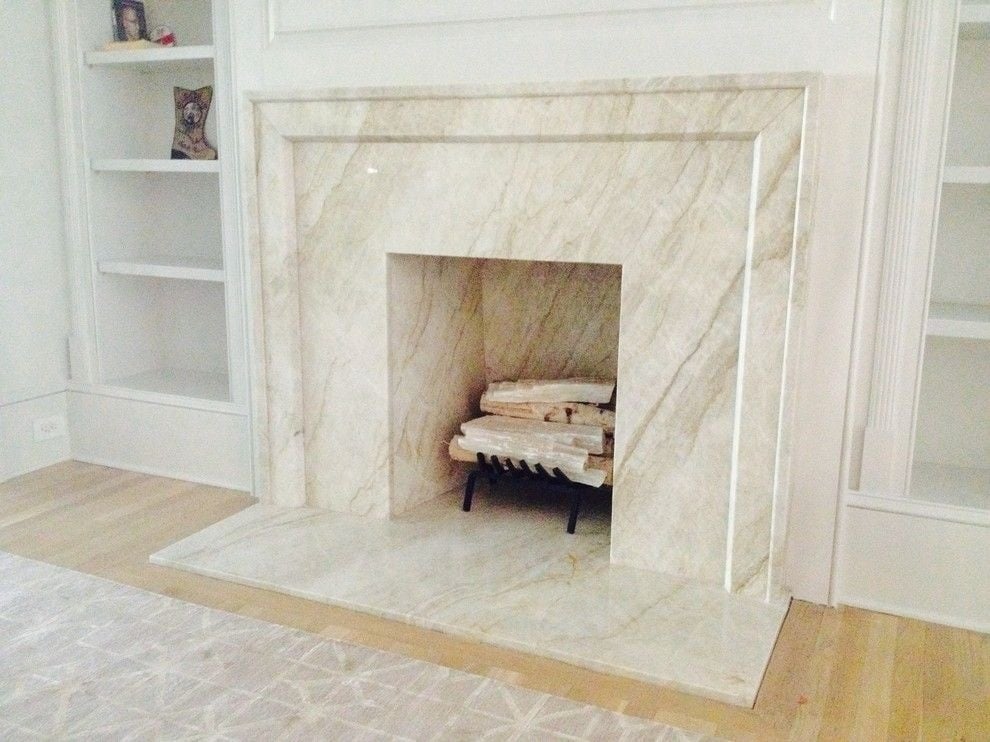
Marble wraps around the entire fireplace opening, including the sides (legs), top (header or mantel), and hearth. This creates a complete marble frame and is the most traditional approach.
Works beautifully in formal living rooms, especially in historic New England homes.
✦ Floor-to-Ceiling
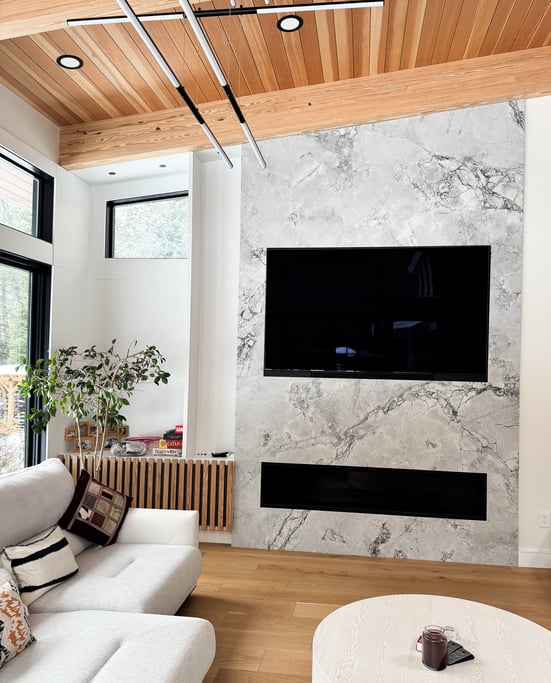
Marble extends from the floor all the way to the ceiling, creating a dramatic feature wall. This modern approach makes the fireplace the undeniable centerpiece of the room.
It works especially well with contemporary interiors and open floor plans. This is the most challenging installation due to the weight and size of the marble pieces, but we have the expertise and equipment to handle these massive installations safely.
✦ Surround with Wood Mantel
Marble covers the area immediately around the firebox while a wood mantel sits above. This combination balances the coolness of marble with the warmth of wood.
It's a popular choice in traditional New England homes where wood mantels are part of the architectural heritage.
✦ Modern Surround Only
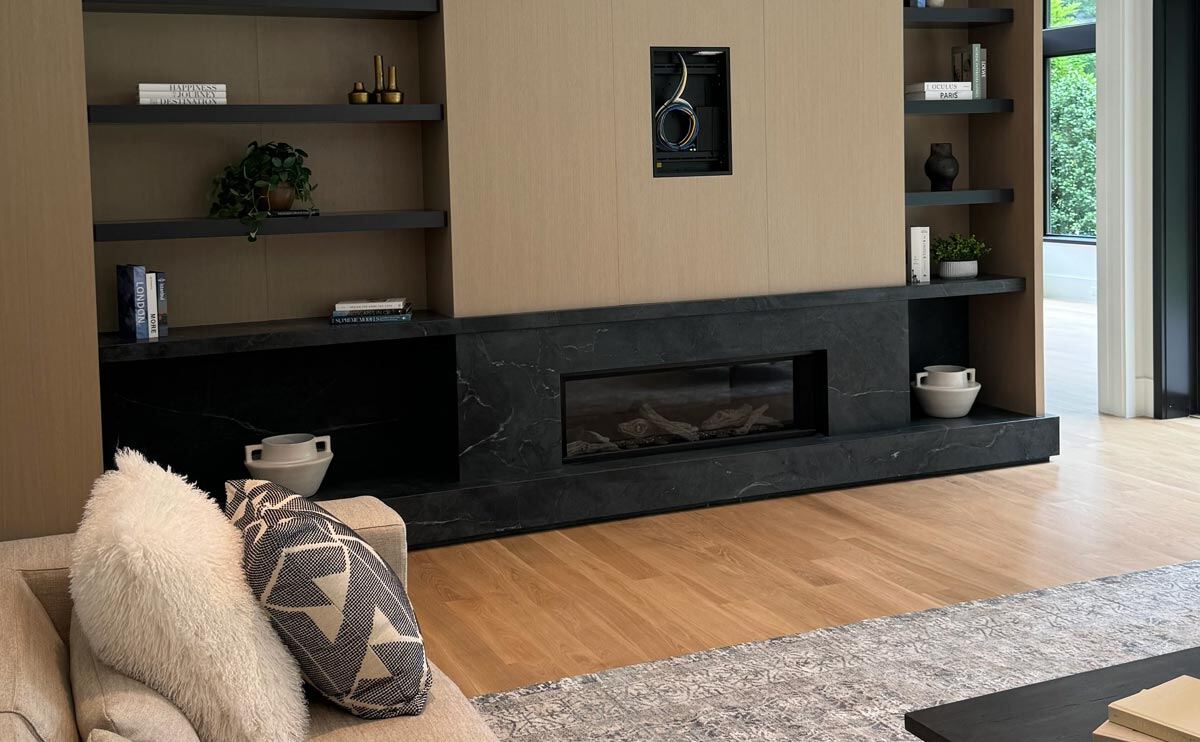
Just marble around the firebox without a wood mantel. This creates a cleaner, more contemporary look that's becoming increasingly popular.
✦ Hearth Only
A marble hearth extends in front of the fireplace at floor level. This can work alone with other surround materials or complement a full marble installation.
✦ Slab vs Tile
Large marble slabs create clean, uninterrupted veining. Tiles can add pattern and dimension and are often more budget-friendly. For the most dramatic look, slabs win every time.
✦ 3D Layered Effect
We're seeing more requests for dimensional installations where we layer marble pieces to create depth and visual interest. This technique builds varied shapes that give a three-dimensional visual effect, adding texture and shadow lines.
It's a sophisticated approach that creates the appearance of thick, sculpted stone through careful layering and design.
✨ Polished vs Honed Marble for Fireplaces
Unlike kitchens where I almost always recommend honed marble, fireplaces give you complete freedom to choose either finish. Since you're not dealing with acidic foods or heavy daily use, both finishes will look beautiful for decades.
✦ Polished
High gloss and reflective. Polished marble catches firelight beautifully, creating dancing reflections when the fire is lit. It has a more formal appearance and makes colors and veining pop with maximum contrast.
This is the traditional choice for elegant fireplace surrounds.
✦ Honed
Matte and soft. Honed marble absorbs light rather than reflecting it, creating a quieter presence. It works well in casual living spaces and modern interiors.
Some people prefer how it looks in photographs without glare.
✦ How to Choose
Consider your room's lighting and style. In a formal living room with traditional furnishings, polished marble enhances the elegance. In a family room with casual furniture, honed might feel more appropriate.
📖 Bookmatching for Dramatic Effect
Bookmatching is a technique where consecutive slabs from the same block are opened like a book, creating a mirror-image pattern. For fireplace surrounds, this creates symmetry that draws the eye and emphasizes the natural artistry of the stone.
On a floor-to-ceiling installation, bookmatched slabs create a centerpiece that makes people stop and admire. The veining mirrors itself perfectly, framing the fireplace with natural symmetry.
✦ Selecting the Right Slabs
Bookmatching requires careful slab selection. You need consecutive slabs from the same block, and the veining needs to create the pattern you want when mirrored.
This is where visiting the stone yard matters. Using our Slabsmith inventory software, we can show you exactly how the bookmatched slabs will look before we cut them. It's not something you can do from photos alone.
🪨 Other Safe Materials for Fireplace Surrounds
While marble is my top choice for elegance, several other materials are also safe and code-compliant for fireplace applications.
Granite is extremely durable and heat-resistant. It works beautifully for fireplaces and offers different aesthetic options from marble.
Quartzite gives you marble-like veining with granite-level durability. It's natural stone that's safe for fireplaces and offers unique patterns and colors.
Porcelain is becoming marble's biggest competitor for fireplaces, especially floor-to-ceiling installations. At only half an inch thick, it's much lighter and comes at a lower price point.
Soapstone is naturally the most heat-resistant material available. It's been used in wood stoves for centuries and develops a beautiful patina over time.
⚠️ Warning: Never use engineered quartz around fireplaces.
Unlike natural stone or porcelain, quartz countertops contain resins that can catch fire when exposed to high heat. This is a serious safety hazard. Always verify with your fabricator that you're using natural stone or porcelain for fireplace applications.
🔧 Installation Considerations
Even though fireplace projects may seem smaller in scope than kitchens, they can present unique challenges, especially in existing homes.
✦ Existing vs New Construction
Installing marble on an existing fireplace is straightforward if the structure is sound. We template the space, fabricate the marble pieces, and install them over the existing surface.
New construction gives more flexibility in design but requires coordination with your contractor.
✦ Structural Support
Marble is heavy, especially for floor-to-ceiling installations. The wall needs adequate support to hold the weight. We assess this during the consultation and work with your contractor if reinforcement is needed.
✦ Gas vs Wood Burning
Both work beautifully with marble surrounds. Gas fireplaces produce less soot and smoke, keeping the marble cleaner over time. Wood-burning fireplaces may require occasional cleaning of any soot deposits, but this is easy to do.
✦ Watch Out for Floor Flush Issues
Many homeowners want the marble hearth to sit flush with the floor, but existing tile or flooring is often thinner than marble. We can mill down some materials to achieve the proper thickness, but this isn't possible with all stone types.
Simply removing the old material may not provide enough depth, leaving the new marble sitting above the floor level. The alternative, breaking up concrete underneath, can turn a modest project into a major renovation.
In older Massachusetts homes, floors often settle over time while the fireplace area (being next to structural walls) remains more stable. This means the existing floor may not be perfectly level, forcing us to choose between making the hearth level or following the plane of the existing flooring.
✦ Woodwork and Trim
Most fireplace installations involve some woodwork around the surround: molding, trim, or adjustments due to different material thicknesses. Woodworking isn't in our scope of work. In the trades, it's best when each professional handles their specialty.
We mention this upfront so homeowners can coordinate with the appropriate trades. These details may seem small, but addressing them during the initial consultation helps avoid surprises later.
📍 What We're Installing in Massachusetts
Marble fireplace surrounds are extremely popular in historic homes throughout MetroWest. Many of these homes originally had marble fireplaces, and homeowners want to restore or replicate that historic character.
We're also seeing strong demand for floor-to-ceiling porcelain installations in newer homes and major renovations. As things go more modern and transitional, these contemporary fireplace designs are getting really popular. The clean, dramatic look fits open floor plans where the fireplace wall becomes a design feature.
✦ Current Project: Century-Old Weston Home
I'm currently working on a century-old home in Weston with 13 fireplaces total: 5 on the first floor, 4 on the second, and 4 on the third.
When this house was built, there was no modern heating system, so every room needed its own fireplace for warmth. We used absolute black honed granite for the first-floor fireplaces and honed Carrara marble for the second and third floors.
It showcases how different materials can work together in a cohesive design. The granite grounds the formal first-floor rooms while the marble brings lighter elegance to the upper floors.
💰 Why Stone Pricing Isn't One-Size-Fits-All
How much is it per square foot? That's the most asked question. Unfortunately, it's not that simple.
Let me explain why. If you choose anything from our in-house inventory, it's a set price per square foot no matter the size of the job. If we need to special order material for your job, the pricing changes because in this industry, you can only order whole slabs at a time.
💎 Pricing Range: Total installed pricing typically ranges from $55-150 per square foot. This covers about 95% of available options. Fireplace projects vary even more widely because of the range of design complexity involved.
Exceptions: Rare blue colors fall outside this range. Marbles: Calacatta and Statuario families command higher prices due to limited quarry supply and high demand.
Why pricing varies:
- Sourcing: We work with various suppliers to find the best value for your project. Stock material from our yard offers the best pricing, while special orders from specific suppliers may cost more.
- Complexity: Floor-to-ceiling installations, bookmatching, and structural modifications require more fabrication time.
- Waste: Every project is like a puzzle. How efficiently we can fit your pieces on the slab affects the final cost. Intricate shapes mean less efficient cuts.
✦ Money-Saving Tips
Consider remnants. These can be a goldmine for fireplace projects. You might discover rare or premium materials left over from recent jobs, available at a fraction of their original cost.
Since fireplaces don't require the large continuous areas that kitchens do, remnants work perfectly. Fireplaces can also be a good project for handy homeowners who want to tackle the installation themselves, or experienced tile installers can handle many fireplace surrounds.
That's why visiting our showroom is the best way to decide. You'll see our materials in person in our indoor heated warehouse, compare finishes, and get expert guidance to make the right choice.
✅ Is a Marble Fireplace Right for You?
Choose marble if:
- You want the classic, elegant look that only natural veining provides
- Your fireplace is a focal point you want people to notice
- You like the idea of a material that's been used in fireplaces for centuries
- You want low maintenance (no etching worries like in kitchens)
- You're in a historic New England home and want to match original materials
Consider alternatives if:
- You have a tight budget (porcelain gives a similar look for less)
- You want maximum heat resistance above all else (soapstone wins there)
- You prefer a more rustic or contemporary look (granite or quartzite may fit better)
- You want the lightest possible material for a large feature wall (porcelain is thinner and lighter)
💡 My Recommendation
Marble is hard to beat for fireplaces. It's one of those situations where the material gets to do exactly what it was made for, without the compromises you deal with in kitchens.
If you're investing in a fireplace surround for your Massachusetts home, marble gives you something that looks better every year and lasts generations. I've installed thousands of them and I've never had a homeowner regret the choice.
For wood-burning fireplaces specifically, soapstone is also worth a serious look. For budget-conscious projects, porcelain is the best value going right now.
❓ Frequently Asked Questions
Q. Is marble safe for fireplaces?
A. Yes. Marble formed under intense geological heat and pressure millions of years ago. It handles fireplace temperatures without cracking, discoloring, or degrading.
Q. Does marble crack from fireplace heat?
A. No. The heat from your fireplace is nothing compared to the geological forces that created marble. It won't crack from normal use.
Q. Can I use quartz around my fireplace?
A. No. Never use engineered quartz around fireplaces. Quartz contains resins that can catch fire when exposed to high heat. Always use natural stone or porcelain instead.
Q. What's the most popular marble for fireplaces?
A. Carrara is the most popular for its classic look. Calacatta offers more dramatic veining for a showstopping focal point.
Q. Should I choose polished or honed marble for my fireplace?
A. Either works beautifully. Polished catches firelight and looks more formal. Honed has a matte, contemporary feel.
Q. How do I clean a marble fireplace surround?
A. Occasional dusting and a wipe with a damp cloth is all you need. Seal it once when installed and rarely think about it again.
Q. Can I install a marble fireplace myself?
A. Fireplaces can be a good DIY project for handy homeowners. Be aware of potential challenges with floor flush issues and woodwork that may require additional trades.
Q. What other materials are safe for fireplaces?
A. Granite, quartzite, soapstone, and porcelain are all heat-resistant and code-compliant. Porcelain is becoming especially popular for modern floor-to-ceiling installations.
Q. How much does a marble fireplace cost?
A. Costs vary widely based on design complexity, marble variety, size, and installation requirements. Contact us for a quote. Ask about our remnant inventory for premium materials at reduced pricing.
Q. What's the best material for a wood-burning fireplace?
A. Soapstone is exceptional for wood-burning fireplaces. It's been used in wood stoves for centuries. Granite and marble are also excellent choices.
🏠 Visit Our Southborough Showroom
Still figuring out which stone is right for your fireplace? Come see us.
Nothing beats standing in front of the actual slabs, comparing colors, patterns, and finishes in person. That's how you make the right decision.
Stop by our countertop store at 43 Turnpike Road (Route 9), Southborough, MA 01772 during business hours. We keep a large inventory in our heated warehouse, so there's always plenty to see.
Already done your homework and know what you want? Email us or give us a call.
📞 508-460-7900
📧 info@graniteguyinc.com