How to Clean Marble Countertops: A Fabricator's Guide
Written by Granite Guy Inc., Southborough, Massachusetts
Updated: January 2026
Quick answer: Clean marble countertops with mild dish soap (like Dawn) and warm water. Wipe with a soft cloth, then dry immediately. Never use vinegar, lemon juice, Windex, or Clorox wipes. Acids etch marble permanently.
But here's what most cleaning guides won't tell you...
I've been fabricating and installing marble countertops across Greater Boston and MetroWest since 1995. In that time, I've installed over 10,000 marble kitchens from Wellesley to Worcester, and I've watched what happens to them over the years.
Some customers call me in a panic two weeks after installation because they got lemon juice on their counter. Others have had marble for twenty years and never given it a second thought. The difference isn't the marble. It's understanding what you're actually dealing with.
Wondering if marble is worth the care? Read about the timeless appeal of marble.
Most articles about cleaning marble countertops give you the same advice: use mild soap and water, avoid acids, seal regularly. That's not wrong, but it doesn't help you understand why. And if you don't understand why, you'll either worry too much about normal wear or not enough about actual problems.
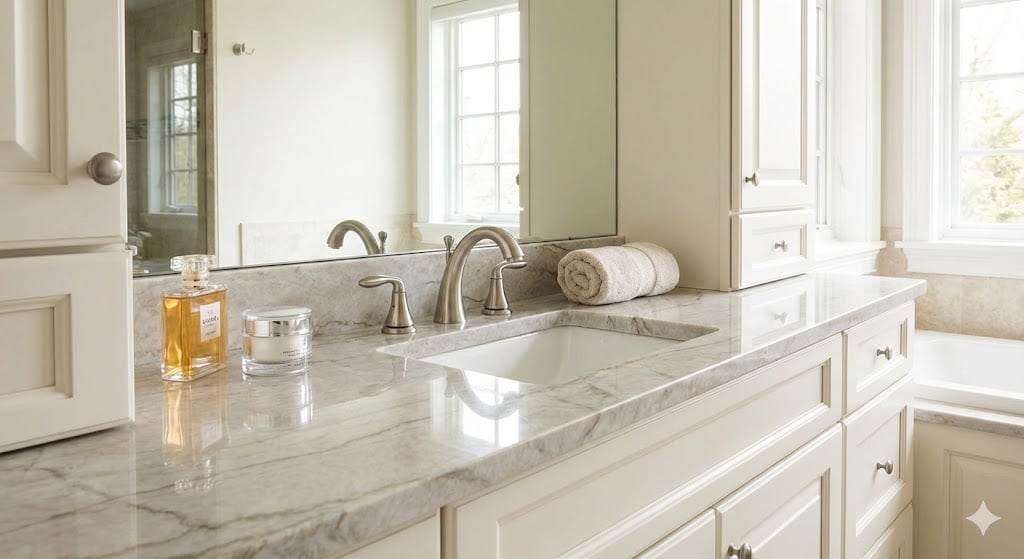
"Whether you have marble kitchen countertops or marble bathroom countertops, the cleaning process is the same."
🧴 Can You Use Dawn on Marble? (Yes - Here's Why)
Dawn dish soap is my go-to recommendation for cleaning marble countertops. I tell probably 90% of my Massachusetts customers to skip the fancy stone cleaners and just use Dawn.
Why Dawn works:
Dawn is pH-neutral, meaning it won't react with the calcium carbonate in marble. It's gentle enough that it won't degrade your sealer over time. And it cuts through kitchen grease without leaving residue.
How to use it:
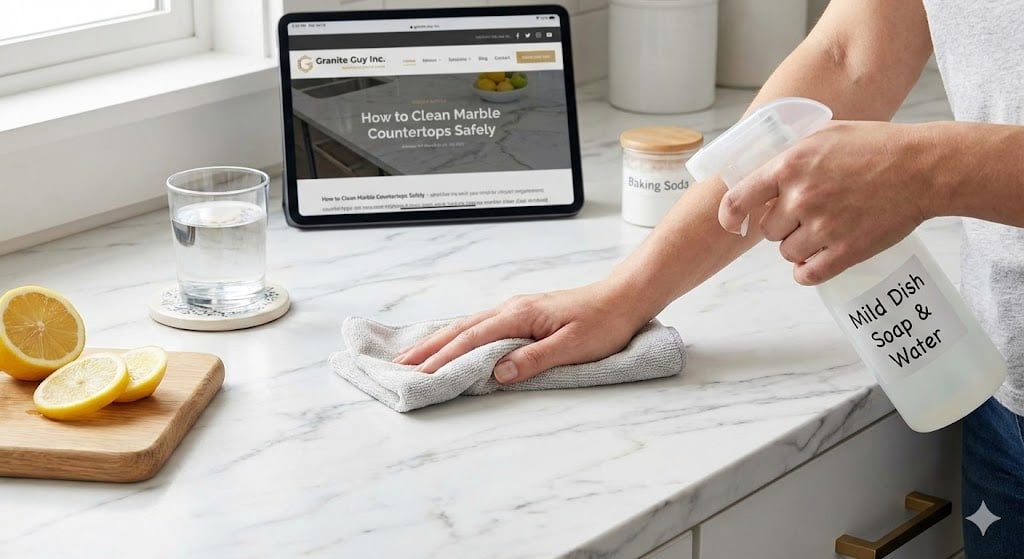
Add a few drops of Dawn to a spray bottle filled with warm water. That's it. Spray, wipe with a soft cloth, and dry. You don't need anything fancier for daily cleaning.
What about other dish soaps?
Most mild dish soaps work fine. The key is avoiding anything with added citrus (lemon-scented cleaners often contain citric acid) or antibacterial additives that might be too harsh. Plain Dawn Original is your safest bet.
I've used Dawn on my own marble for years. It's what I recommend to every customer who visits our Southborough showroom.
🏛️ Cleaning Carrara vs. Calacatta: Any Difference?
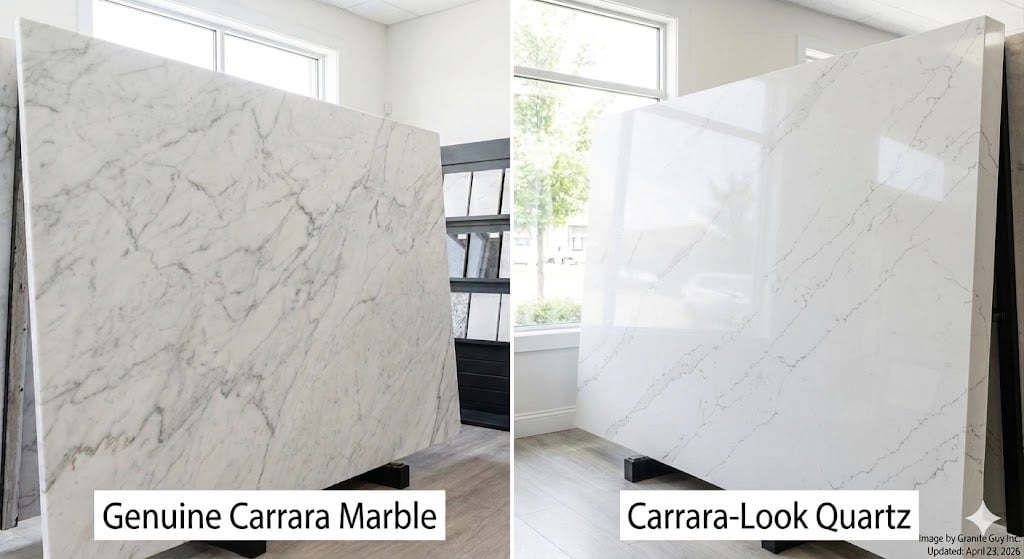
Both Carrara and Calacatta are Italian marbles, and they clean exactly the same way. The difference is purely aesthetic, not functional.
Carrara marble has a grayish-white background with soft, feathery gray veining. It's the most popular marble I install in MetroWest kitchens. Minor etching tends to blend in better because the background isn't pure white.
Calacatta marble has a brighter white background with bold, dramatic gold or gray veining. It's stunning in high-end Boston and Wellesley homes, but more unforgiving. Etch marks show up more clearly against that bright white surface.
Cleaning both:
Use the same method for either: mild dish soap and warm water, wipe with a soft cloth, dry immediately. The soap doesn't care what color your veins are.
One practical difference:
If you have Calacatta with that bright white background, you might notice watermarks and etch marks more easily. This isn't because Calacatta is more delicate. It's just harder to hide imperfections on a pure white canvas. Consider a honed finish if you want something more forgiving.
A note for Massachusetts homeowners:
Our hard water in many MetroWest towns can leave mineral deposits on marble. If you're in an area with well water or hard municipal water, drying your counters after cleaning is especially important. Those white spots you see? Often just mineral buildup, not damage.
🪨 Cleaning Honed vs. Polished Marble
The cleaning method is identical for both finishes. The difference is in how they show wear and what "clean" looks like.
Polished marble has a glossy, reflective surface. It shows fingerprints, water spots, and etch marks more readily because anything that disrupts the shine becomes visible. After cleaning, you'll want to buff it dry with a soft cloth to restore that mirror-like finish.
Honed marble has a matte, velvety finish. It hides imperfections much better than polished. Water spots blend in. Minor etching is barely noticeable. After cleaning, just dry it. You're not chasing a shine.
Which is easier to maintain?
Honed marble, hands down. I recommend it to about 90% of my kitchen customers across Greater Boston for exactly this reason. You start with a matte finish, so you're not constantly fighting to maintain a polish that acids will inevitably dull.
Why this matters in Massachusetts:
Between our hard water and the reality of busy family kitchens, honed marble just makes sense for most homeowners. I've installed honed Carrara in Natick, Framingham, and Hopkinton homes where families actually cook. Ten years later, those counters still look beautiful because the finish hides the normal wear of daily life.
Cleaning tips by finish:
For polished marble, dry thoroughly and buff with a microfiber cloth to restore shine. Consider a marble polishing powder occasionally to maintain luster.
For honed marble, just dry it. That's really it. The matte finish is your friend.
🚫 Products That Will Ruin Your Marble (The Complete List)
This is where people get into trouble. Some of these seem harmless. Some are even marketed as "natural cleaners." All of them will damage your marble.
Acids (cause etching on contact):
- Vinegar (including diluted)
- Lemon juice
- Orange juice
- Citrus-based cleaners
- Tomato-based products
- Wine (red and white)
Household cleaners to avoid:
- Windex and glass cleaners (ammonia strips sealer)
- Clorox wipes (contain bleach AND citric acid)
- Lysol (most formulas are acidic)
- The Pink Stuff (abrasive AND acidic)
- Bar Keepers Friend original (contains oxalic acid)
- Soft Scrub (abrasive)
- Any "all-purpose" cleaner
- Anything that "cuts grease" (usually acidic)
Abrasives (cause scratching):
- Steel wool
- Scotch-Brite pads
- Magic Erasers (melamine is abrasive)
- Scouring powders
- Rough sponges
Why these matter:
Acids don't just stain marble. They cause a chemical reaction that physically changes the stone's surface. This is called etching. It happens in seconds. And sealing won't prevent it because etching is a surface reaction, not penetration.
Abrasives scratch the relatively soft marble surface. Once scratched, those marks are permanent unless you refinish the stone.
What's actually safe:
Mild dish soap (like Dawn), warm water, and a soft cloth. That's it. You don't need specialty products for daily cleaning.
❓ Frequently Asked Questions About Cleaning Marble
Q. Can you use Dawn dish soap on marble countertops?
A. Yes. Dawn is pH-neutral and won't damage marble or degrade your sealer. A few drops in warm water is all you need for daily cleaning.
Q. Can you use Clorox wipes on marble?
A. Avoid regular use. Clorox wipes contain both bleach and citric acid. An occasional wipe won't destroy your counters, but daily use will degrade your sealer.
Q. Can you use The Pink Stuff on marble?
A. No. The Pink Stuff is mildly abrasive and slightly acidic. It can scratch marble's soft surface and cause etching.
Q. Can you use Bar Keepers Friend on marble?
A. The original formula contains oxalic acid and will etch marble. Only use for stubborn stains, test in a hidden spot first.
Q. Can you use Windex on marble?
A. Occasional use is fine, but regular use will strip your sealer over time. Stick with soap and water.
Q. Can you use vinegar on marble?
A. Never. Vinegar is acidic and will etch marble on contact within seconds.
Q. Does marble stain easily?
A. With proper sealing, you have plenty of time to wipe up spills. Most "stains" are actually etch marks, which are different.
Q. Is marble hard to maintain?
A. More than quartz or granite, but less than people fear. Daily cleaning is just soap and water.
Q. How do you disinfect marble countertops?
A. Use 70% isopropyl alcohol. Spray, let sit for a minute, wipe clean. Avoid bleach-based disinfectants.
Q. Is baking soda safe for marble?
A. Yes. Baking soda is alkaline, not acidic. It's useful for stain removal when mixed with water.
Q. How often should I seal marble countertops?
A. Every 6-12 months depending on use. Do the water test: if water soaks in instead of beading up, it's time to reseal.
Q. What removes water stains from marble?
A. Most "water stains" are mineral deposits from hard water. Buff with a dry microfiber cloth, or use a marble polish for stubborn spots.
🏠 Visit Our Southborough Showroom
If you're considering marble for your kitchen or bathroom, or if you have questions about caring for existing marble countertops, stop by and see us. We've been fabricating and installing marble across Greater Boston and MetroWest since 1995.
📍 43 Turnpike Road (Route 9), Southborough, MA 01772
📞 508-460-7900
✉️ info@graniteguyinc.com
Learn more about our process or browse marble options at our countertop store.