
Written by Granite Guy Inc., Southborough, Massachusetts
Updated: October 4, 2026
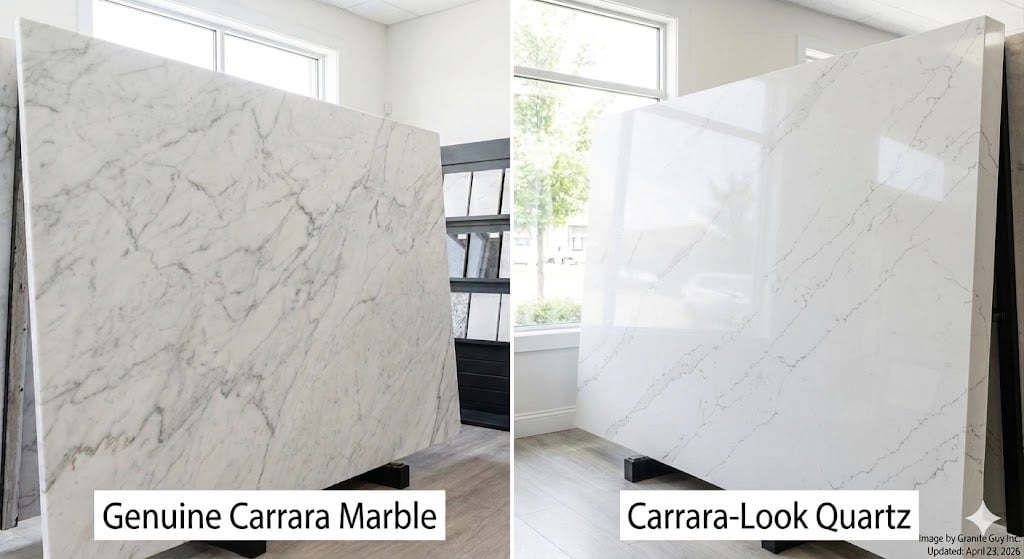
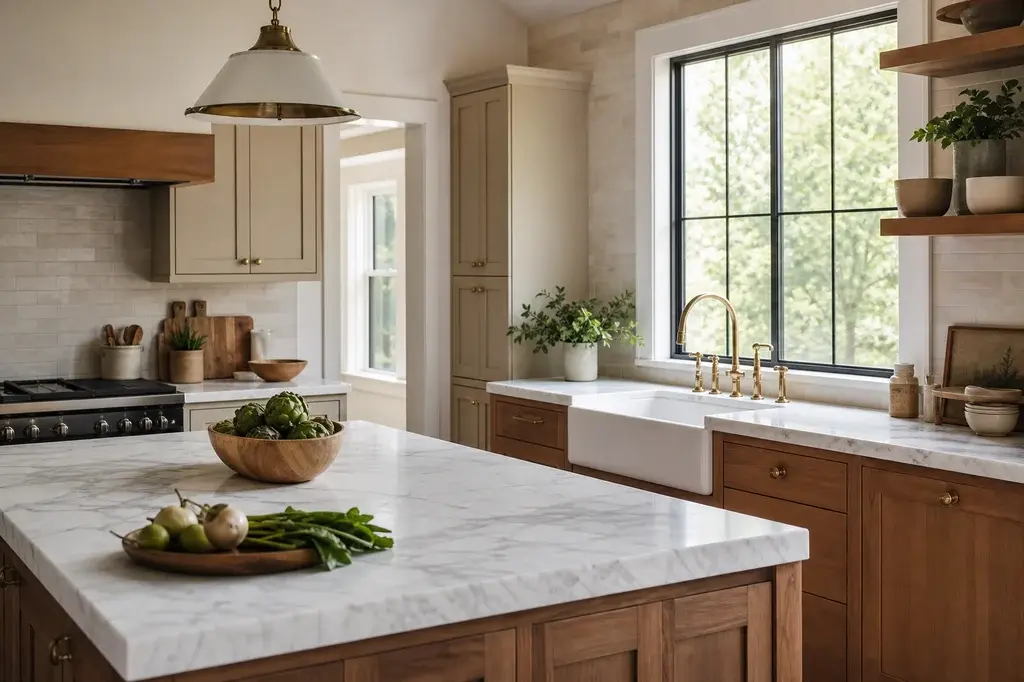
Is marble good for kitchen countertops? Yes, for the household that knows what it is getting, and no for the one that wants a counter to stay flawless. I have worked with marble for over three decades, and the clients who choose it with their eyes open are the ones who come back for more.
The quick answer: Marble has a look of its own, one that nothing else can replicate. The trade-off is that it is softer than granite or quartz and acid can etch it, so it suits a household that will look after it, and can live with the marks if they come. If durability is a must-have, pick something else.
After 10,000+ projects completed across MetroWest and Greater Boston, here is what I tell clients at the counter, and the stories behind it. The slabs I'm talking about are the ones on our marble countertops page.
Is Marble Good for Kitchen Countertops? It Depends on You
Marble's reputation is worse than the stone deserves. It can etch, and it is softer than granite, but it is not the delicate thing it gets made out to be. It is still stone.
The warning every homeowner has heard, never put marble in a kitchen, is right for some households and wrong for a lot of others.
What decides it is how the counter gets looked after. Cared for, marble can stay close to the day it went in; left alone, it can take on a patina and a personality of its own, and some owners want exactly that.
On paper there are tougher options, and I sell all of them. The top kitchen designs still call for the rare Italian marbles, and the clients who pick them know why.
Where My Marble Clients Came From
More than 15 years ago I started working with builders and clients on projects designed by Patrick Ahearn, a well-known New England architect. White Carrara is the signature stone on those projects, and those clients would not pick anything else.
That changed how I sell marble. I set the expectations before the sale, so there are no surprises later, and I started selling more marble, not less.
Clients who choose marble often come back for marble again, after selling a house or remodeling another kitchen. I have not had complaints from my marble clients, and our Google reviews are public.
Etching and Staining Are Two Different Things
Etching is a chemical reaction, not a stain. Marble is calcium carbonate, which is alkaline, the opposite of an acid. When the two touch they react, and the reaction leaves a dull spot, whether the counter is sealed or not.
Staining is absorption. Like any natural stone, marble has pores, so what you spill can soak in and color it: wine, grape juice, anything with color in it. A sealer keeps spills from soaking in, and it does nothing for etching.
Warning: Lemons, vinegar, wine and tomato sauce etch marble. So do the wrong cleaners, and so does hard water from the town supply or a well. Keep acid off the counter and wipe it up when it lands.
Pro tip: In MetroWest towns with hard water or well water, you may see white spots that look like etching but are mineral deposits. Soap, water and a green kitchen scrub pad usually take them off a honed counter; on polished, use a white non-scratch pad. Skip the abrasive powder cleaners, which can leave light scratches or dull marks.
Sealing has no schedule. Drop water on the counter: if it beads, you are sealed, and if it soaks in and darkens the stone, it is time. Our marble care guide covers cleaners, sealing and what to keep away from the stone.
Why Honed Is the Kitchen Finish
The only trouble I have had with my regular marble clients is with polished. An etch is most visible on a shiny surface, so every water ring and lemon squeeze shows.
Honed marble can etch too, but a matte surface hides it. Honed means no shine, and most of the marble kitchens I install in MetroWest are honed for exactly this reason. Our honed vs polished marble guide goes deeper on the two finishes.
Can Marble Take Heat?
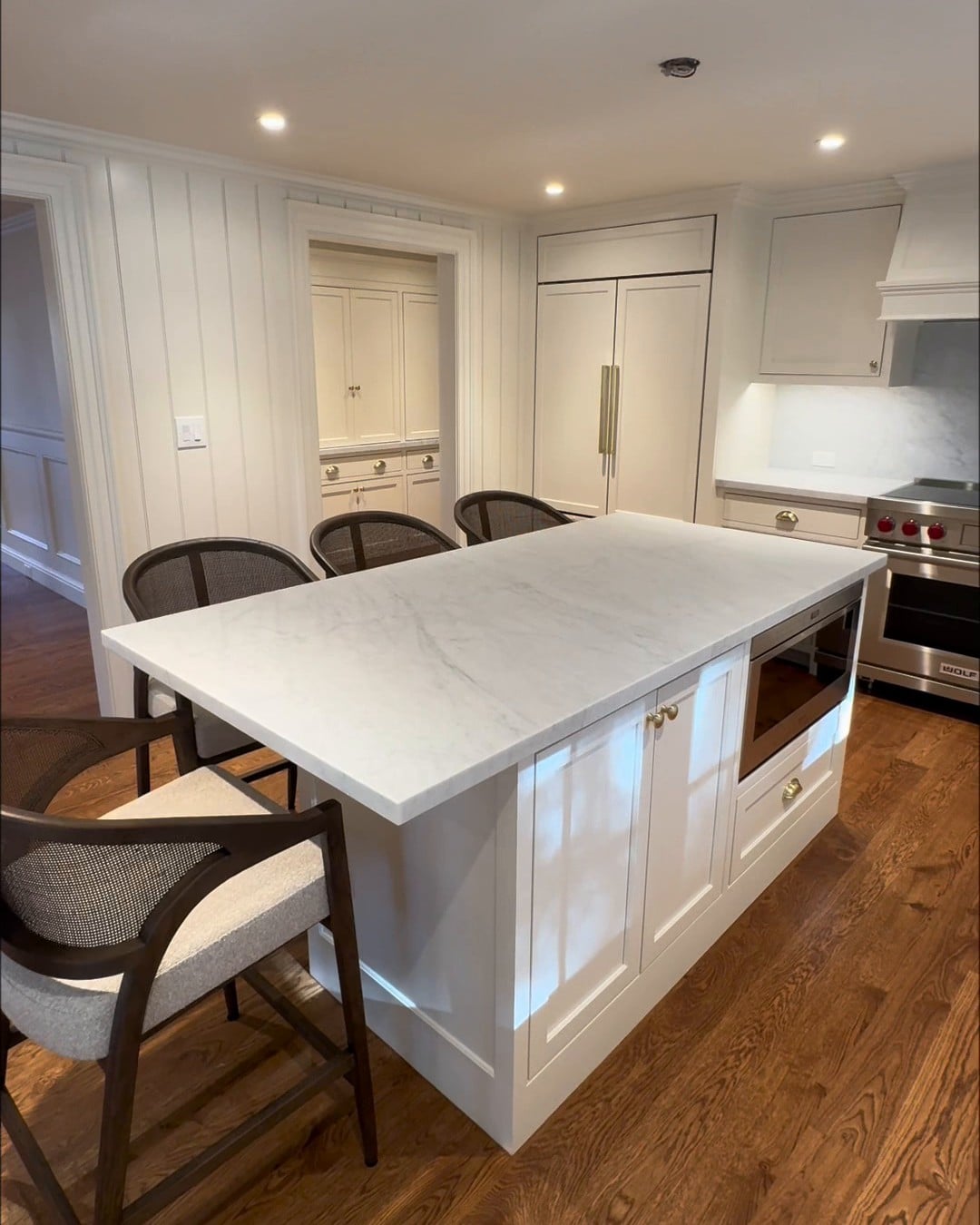
I have not seen heat damage on a marble kitchen. I still recommend trivets as a habit, and a coaster under the lemonade pitcher, because being proactive beats fixing something afterward.
Trivets are a recommendation, not a requirement. Some of my clients use them because they want to be extra careful, and there is no harm in it.
Pros and Cons of Marble in a Kitchen
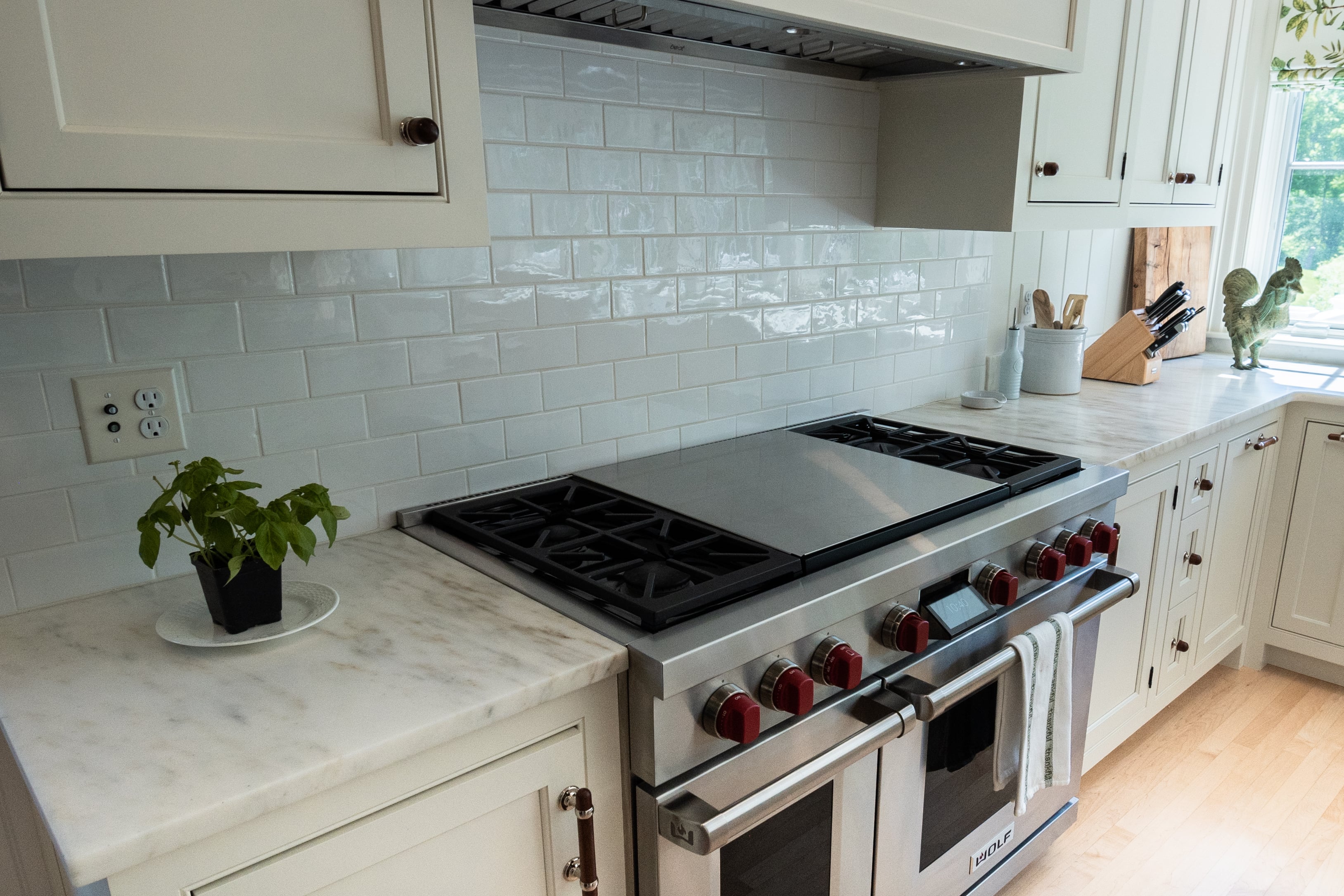
Choose marble if:
- You love natural stone and you are fine with the patina it can take on, depending on how it is cared for.
- You grew up with it, or you know someone who has lived with it and loved it.
- You want the look that the best kitchen designs are built around, and nothing else will do.
- You will wipe up spills, keep acid off the counter, and seal it when the water test says so.
Consider something else if:
- You want a counter that looks brand new for decades with no attention.
- The kitchen counter is a workspace, not a priority, in a busy household.
- Durability is a must-have. A marble-look quartzite is typically as durable as granite.
- You would rather not think about cleaners, coasters or sealing at all.
Who Uses Your Kitchen?
Kids are not the dividing line. Some families with children are not afraid of marble because they grew up with it. Others look at their own house and know it would get chipped and ruined.
Young couples buying a first house fall for marble right away, and I hear it a lot: "My mom has it, she taught us how to take care of it, it is not a big deal." Some go ahead.
Others say, "It is too nice. I will try it on my next house," and they choose something with no upkeep so they can focus on work.
The question is the household. If the counter will not get the care marble deserves, do not get it, or you will regret it later. There is no perfect material, and a marble look in a harder stone is always on the table.
A Marble Island With a Tougher Perimeter
One answer I give often: marble on the island, where it gets admired, and a harder stone on the perimeter around the sink and stove, where the heavy cooking happens.
The two materials don't need to match. A Carrara island with a soft gray quartz perimeter is a common pairing, and honed Absolute Black granite on the perimeter is popular too. Either way, the island becomes the showpiece of the kitchen.
For the full picture on kitchen countertops, from materials to layout, see our kitchen countertops page.
What Marble Looks Like After One Year, and After Ten
The calls I get about marble come early. Natural stone is not perfect; it comes out of the ground with flaws, and in a brand new kitchen where everything else looks perfect, the slightest mark gets noticed.
That is usually the first few weeks or months. After that, most owners stop noticing. It is like a new car: you go crazy about it for a few months, then it picks up a scratch and it is not a big deal anymore.
A neighbor of mine had her kitchen done five or six years ago. She asked me to look at one small spot, and she never called again.
I do have one from ten years out. A client chose polished, and a decade later the counters had a lot of etch marks. The fix was to change the finish: we honed them, which is what I had recommended at the start, and she loved it.
How an Etch Gets Fixed
An etch can usually be improved, often with a light polish, and it does not need to come back to a full shine. Three levels:
- A small spot or an edge: fine sandpaper and water by hand, or a polishing paste rubbed in, can make it disappear. If you want to try it yourself, go for it; you are not going to ruin it. A professional will get you a better result.
- A larger spot: a hand grinder with the right polishing pads. That takes the right knowledge, so it is a fabricator's job.
- A whole counter: a refinishing polisher that moves in a planetary motion and leaves no edge lines. Think of it like sanding a hardwood floor: after years of dings from dogs and everyday life, a light pass brings it back.
There is a house in Wellesley I have worked on for years. They did the kitchen in marble about five years ago, a basement remodel a couple of years after that, and this year the primary bath, in marble again.
While we were there for the bath, they mentioned a few small edge marks in the kitchen and asked me to smooth them out. Five years in, they chose marble a second time. That is proof in itself: they are not unhappy with it.
What I'm Seeing in Massachusetts Kitchens
Marble kitchens are still going in across MetroWest and Greater Boston, in historic homes and in new construction, and a lot of them in the larger custom homes. Ten years ago everyone wanted the stark white magazine look. Today, more clients ask for a honed finish that looks like it has been there for generations.
It is not only marble anymore. Clients ask for a muted look in every material: honed with no shine, suede with a slight texture, leathered with more of it. I hear it at the counter all the time: "I love that stone, but I would buy it if it were honed or leathered."
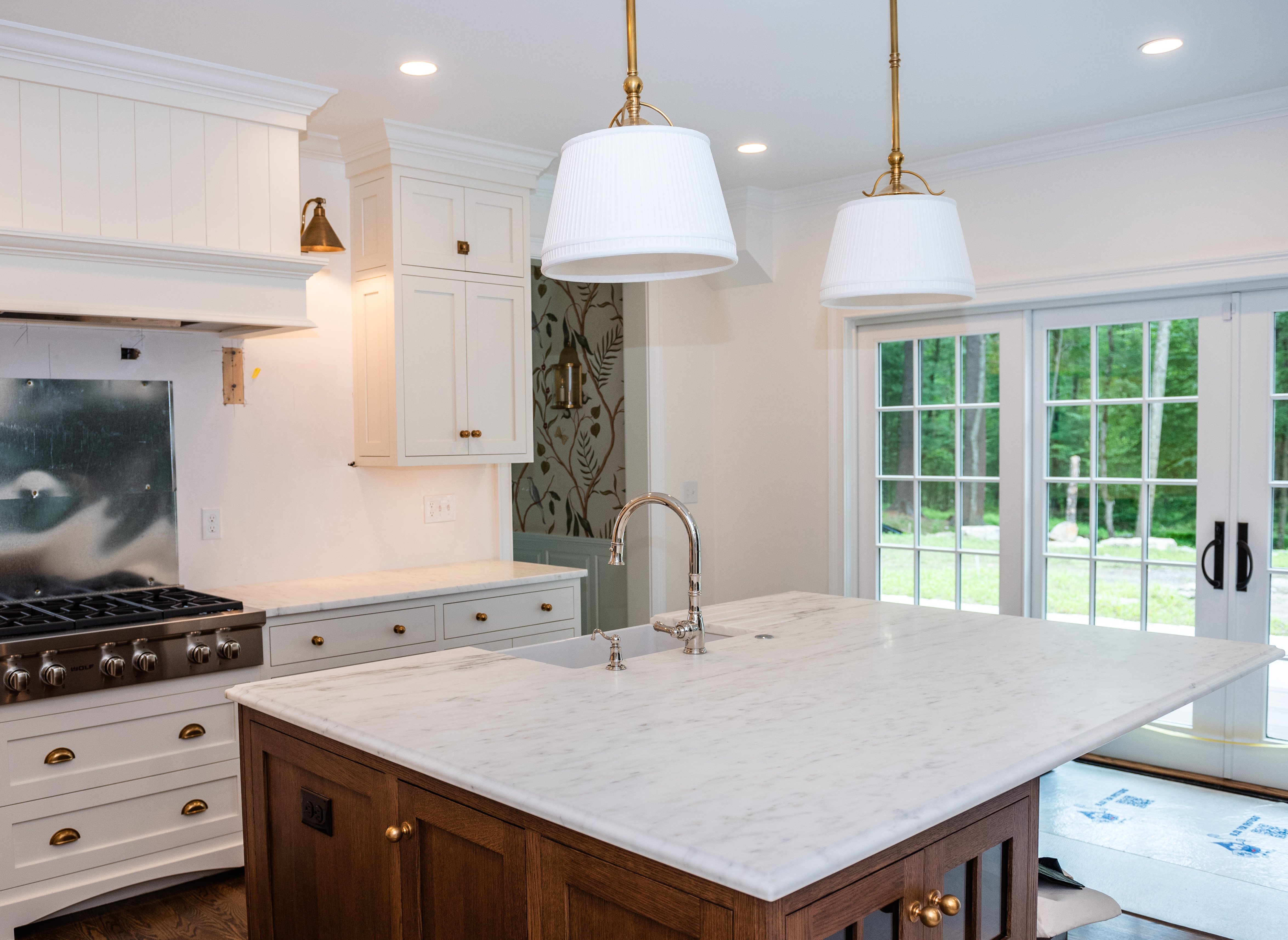
A lot of the time we can change the finish in our own shop, from polished to honed or leathered, so a slab you love in the wrong finish is not a dead end.
Going the other way, from honed or leathered to a full polish, is the hardest finish to do and takes equipment built for it, so that is not work we take on.
Marble lovers are a smaller group than most homeowners assume, but they know what they want. Which marble to pick, and what Carrara, Calacatta and Vermont Danby typically look like, is covered in our Carrara marble guide. Every slab varies, so see yours in person.
How Much Do Marble Countertops Cost?
Marble pricing comes down to which family you choose and how much veining has to match piece to piece. Carrara lands in the everyday range; Calacatta and Statuario run well above it, and Vermont Danby has been climbing toward them.
The rest, sourcing, size, complexity, waste, is the same for every material, and we break it all down on our pricing page.
My Recommendation
If you know what marble is, and you want it anyway, get it, and for a kitchen counter get it honed. On a surface that sees little use, a fireplace for example, any finish is fine.
You will not find the look anywhere else, and the clients who chose it that way are the ones who call me back for the next room.
If you are hoping it will behave like quartz, it will not. Come see the slabs, put your hand on a honed sample next to a polished one, and decide with your eyes open.
Frequently Asked Questions About Marble in the Kitchen
Q. What are the negatives of marble countertops?
A. It is softer than granite or quartz, and acid can etch it. Like any natural stone it can also stain if a spill sits, which is what a sealer is for.
Q. Does marble stain easily?
A. Not if a sealer is on it and spills get wiped up. Staining is absorption, and the water test tells you when the sealer needs renewing.
Q. Is honed or polished marble better for a kitchen?
A. Honed. It can still etch, but a matte surface hides the marks that show on polished.
Q. Can I put marble on just the island?
A. Yes, and it is a common choice. Marble on the island and a harder stone on the perimeter keeps the look where it is admired.
Q. Is marble still in style in 2026?
A. Yes. The look has shifted from stark white and polished toward honed and lived-in, and our guide on whether Carrara is outdated covers the trend.
Q. Can marble be used outdoors?
A. I don't recommend it in New England: leaves and tree sap make it too much upkeep, and there are better options. Our guide to outdoor countertop materials covers what holds up.
Q. Is marble easier in a bathroom than a kitchen?
A. Yes. Less acid means less etching, and our marble bathroom guide covers vanities.
Related Articles
- Carrara vs Calacatta Marble: Understanding the Differences
- Marble Sealer Guide: How to Seal Marble Countertops
- Marble vs. Quartz Countertops: A 30-Year Fabricator's Honest Guide
Visit Our Southborough Showroom
Still figuring out which stone is right for you? Come see us. Nothing beats standing in front of the actual slabs, comparing colors, patterns, and finishes in person. That's how you make the right decision.
Stop by our countertop store at 43 Turnpike Road (Route 9), Southborough, MA 01772 during business hours. We keep a large inventory in our heated warehouse, so there's always plenty to see.
Already done your homework and know what you want? Email us or give us a call.
Phone: 508-460-7900
Email: info@graniteguyinc.com