Marble Sealer Guide: How to Seal Marble Countertops
-
Written by Granite Guy Inc., Southborough, Massachusetts
Published: January 6, 2026
After three decades fabricating and installing marble countertops across Greater Boston and MetroWest, I've learned that marble sealing advice online ranges from helpful to downright dangerous. "Never seal marble." "Seal every month." "This nano-coating will solve everything."
Most of it misses the crucial point.
Here's what generic guides don't tell you: marble is fundamentally different from granite. It's more porous, it etches from acids, and different marble types behave completely differently.
Your Carrara marble might need more frequent sealing. Your Thassos marble might go longer between applications. Some marble arrives pre-sealed from the factory.
What I'm sharing here is exactly what I tell clients in my Southborough showroom. Advice from over 10,000 installations and working with marble from Italy, Greece, Turkey, the United States, Brazil, and quarries worldwide, plus experience sealing all types of natural stone.
By the end, you'll know how to test your marble, choose the right sealer, apply it correctly, and understand why sealing won't prevent etching (that's a different problem entirely).
Jump to:
- Does Your Marble Need Sealing?
- Sealing Won't Prevent Etching
- Marble Types and Sealing Needs
- Step-by-Step Sealing Guide
- Choosing the Right Sealer
- How Often to Reseal
- FAQs
π§ͺ Does Your Marble Actually Need Sealing?
Before you buy a bottle of sealer, you need to understand something critical. Unlike granite, most marble DOES need sealing. But not all marble is created equal.
I've watched homeowners panic-seal their marble every month because some blog told them to. I've also seen families ruin expensive Calacatta marble because they thought it didn't need sealing.
The truth is somewhere in the middle. It depends entirely on your specific marble type.
π§ The Water Test: Your Best Guide
[VIDEO PLACEHOLDER: Water Test Demonstration - Film quick video showing water beading vs absorbing on marble]
Here's the simplest test you can do. Go to your kitchen sink, cup some water in your hand, and pour it on your marble.
Don't overthink it.
If the water beads up and sits there: You're good. Your marble is either naturally dense or already sealed.
If the area under the water starts darkening within a few minutes: The stone is absorbing moisture. This means the pores are open and you need sealing.
If nothing happens after sitting for a while: Your marble is either very dense or came with factory resin treatment. That resin acts like a super sealer from the start.
For a more complete picture, try the same test with a little olive oil. Some marble resists water but will absorb oils.
π£οΈ Ask Your Fabricator First
A skilled fabricator can assess your marble's porosity instantly. After thousands of slabs, I can identify this by visual texture and origin.
Soft, chalky-looking marble usually means high porosity. Crystalline, glassy surfaces typically indicate density.
If your fabricator shrugs and says "I don't know," that's concerning. Any reputable fabricator should understand their stone's sealing requirements.
π° The Real Cost of Sealing vs. Not Sealing
Let's talk numbers.
DIY Sealing: Quality sealers cost around $40 and one bottle will cover your kitchen many times over. DuPont BulletProof sealer is one good option, but even the sealers at Home Depot and Lowe's work really well.
Professional Sealing: $300-500 depending on square footage.
Cost of Not Sealing Porous Marble: Oil stains become permanent. Coffee rings. Wine marks.
Replacing stained marble runs $5,000-20,000+ for quality material. Quality fabricators will give you guidance on maintaining your investment without leaving you completely in the dark.
β οΈ The Critical Truth: Sealing Won't Prevent Etching
This is where most marble advice fails completely. People confuse staining and etching. They're completely different problems, and no amount of sealer will prevent etching.
π¬ Staining vs. Etching: Know the Difference
Staining is absorption. Liquids enter the stone's pores and leave discoloration. Sealer prevents this by filling those microscopic pores.
Etching is a chemical reaction. Acids (lemon, vinegar, wine, tomato sauce, even some cleaning products) contact the calcium carbonate in marble and create dull spots that lose their shine. This is chemistry, not absorption. Sealer sits in the pores but doesn't create a barrier on the surface.
π§ͺ Why Marble Etches and Granite Doesn't
This is the key difference in marble vs granite maintenance. Marble is metamorphosed limestone, primarily calcium carbonate. When acid touches calcium carbonate, a chemical reaction dissolves a tiny layer of the surface. That's etching.
Granite is mostly quartz and feldspar, silica-based minerals that don't react with acids. You could leave lemon juice on granite all day. Nothing happens. This is why granite is often called "more forgiving" than marble, but marble's beauty keeps homeowners coming back despite the extra care required.
This is why I tell every marble client: If you can't accept some etching over time, marble might not be for you. Or consider honed marble, which hides etch marks much better than polished.
Pro Tip: Unlike soapstone (which uses mineral oil to darken the stone) or granite (which varies widely in porosity), marble sealing is strictly about preventing absorption without changing the stone's color. Each material has completely different maintenance needs.
β¨ Honed vs. Polished: The Etching Factor
About 90% of the marble I sell is honed. Here's why:
On polished marble, every etch mark catches the light and screams for attention. One lemon slice, one splash of wine, and you have a visible dull spot.
On honed marble, etch marks blend into the matte surface. They still happen, but they're far less noticeable. For busy kitchens, honed marble is almost always the smarter choice.
Sealing is still important for both finishes, it prevents staining. But accept that etching will happen regardless of how well you seal.
πͺ¨ Marble Types and Their Sealing Needs
Different marbles have vastly different porosity. Here's what I've learned from decades of working with these stones.
π΄ Marbles That Need Frequent Sealing
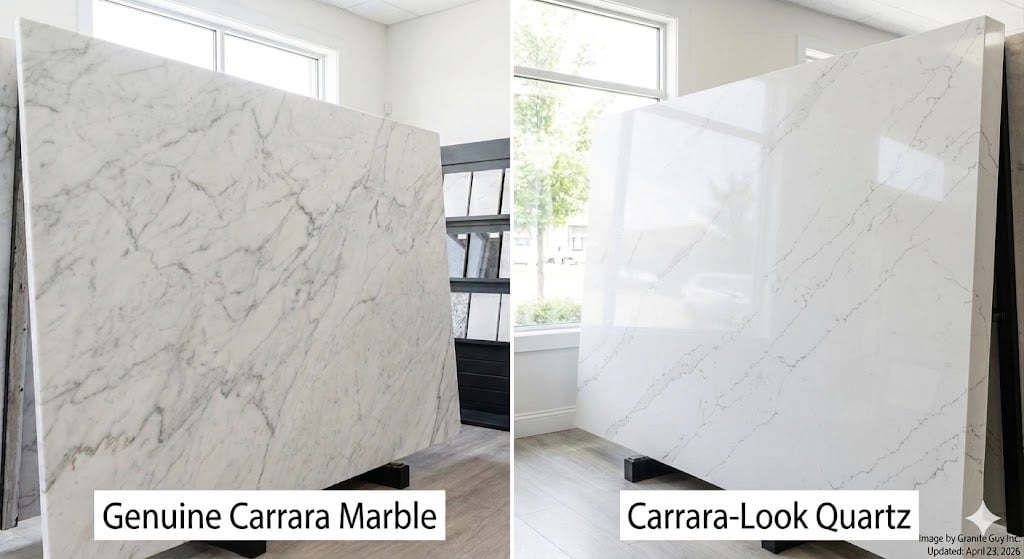
Carrara (Italy): The most popular marble in Massachusetts kitchens. Beautiful gray veining on white background.
Moderately porous, especially the lighter varieties. The whiter the background, the more porous it tends to be, and the more expensive.
Calacatta (Italy): The premium choice with dramatic gold and gray veining. Very porous and demands attention and regular maintenance.
Worth it for the beauty, but know what you're signing up for.
Calacatta vs Carrara marble: Both are Italian white marbles from the same mountain range and have very similar porosity. The main difference is the veining pattern and color, not maintenance needs.
Both require regular sealing attention.
Super White: This one was sold as quartzite for the longest time. Then complaints about staining started piling up. The truth is Super White is actually dolomite, which is very porous and stains easily.
If it etches from lemon juice, treat it like marble. Unfortunately, dishonest suppliers and fabricators mislabeled this stone for years. The same thing happened with a lot of Brazilian stones that look like quartzite but are actually marble. Beautiful stones, but you need to know what you're actually getting.
Statuario (Italy): Striking gray veins on bright white. Similar porosity to Calacatta. Premium stone, premium maintenance.
π‘ Marbles That Need Moderate Sealing
Vermont Danby (USA): Our local favorite, quarried right here in New England. Denser than Italian varieties.
I love recommending this to clients who want American-sourced stone with easier maintenance.
Thassos (Greece): Brilliant, pure white marble. Surprisingly dense for such a white stone. Still needs sealing, but less frequently than Carrara.
Crema Marfil (Spain): Warm beige tones. More forgiving than white marbles, both in appearance and porosity.
π The Factory Resin Factor
Modern stone processing has changed everything. Many marble slabs now arrive from overseas with resin treatment applied at the factory. This fills natural pits and fissures and acts as a built-in sealer.
How to spot factory treatment: Check the backside and edges. Shiny coating or little drips indicate resin treatment.
If you see a mesh backing on your slab, it's almost certainly resin-treated. Many slabs have fiberglass mesh backing for both stability and to hold the resin in place.
Factory-treated marble still benefits from additional sealing, but the baseline protection is already there. Ask your fabricator if your slab has been resin-treated.
π οΈ Step-by-Step: How to Seal Marble Countertops
Once you know sealing is needed, here's my process after thousands of applications. This works for marble, travertine, limestone, and just about any natural stone that needs sealing.
1οΈβ£ Step 1: Clean Thoroughly and Let Dry
Remove everything from the countertop. Clean with warm water and a few drops of dish soap. Avoid anything acidic, no vinegar-based cleaners, no citrus products.
Critical: Let the marble dry completely. Overnight is best. Moisture trapped in the stone prevents sealer from penetrating properly. If you sealed yesterday and the marble was still damp, the sealer is sitting on top instead of inside the pores.
2οΈβ£ Step 2: Apply the Sealer
Safety first: Wear gloves and open your windows. Water-based sealers like BulletProof don't smell much, but oil-based and silicone-based sealers can be really strong. Good ventilation makes a big difference.
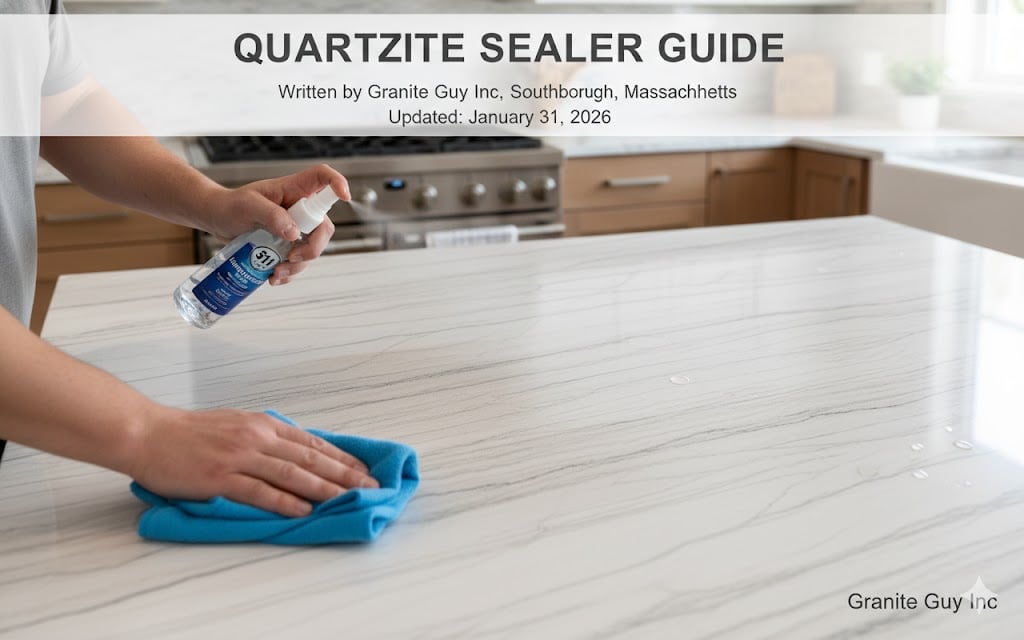
I prefer spray sealers because they penetrate quickly and spread evenly. Spray it over the countertop, then use a clean microfiber cloth or paper towel to spread across the surface.
Watch the absorption. Good porous stone will drink up the sealer within seconds. If it's not absorbing at all, your stone might not need this application.
3οΈβ£ Step 3: Wait, Then Wipe (This Is Where People Mess Up)
Let the sealer sit for about 10-15 minutes. Watch the manufacturer's instructions, but most penetrating sealers follow this timeline.
Here's the critical part: Wipe off ALL excess before it dries completely. Dried sealer residue creates a hazy film that's extremely difficult to remove. Many homeowners think their stone got ruined when really it's just sealer buildup.
Pro tip: If you do get haze from sealer buildup, mineral spirits on a clean cloth works really well to remove it.
Remember: sealer only works when it penetrates and fills pores. Whatever sits on the surface is useless and creates problems.
4οΈβ£ Step 4: Multiple Coats for Porous Stone
For highly porous stone like Calacatta or light Carrara, plan on 2-3 coats within a week. Apply first coat, wait 24 hours, then apply the second coat. Wait another day between each additional coat.
You'll know you're done when the sealer sits on the surface instead of soaking in. That means the pores are filled.
5οΈβ£ Step 5: Cure Time
Don't use the countertop for 24 hours. No food prep, no cleaning, nothing sitting on the surface. The sealer needs time to cure and bond within the stone's pores.
πͺ Don't Forget the Edges and Cutouts
Factory sealing doesn't protect fabricated edges. When we cut your marble for sink cutouts, cooktop openings, or edge profiles, we expose raw stone that wasn't treated at the factory.
Marble kitchen islands are especially vulnerable because they have more exposed edges than perimeter countertops. Waterfall edges, where marble wraps down the sides, create even more unsealed surface area that needs attention.
These cut edges are often more porous than the polished top surface. Water from the sink splashes against the inside of the cutout constantly. Without sealing, moisture wicks into the stone and creates dark spots or rings.
Always ask your fabricator: Do you seal all the cut edges before installation? At our shop, we seal every cut surface. Not all fabricators do.
After installation, pay special attention to sealing around the sink cutout yourself. This area gets the most water exposure and needs the most protection.
π§΄ Choosing the Right Marble Sealer
Good news: modern sealers are all pretty effective. You don't need expensive products to get quality protection.
π― Penetrating Sealers (What I Recommend)
Penetrating sealers absorb into the stone and fill pores from inside. They don't change the marble's appearance and they allow the stone to breathe. This is what you want for countertops.
Products I trust:
511 Impregnator Sealer: The blue jug at Home Depot. Reliable, affordable, works great. Around $25-30.
DuPont StoneTech BulletProof: Excellent quality. Used to cost $500 when companies applied it with fancy paperwork. Now it's about $40 on Amazon.
Tenax Proseal: Professional-grade. A bit pricier but excellent penetration.
π¨ Color-Enhancing vs. Non-Enhancing
Color-enhancing sealers darken and enrich your marble's appearance. They make whites look creamier and veins more dramatic. Some people love this effect.
Non-enhancing sealers keep the natural look. What you see before sealing is what you get after.
Read the label carefully. If you want your Carrara to stay bright white, don't accidentally grab a color enhancer.
π« What About Topical Sealers?
Topical sealers sit on the surface like a coating. I generally don't recommend them for marble countertops. They can:
- Create a plastic-like feel
- Wear unevenly in high-use areas
- Trap moisture underneath
- Need stripping before reapplication
For countertops, stick with penetrating sealers. Topical coatings are better suited for floors with heavy foot traffic.
π Premium Protection Options
For ultra-luxury marble installations, some clients opt for professional-grade protection:
Epoxy Coatings: About $40-50 per square foot. When you have Calacatta Borghini costing $200+ per square foot, this makes financial sense.
HydroShield Treatment: Our partners at Artistic Tile in Natick offer this specialized treatment for around $20 per square foot. Excellent for high-end marble.
Protective Film: Like a screen protector for your countertop. Invisible barrier that takes the abuse instead of your stone.
For clients with high-end marble installations, I often recommend discussing these premium options when the investment justifies the extra protection.
π How Often Should You Reseal Marble?
Forget the generic "seal every 6 months" advice. It depends entirely on your specific marble and how you use it.
π Factors That Affect Sealing Frequency
Marble type: Carrara and Calacatta need more frequent sealing than Danby or Thassos.
Finish: Honed marble is more porous than polished and typically needs sealing more often.
Use patterns: Kitchen counters used daily need more attention than a guest bathroom vanity.
Cleaning products: Harsh cleaners strip sealer faster. Stick with pH-neutral stone cleaners.
π§ The Water Test Is Your Best Guide
Instead of following a rigid schedule, just watch how water behaves on your counters. If it beads up, you're sealed. If it soaks in and darkens the stone, time to reseal.
After a while, you'll recognize this intuitively without formal testing. You'll notice water acting differently and know it's time.
π§½ Daily Care That Extends Sealer Life
How you clean your marble affects how long your sealer lasts. For a complete cleaning guide, see our article on how to clean marble countertops.
Did you know? Some clients actually prefer not to be fussy with their marble and let it develop natural character over time. There's no right or wrong approach - it's really about personal preference.
β Do This
- Wipe spills immediately, especially wine, coffee, juice, anything acidic
- Use warm water with mild dish soap for daily cleaning
- Use pH-neutral stone cleaners for deeper cleaning
- Dry the surface after cleaning
- Use cutting boards and trivets religiously
β Don't Do This
- Never use vinegar on marble. I don't care what Pinterest says. Vinegar is acid. Acid etches marble. Period.
- Avoid bleach and ammonia-based cleaners
- Skip the "all-purpose" cleaners unless they specify safe for natural stone
- Don't let standing water sit, especially around the sink
- Never use abrasive scrubbers or powdered cleansers
β Common Questions About Marble Sealing
Q. My marble is 5 years old and has never been sealed. Is it ruined?
A. Probably not ruined, but do the water test immediately. If it darkens quickly, seal it now. Existing stains may be permanent, but proper sealing prevents future damage. We can often improve the appearance of stained marble with professional restoration.
Q. Can I use the same sealer on marble and granite?
A. Yes, most penetrating sealers work on both. Products like 511 Impregnator and StoneTech BulletProof are designed for all natural stone. Just follow marble-specific timing since marble typically absorbs faster. For granite-specific guidance, see our granite sealer guide.
Q. Will sealing make my marble shiny?
A. No, penetrating sealers don't change the finish. If you have honed marble, it stays matte. If you have polished, it stays polished. Color-enhancing sealers will deepen the color slightly but don't add shine.
Q. I sealed my marble but it still etched from lemon juice. Did I do something wrong?
A. No, you did nothing wrong. This is the most common misconception. Sealer prevents staining (absorption). Etching is a chemical reaction that happens regardless of sealing. The only way to prevent etching is to prevent acid contact.
Q. How do I remove haze from over-applying sealer?
A. Try buffing with a clean, dry cloth first. If that doesn't work, use a small amount of acetone on a cloth and buff gently. For severe buildup, you may need a professional stone restoration service.
Q. Is there any sealer that prevents etching?
A. Topical coatings and epoxy treatments can reduce etching by creating a barrier on the surface. But these change the feel and appearance of your marble. For countertops, most people prefer natural stone feel and accept some etching as part of living with marble.
Q. Do you seal marble before or after installation?
A. We seal the cut edges before installation and recommend clients seal the top surface after installation. This ensures all exposed stone is protected and lets you control the exact sealer used on your visible surfaces.
Q. My fabricator said my marble doesn't need sealing. Is that true?
A. It's possible if your marble is resin-treated or naturally very dense. But I'd still do the water test to verify. Some fabricators say this to close the sale faster. Trust your own test results.
π‘ What to Expect From a Quality Fabricator
A good fabricator treats sealing as part of their service, not an afterthought:
They know their materials and can assess your specific marble's porosity immediately.
They seal cut edges during fabrication, before your countertop is installed.
They educate you on proper maintenance without trying to sell you overpriced products.
They're honest about marble's characteristics, including the etching reality.
They don't oversell. If your marble doesn't need immediate sealing, they tell you.
Beware of operations that can't tell you where your marble came from or don't know the difference between marble, quartzite, and dolomite. If they're mislabeling materials, they probably can't advise on sealing either.
π The Bottom Line
After 30 years in this business, here's what I want every marble owner to understand:
Most marble needs sealing. Unlike granite, marble is almost always porous enough to benefit from a quality sealer.
Sealing prevents staining, not etching. These are different problems requiring different solutions. Accept some etching as part of living with marble, or consider honed finish which hides it better.
The water test is your guide. Test every few months and reseal when water stops beading.
Modern sealers work great. You don't need expensive products. Hardware store sealers do the job.
Honed marble is more forgiving. If you're debating polished vs. honed for a kitchen, honed hides both etch marks and sealer wear better.
Your fabricator should be a resource. Find someone who knows marble and will help you maintain your investment.
π Related Articles
- Carrara Marble Guide: Everything You Need to Know
- Honed vs Polished Marble: Which Finish is Right?
- How to Clean Marble Countertops
- Granite Sealer Guide: Complete Application Guide
- Marble vs Granite: Complete Comparison
- Calacatta vs Carrara Marble: Key Differences
π Questions About Your Marble?
At Granite Guy Inc., we've been fabricating and installing marble countertops in Greater Boston and MetroWest Massachusetts since 1995. Whether you need help with sealing, maintenance, or you're considering new marble countertops, we're here with honest, expert advice.
Call 508-460-7900 or visit our showroom in Southborough to see our marble, granite, quartzite, and quartz options.
Related Resources
- Marble countertops
- Carrara marble guide
- Honed vs polished marble
- Granite sealer guide
- How to clean marble countertops
- Quartzite countertops
- Our process
- Contact us for a free consultation