Honed vs Polished Marble: A 30-Year Fabricator's Honest Guide
Written by Granite Guy Inc., Southborough, Massachusetts
Published: January 6, 2026
🪨 Honed vs Polished Marble: What You Really Need to Know
Honed marble is the finish we recommend for 90% of our marble installations, and there's a good reason why. Choosing between honed and polished marble isn't just about looks. It changes how your marble ages, how visible etching becomes, and how much you'll notice everyday wear.
After 30 years of fabricating and installing marble countertops across Greater Boston and MetroWest, from Concord to Newton, I've seen this decision play out in thousands of kitchens and bathrooms.
Let's walk through everything you need to know so you can make the right choice for your home and lifestyle.
Jump to a section:
- What is Honed Marble?
- What is Polished Marble?
- Quick Comparison: Honed vs Polished Marble
- The Etching Reality
- Honed vs Polished Marble in the Kitchen
- Honed vs Polished Marble in the Bathroom
- Dark Honed Marble Warning
- Cost Differences
- Maintenance
- Design Considerations
- Can You Change Finishes After Installation?
- Before and After Comparison
- FAQs
🔍 What is Honed Marble?
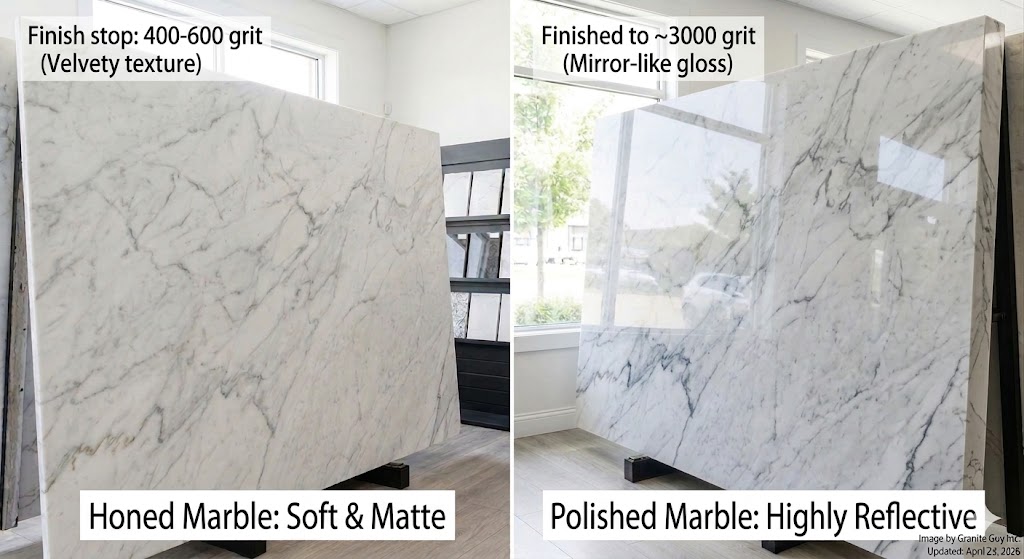
Honed marble is natural marble that's been ground smooth but stopped before the final polishing stage, creating a soft matte finish instead of a glossy shine. The surface feels velvety to the touch and absorbs light rather than reflecting it.
Honed marble hides etch marks dramatically better than polished marble. This is why it's become the go-to finish for kitchen countertops.
We create honed marble by running the stone through the polishing process but stopping around 400 to 600 grit. This smooths the surface without creating that mirror-like reflection.
The process leaves the stone's pores slightly more open than polished finishes. This is why regular sealing becomes important.
The finish gives you an elegant, understated, timeless look. You still see the marble's beautiful veining and character, but it doesn't scream for attention.
It absorbs light instead of bouncing it back. This creates that calm, sophisticated feeling people love in classic New England kitchens and spa-like bathrooms.
✨ What is Polished Marble?
Polished marble is the classic high-gloss finish most people picture when they think of marble. It's fully polished through all the finer grits, often up to 3000, until it looks almost like glass.
The result is deep, rich, glossy, and dramatic. Colors become more vibrant, veining gets bolder, and the surface actually reflects light like a mirror.
Light bounces around your space, which can help brighten darker rooms. Polished Carrara or Calacatta marble becomes particularly stunning, showing incredible depth and luminosity.
We take the stone beyond the honing stage and use ultra-fine abrasives and polishing compounds. The final buffing creates that signature shine.
This process also closes the stone's pores more completely. It makes the surface slightly more resistant to staining, though not to etching.
⚖️ Quick Comparison: Honed vs Polished Marble
Honed Marble: The Smart Choice for Kitchens
Honed marble has a soft, velvety, matte surface with a natural feel. It's the finish for busy kitchens, bathrooms, and homes where you don't want to see every etch mark from your morning coffee.
The big advantage is how well it hides etching, scratches, and everyday wear. The tradeoff is that it's slightly more porous and may show watermarks more easily if not sealed properly.
Polished Marble: The Classic Choice
Polished marble is glossy and reflective, making colors and veining pop dramatically. It's what most people picture when they imagine marble countertops.
This finish works beautifully for backsplashes, vanity tops in low-use bathrooms, and decorative applications. It's slightly more stain-resistant, but here's the catch: every single etch mark will announce itself.
⚠️ The Etching Reality: Why This Matters More Than Staining
Here's what most articles won't tell you honestly: etching is the real issue with marble, not staining. Marble is made of calcium carbonate.
Anything acidic, whether that's lemon juice, vinegar, wine, tomato sauce, or even some cleaning products, will etch the surface on contact.
Etching is a chemical reaction. It's not a stain that sits on top of the surface. It's the acid actually eating into the stone and dulling the finish.
Sealing does nothing to prevent this. Absolutely nothing. Sealer protects against staining. It does not protect against etching.
On polished marble, etch marks look like dull spots or water rings against the shiny surface. They catch the light differently and become impossible to ignore.
I've had clients call me in a panic two weeks after installation because they thought their brand-new polished marble was ruined. It wasn't ruined. It was just showing every single interaction with anything acidic.
On honed marble, those same etch marks are nearly invisible. The matte finish already absorbs light rather than reflecting it, so the dulled spots blend right in.
You'd have to get down at counter level with a flashlight to see most of them.
This is why 90% of the marble we sell is honed. Not because polished isn't beautiful. It's absolutely stunning.
But because honed actually works in real kitchens with real families who cook real food.
🍳 Honed vs Polished Marble in the Kitchen
Why Honed Wins for Kitchen Countertops
Let me be direct: as I explained in my Guide to Marble Kitchen Countertops, if you're putting marble in a kitchen where you actually cook, honed is the way to go. Here's what I've seen after thousands of installations:
Polished marble in a kitchen requires constant vigilance. Every lemon slice, every splash of vinegar, every tomato sauce drip leaves its mark. Some clients embrace this as patina. Most feel stressed every time they cook.
Honed marble lets you actually use your kitchen. The etching still happens, but you don't see it.
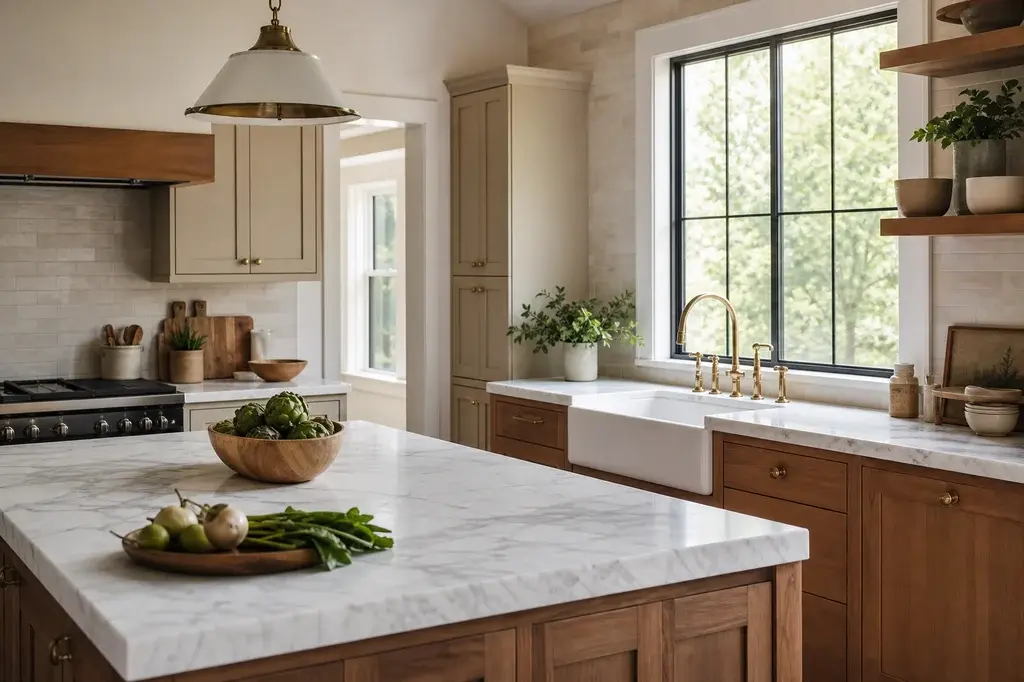
Over time, the surface develops a beautiful, uniform patina that tells the story of meals cooked and life lived. This is especially true for marble kitchen islands, which see the most action.
I have a Calacatta honed countertop in my own kitchen, and after years of use, it looks better than the day we installed it.
🍳 Honed vs Polished Marble in the Kitchen
Polished marble works beautifully for backsplashes. You're not cutting lemons on your backsplash or setting down wine glasses.
The vertical surface stays protected and shows off that gorgeous glossy finish without the wear.
Some clients also choose polished for a dedicated baking station where they only work with dry ingredients. The cool surface is perfect for pastry.
If you're careful about what touches it, polished can stay beautiful.
🛁 Honed vs Polished Marble in the Bathroom
As detailed in my Marble Bathroom Countertops Guide, bathrooms give you more flexibility than kitchens because you're dealing with fewer acidic substances. Water won't etch marble. Soap residue wipes off.
The main concern is products like certain facial cleansers, some toothpastes, and cleaning products.
Vanity Tops
Either finish can work well here. Polished marble on a bathroom vanity creates that classic, luxurious spa feeling.
If your daily routine doesn't involve a lot of acidic products and you wipe the surface regularly, polished can stay gorgeous for years.
Honed marble gives you a softer, more organic look and forgives the occasional splash of face wash or toothpaste. For busy family bathrooms or kids' bathrooms, honed is the practical choice.
Shower Walls and Floors
For shower floors, honed marble is strongly recommended. Polished marble gets slippery when wet, which creates a safety concern.
The matte finish of honed marble provides better traction.
For shower walls, either finish works. Polished marble creates a stunning, reflective surface that can make a shower feel more spacious.
Just ensure you use pH-neutral cleaners and squeegee the walls after showering to prevent water spots.
💡 The Real Talk on Absolute Black or Nero Marquina Honed
I need to give you the same warning I give about dark honed granite: dark honed marble shows fingerprints and smudges. Nero Marquina honed marble is striking, elegant, and dramatic.
It's also going to show every touch, every oil from your hands, every water spot.
This isn't a reason not to choose it. I have clients who love their dark honed marble and don't mind wiping it down regularly.
But I always make sure people understand what they're getting into. Dark honed surfaces require more frequent wiping than lighter colors.
If that sounds tedious, choose a lighter marble or go with polished for the dark stone.
💰 Does Honed Marble Cost More Than Polished?
No. Honed and polished marble cost the same when you order slabs with the finish already applied. The marble slab price is identical regardless of which finish you choose.
The only difference is the finishing process at the supplier level.
The only cost difference comes if you're changing finishes after the slab is already processed. Converting polished to honed or vice versa in our shop adds labor cost, typically ten to twenty dollars per square foot.
This is why we always recommend choosing your finish before fabrication begins.
🧹 Maintenance: Honed vs Polished Marble
Sealing Frequency
Both finishes need regular sealing, but honed marble typically needs it slightly more often. Plan to seal honed marble every three to six months.
Polished marble can often go six to twelve months between sealings because the surface is denser.
The exact frequency depends on your specific marble type, how heavily you use your counters, and the quality of sealant used.
The best test is the water bead test: if water no longer beads up on the surface and instead soaks in, it's time to reseal.
Daily Cleaning
For both finishes, use warm water and a few drops of mild dish soap with a soft cloth. Avoid anything acidic: no vinegar, no lemon-based cleaners, no harsh chemicals.
Wipe up spills promptly, especially anything acidic.
The Maintenance Reality
Here's the honest truth: polished marble requires more constant attention to maintain its appearance because every etch mark shows.
Honed marble is more forgiving day-to-day but may need slightly more frequent sealing.
If you're meticulous about wiping spills immediately and you love that glossy look, polished can work.
If you want to actually enjoy your kitchen without stress, honed is the answer.
🎨 Design Considerations
Honed Marble Works Best For:
- Modern farmhouse kitchens
- Transitional designs that blend traditional and contemporary
- Scandinavian or minimalist spaces
- Historic New England homes seeking authentic character
- Busy family kitchens where function matters as much as form
- Spa-like bathrooms with an organic feel
Polished Marble Works Best For:
- Formal powder rooms and guest bathrooms
- Kitchen backsplashes as a statement piece
- Traditional luxury spaces that prioritize drama
- Low-traffic decorative applications
- Fireplace surrounds where etching isn't a concern
- Commercial spaces with professional cleaning staff
🔄 Can You Change Finishes After Installation?
Yes, but it's a significant undertaking. Changing polished marble to honed requires grinding down the entire surface with diamond abrasives.
This creates substantial dust, requires clearing the area completely, and typically costs ten to twenty dollars per square foot.
More importantly, the process removes a thin layer of stone. On countertops with detailed edges or complex shapes, maintaining consistent edges while honing becomes challenging.
If you're even considering this, contact us for an assessment. In most cases, it's more economical to choose the right finish from the start.
But if you inherited polished marble that's heavily etched, converting to honed can sometimes bring it back to life rather than replacing it entirely.
📸 Before and After Comparison
When we show clients the same marble slab with both finishes side by side in our showroom, the transformation is striking.
How Polished Finish Changes the Stone
With a polished finish, colors appear twenty to thirty percent darker and more saturated. Veining becomes dramatically more pronounced and vivid.
The surface reflects overhead lighting, and the stone looks "wet" even when completely dry. If you love bold drama and want your marble to be the star of the show, polish amplifies everything.
How Honed Finish Changes the Stone
The honed version of the same stone shows colors that appear softer and more natural. The surface has an even, consistent appearance without dramatic highlights.
Patterns remain visible but understated. It creates a "dry" look even after sealing and absorbs light rather than reflects it.
This is why honed works so well when you want elegant, sophisticated marble that doesn't compete with everything else in the room.
❓ Frequently Asked Questions
Q. Is honed or polished marble better for kitchen countertops?
A. Honed marble is better for kitchens because it hides etch marks from acidic foods. About 90% of our marble kitchen installations are honed for this reason.
Q. Does honed marble stain more easily than polished?
A. Slightly. Honed marble is more porous, so it needs sealing every three to six months. But the bigger concern with marble is etching, not staining, and honed hides etching dramatically better.
Q. Does sealing prevent etching on marble?
A. No. Sealer protects against staining, not etching. Etching is a chemical reaction between acids and marble that happens on contact regardless of sealing.
Q. Which finish is more slippery when wet?
A. Polished marble is significantly more slippery. For shower floors, honed marble is the safer choice.
Q. Can I mix honed and polished marble in the same kitchen?
A. Yes. A common approach is honed countertops for working surfaces and polished marble for the backsplash.
Q. How do I know which finish to choose?
A. If you want a worry-free kitchen, choose honed. If you're meticulous about wiping spills immediately and love the glossy look, polished can work.
Q. Does honed marble develop patina?
A. Yes. On honed marble, patina blends naturally with the matte surface and often enhances the stone's character. On polished marble, it shows as unwanted dull spots.
🎯 Making Your Decision
Both honed and polished marble offer the timeless beauty and elegance that make marble such a beloved countertop material. The finish you choose comes down to your aesthetic preferences, lifestyle, and how you actually use your space.
At Granite Guy Inc., we help homeowners throughout Greater Boston and MetroWest navigate this decision every day. We'll show you samples of both finishes in your selected stone.
Because we carry a wide selection of marble including Carrara, Calacatta, Danby, and many others, you can compare how each finish looks across different varieties.
We'll talk through how you actually use your kitchen, show you real examples of honed vs polished marble aging, and help you visualize how each finish will work in your specific space.
Sometimes the decision becomes obvious once you see the stone in person under your lighting conditions.
📞 Ready to Choose Your Perfect Marble Finish?
With 30 years of experience and over 10,000 completed installations, we have the expertise to guide you through your marble countertop project.
From selecting the perfect stone and finish to expert fabrication and installation, our team handles every detail.
📞 Call us today at (508) 460-7900 for a free consultation and quote.
Stop by our showroom in Southborough anytime. We'll show you honed and polished marble samples side by side so you can see the difference instantly.
Or schedule a free in-home consultation where we'll bring samples directly to your kitchen and see how they look in your actual lighting.
Granite Guy Inc.
Proudly serving Greater Boston & MetroWest since 1995
Southborough, MA
Visit our marble countertops page to explore our full selection of marble options and finishes.