How to Clean Granite Countertops: A Step-by-Step Guide
Written by Granite Guy Inc., Southborough, Massachusetts
Updated: February 5, 2026
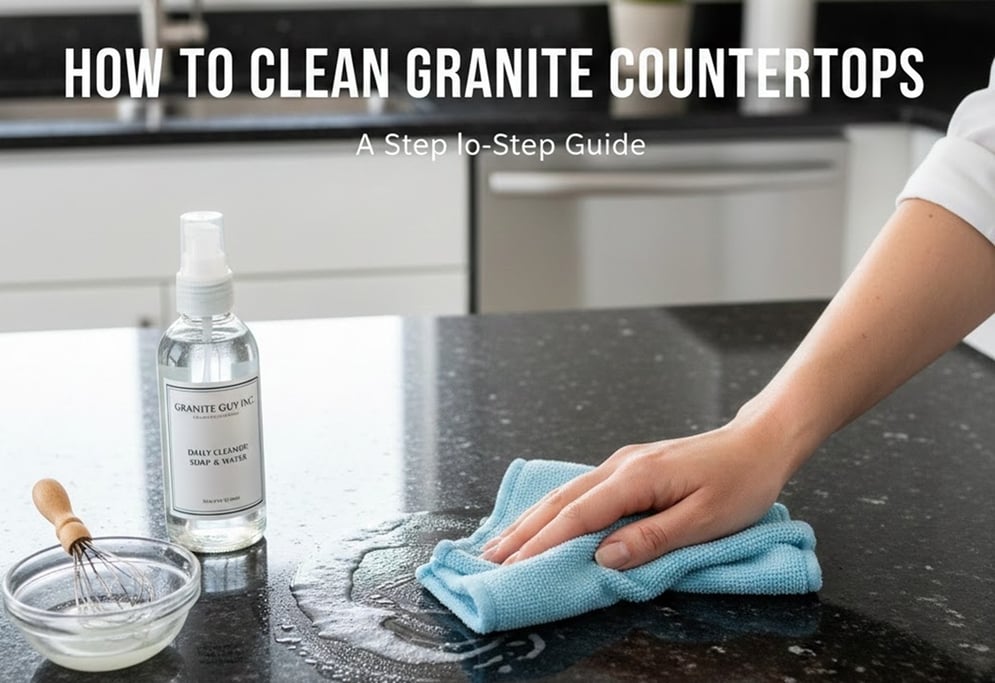
Warm water + a few drops of dish soap + soft cloth. Wipe, rinse with clear water, dry immediately. That's it. Skip the fancy granite cleaners. They're not necessary for daily cleaning.
Learning how to clean granite countertops properly is essential for maintaining their beauty and durability. For daily cleaning, use warm water and mild dish soap with a soft cloth regularly.
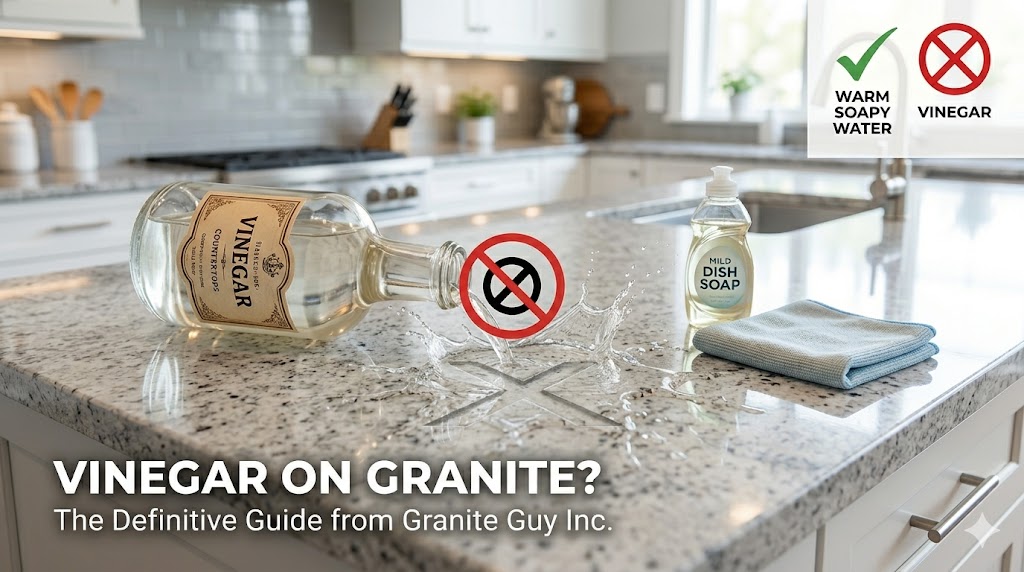
Avoid vinegar, bleach, or acidic substances as they'll remove the protective sealant over time.
Sealing frequency varies by granite type. Test by dropping water on the surface. If it darkens, it needs sealing.
For cloudy granite caused by residue buildup, use mineral spirits. If buildup is still stubborn, buff with dry fine steel wool using circular motions for a lustrous shine.
🪨 Understanding Granite Care: Since 1995 Fabricating and Installing in Greater Boston and Metro West
Most granite is the toughest and most durable stone surface you can install. According to the Natural Stone Institute, granite's durability makes it ideal for both residential and commercial applications.
We've been using it in Greater Boston and Metro West Massachusetts since 1995. Most granite is exceptionally strong, but some exotic types can be more sensitive to certain cleaning products.
Some products can slowly damage your sealer with regular use. These include vinegar or citrus cleaners, bleach, ammonia-based products, glass cleaners like Windex, and all-purpose cleaners.
The granite will remain undamaged. However, using these chemicals often will wear away the protective coating.
This will make your countertops more porous over time.
Occasional use is fine, but for daily cleaning, stick with simple soap and water. Many people reach for glass cleaners or vinegar out of habit, but these products can dull the finish over time with repeated use.
🧽 Daily Granite Cleaning
For daily cleaning, you need a few items. Gather warm water, dish detergent or mild soap, and a microfiber cloth or paper towel.
A spray bottle is optional. You may also want a green or white scrub pad for tough spots.
Mix a few drops of dish soap in warm water in a spray bottle or bucket. Spray or apply the mixture, working with a soft cloth.
For stubborn spots, use a green or white scrubby pad with the soapy water and a bit of elbow grease.
Wipe away all soap residue with clear water. Use a dry microfiber cloth to remove excess water right away.
This helps prevent water spots.
Pro Tip: Clean spills immediately. Wine, coffee, and cooking oil can stain if left sitting. Always make sure you leave no soap residue behind, as that causes cloudiness.
After cleaning near the sink, wipe down the surrounding area to prevent water buildup.
🖤 How to Clean Black Granite Countertops
Black granite is gorgeous but unforgiving. It shows every water spot, fingerprint, and streak. Here's how to keep it looking sharp.
✦ The Problem with Black Granite
It's not actually harder to clean. It just shows everything.
White water spots are mineral deposits from tap water. Streaks are usually soap residue you didn't fully rinse.
Fingerprints are just oils from your hands.
✦ Daily Cleaning for Black Granite
Use less soap than you think. A few drops of dish soap in warm water is plenty.
Too much soap leaves residue that shows up as haze.
Rinse thoroughly with clear water. This is the step most people skip. Soap residue is the #1 cause of that cloudy film on black granite.
Dry immediately with a clean microfiber cloth. Don't let it air dry or you'll get water spots every time.
✦ For Streaks and Water Spots
Buff the dry surface with a clean, dry microfiber cloth using circular motions. Most spots disappear with dry buffing alone.
For stubborn mineral deposits, use a 50/50 mix of water and isopropyl alcohol. Spray lightly, wipe, and dry immediately.
Pro tip: Keep a dedicated microfiber cloth near your black granite. A quick dry buff after washing dishes prevents 90% of the spots people complain about.
🧹 Deep Cleaning Granite Countertops
You need to deep clean when you see buildup, grease spots, or dullness. This happens when your regular cleaning isn't enough.
Understanding how to clean granite countertops properly means not getting overwhelmed by complicated cleaning protocols you see online. Simply assess what you're looking at and address it accordingly.
Every house is different. Some cook constantly and need more frequent cleaning, others barely use their kitchen.
For problem spots, use more dish soap and a green scrubby pad for stubborn areas that need extra elbow grease.
A baking soda paste works for stubbornly stuck-on dirt and debris. It's gentle yet effective for deep cleaning without scratching.
Mix 50/50 isopropyl alcohol and water in a spray bottle. Spray the surface, let sit 3-5 minutes, wipe with a soft cloth, and dry. Use after handling raw meat or when needed. Avoid bleach. It breaks down the sealer over time.
This is especially important around the sink and food prep areas. Isopropyl alcohol is one of the safest disinfectants for granite because it evaporates quickly and doesn't leave residue.
That's it. Clean what looks dirty regularly.
✨ How to Fix Cloudy Granite Countertops
Based on 30 years of fabrication experience
It's almost always residue buildup. Soap, cleaning products, or sealer that didn't get wiped off properly. It's not damage. Fix it by cleaning with dish soap and water first, then use mineral spirits if needed. For stubborn haze, buff with dry 00 steel wool in circular motions.
✦ Why Granite Looks Cloudy
Residue buildup causes most cloudiness. Soap, cleaning products, or sealer that didn't get wiped off properly are usually the culprits.
Most of the time, it's just surface buildup, not actual damage.
Sometimes people accidentally use glass cleaners thinking they'll add shine, but this can actually contribute to cloudiness.
✦ The Professional Fix
Expensive granite cleaners exist, but they're not absolutely necessary for this problem.
Many people ask how to clean granite countertops when they look cloudy, and the answer is simpler than you think.
Start Simple:
1. Try Soap and Water First — Clean thoroughly with dish soap and warm water using a soft cloth. Wipe completely dry to remove excess water, then check if you see any cloudiness.
2. If it is still cloudy, use mineral spirits. Apply mineral spirits to a soft cloth. Wipe the cloudy areas to remove stubborn residue. Let dry completely.
3. If Still Visible, Use Dry Steel Wool — Use grade 00 steel wool when the surface is completely dry. Lightly buff cloudy spots in circular motions to restore the polish and shine.
4. Reseal if Needed — Apply granite sealer if you used mineral spirits and buff into the surface until dry.
Professional Note: Unless something actually penetrated the material, this method will handle virtually any cloudiness.
In exceptionally rare cases with heavy commercial traffic, the surface can wear down and become dull. However, this is rare in a residential setting.
🏷️ Granite Types & Maintenance Requirements
Not all granite is created equal
✦ Understanding Granite Origins
Many people think white granite countertops are more porous because they're thinking of marble, but that's not necessarily true.
Granite porosity varies significantly by quarry and origin. Some materials are denser and have a quartz-like composition.
This makes them less absorbent. Other materials have a clay-like texture and need more frequent sealing to protect the surface.
Honed materials are often more porous. The polished finish closes the pores more than the natural surface does.
Many slab manufacturers now use resins during fabrication to create a more uniform, glass-like finish and shiny appearance. This works like a super-sealer.
Materials that usually need regular sealing often do not need it after resin treatment. You can tell if a slab has resin by looking at the edges for runoff marks.
✦ Low Maintenance Varieties
Some granites require minimal upkeep and resist staining exceptionally well.
Absolute Black is nearly indestructible, incredibly dense, and resists scratches.
Black Galaxy has minimal porosity and resists everything. Blue Pearl is dense with natural stain resistance.
Emerald Pearl has an exceptionally low absorption rate. Tan Brown is dense and needs minimal sealing.
American granites like Jet Mist and Virginia Mist (both blackish in color) are exceptionally durable and low maintenance.
Dakota Mahogany, another American granite, offers excellent durability. Barre Gray from Vermont is exceptionally dense.
✦ Moderate Maintenance Varieties
Some popular granites need consistent but manageable care.
Uba Tuba is beautiful but more porous than darker varieties. Santa Cecilia is common with moderate porosity.
New Venetian Gold requires consistent care. Brazilian granites like Typhoon Bordeaux, Crema Bordeaux, and Delicatus are popular choices, typically resin-enhanced during fabrication.
✦ Higher Maintenance Varieties
Lighter granites generally require more attention.
Kashmir White shows everything because of its light color. Ornamental White is extremely porous and stains easier.
Giallo Ornamental needs frequent sealing. Colonial White shows water marks quickly.
✦ Testing Your Granite
Drop water on your countertops to determine sealing needs.
If the water beads up, your granite is well sealed and needs no action. If it darkens quickly, you need to seal it soon.
If it absorbs immediately, seal right away.
✦ About Sealing
People make sealing sound complicated, but it's truly not a significant concern.
A good water-based sealer costs around $50 and is less smelly. Pour it on, spread it around, wait 5-10 minutes for it to soak in, and then wipe off the leftover residue on the surface.
What soaked in clogs the pores. That's what actually does the job to protect your countertops.
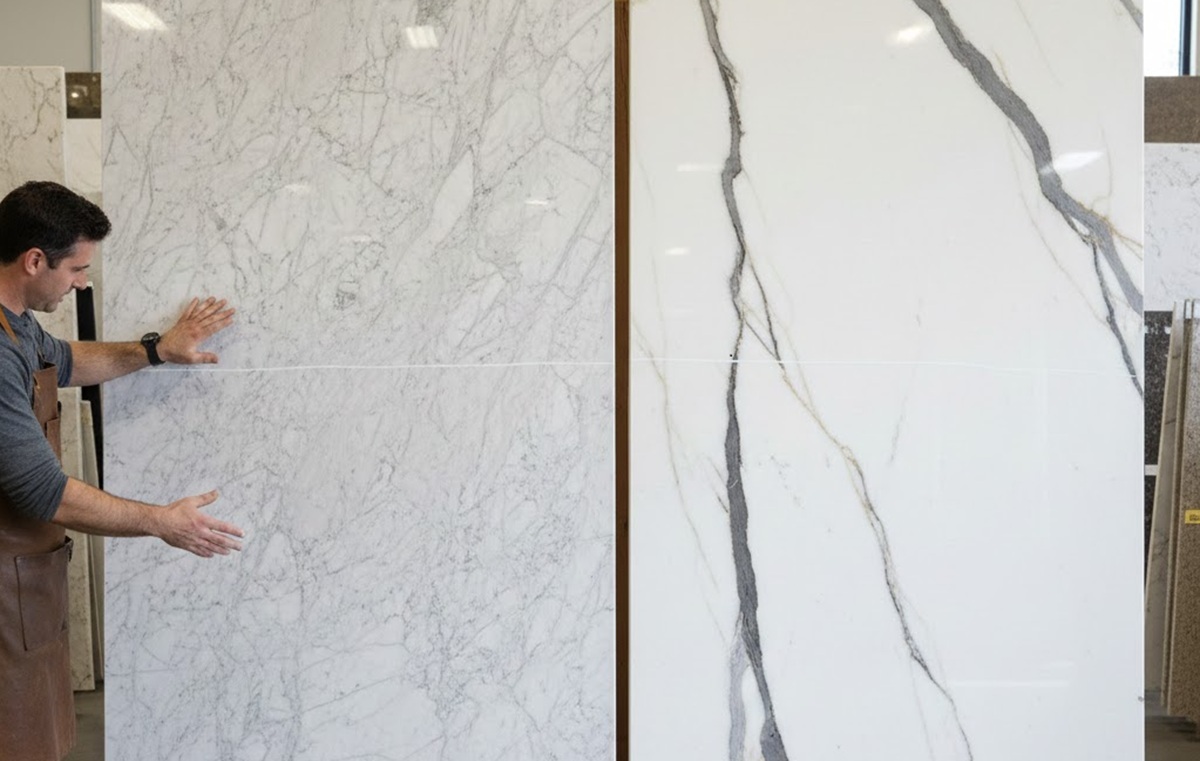
If you're researching care before you buy, that's smart. Come see our slabs in person. We'll show you which granites are easiest to maintain for your lifestyle. Visit our showroom →
🔧 Removing Stains from Granite Countertops
✦ The Reality About Granite Stains
Most "stains" are actually just surface buildup that comes off with proper cleaning. True penetrating stains don't happen overnight. They take serious abuse.
Even with porous materials, you'd need to leave something like red wine sitting for many hours or overnight to get a real stain.
The most common real stains appear around the stove in homes that cook frequently with oils and spices. The combination of heat, cooking oil, grease, and repeated spills without immediate cleanup can eventually penetrate granite.
If something does absorb, use a hairdryer to dry the area right away, then apply sealer immediately. This method usually prevents any permanent staining.
✦ Oil-Based Stains
For stains from cooking oil, butter, grease, or cosmetics, make a paste with baking soda and water. Mix until it is the consistency of toothpaste.
Apply a thick layer over the stain and cover with plastic wrap, taping the edges.
Let sit overnight. As the baking soda paste dries, it pulls air in and automatically sucks anything out of the pores from inside out.
Remove and wipe clean with dish soap and warm water.
✦ Organic Stains
For coffee, wine, or fruit juice stains, mix baking soda with hydrogen peroxide to make a paste.
Apply and cover the same way, leaving for several hours to sit and work.
✦ Water Spots and Mineral Deposits
Water spots are usually just mineral deposits that buff away with a dry cloth. Hard water buildup often happens around sinks where water splashes a lot.
You can clean it with a baking soda paste. Gently scrub the paste on the affected area, then rinse it well with clear water.
✦ Ink or Marker
Use acetone on a cotton ball, dabbing rather than rubbing to avoid scratches.
Professional Tip: Poultice powder is available at Home Depot or hardware stores. If the stain doesn't come out, it might be etching or damage needing professional restoration with specialized materials.
❓ Frequently Asked Questions About Granite Countertops
Q. Can I use disinfectant on granite?
A. Yes, use 50/50 isopropyl alcohol and water. Spray, let sit 3-5 minutes, wipe dry. Avoid bleach-based disinfectants.
Q. Why does my black granite show water spots and streaks?
A. Black granite shows everything. It's the most unforgiving color. Use minimal soap, rinse thoroughly, and always buff dry with a microfiber cloth.
Q. Can I put hot pots and pans directly on granite?
A. Granite handles heat well, but sudden temperature changes can cause thermal shock. Heat also temporarily opens pores. Always use trivets.
Q. How do I know if my granite is real?
A. Real granite feels cool to touch, has unique natural patterns with small flaws, and no two slabs match. Fake granite feels warmer with perfectly uniform, repeating patterns.
Q. Should I choose granite or quartz?
A. Granite offers natural beauty, unique patterns, and excellent heat resistance but needs periodic sealing. Quartz is engineered for consistency and doesn't need sealing, but can burn and lacks natural character.
Q. Does this advice apply to marble and other natural stones?
A. Most natural stones, including marble, quartzite, and soapstone, share similar care principles. However, marble is much more sensitive to acidic substances.
Q. Can I cut directly on granite?
A. Never. It dulls your knives and can damage the sealer. Always use cutting boards.
Q. What's the best way to clean granite daily?
A. Warm water with a few drops of mild dish soap. Wipe with a soft cloth, rinse with clear water, dry immediately with a microfiber cloth.
Q. Can you use vinegar on granite?
Occasional use won't destroy your countertops, but don't make it a habit. Vinegar is acidic and will slowly break down your granite's protective sealer with regular use. Stick to dish soap and water for daily cleaning.
✅ Conclusion
Granite countertops are an excellent investment that can last a lifetime with proper care and maintenance. The key is knowing that granite is exceptionally durable.
You don't need to treat it gently or worry too much about cleaning.
Most granite "problems" aren't significant problems at all. Cloudiness is usually just residue buildup.
"Stains" are often surface issues that clean right off with dish soap and warm water. Water spots are just mineral deposits that wipe away with a dry cloth.
Learning to clean granite countertops well means knowing that granite can handle mistakes. It recovers from neglect better than other materials.
Clean surfaces that look dirty often. Use common sense when choosing cleaning products.
Enjoy one of nature's most beautiful and strong surfaces.
Daily Maintenance Essentials: Clean every day with mild dish soap and warm water. Then, wipe with a dry microfiber cloth to remove extra water.
Avoid acidic substances and harsh chemicals. Use a spray bottle for easy application and work in circular motions for best results.
Protect from hot pots with trivets, use cutting boards to prevent scratches, and test and maintain your sealer as needed.
📚 Related Articles
🏠 Visit Our Southborough Showroom
The best way to choose granite is to see it in person. Touch different materials, take samples home, and see how they look in your lighting.
Every slab is unique, and photos don't capture the true depth and character of natural materials.
Stop by our countertop store to explore your options.
Granite Guy Inc.
43 Turnpike Road (Route 9)
Southborough, MA 01772
📞 508-460-7900
✉️ info@graniteguyinc.com
Learn about our process →
Contact us →