Skip to content
All posts

Can You Use Vinegar on Granite Countertops? | Granite Guy Inc.

Can You Use Vinegar on Granite Countertops? | Granite Guy Inc.

Granite Guy Inc. • Updated December 2025 • 4 minute read


The short answer: No. Vinegar is acidic and will slowly break down your granite's protective sealer with repeated use. Occasional contact won't cause immediate damage, but vinegar should never be your go-to cleaner for granite countertops.

Granite is one of the most popular, elegant, and durable natural stones out there, and for good reason. In particular for granite countertops, they can transform the look of your whole kitchen or bathroom.

The rising demand for granite kitchen countertops has led to more types of granite slabs and finishes in local showrooms. This makes it easier to find the perfect match for your project.

Professional designers can help homeowners choose the best granite kitchen countertops. They can coordinate every detail of the kitchen remodel. They also make sure that cabinets, backsplashes, and fixtures all match for a unified design.

Designer showing granite countertop samples to homeowners

When you plan your remodel, visit a local countertop store. The staff there is friendly and knows a lot. You can ask all your questions, get expert advice, and even take home samples. Working with a local fabricator is very convenient.

You can easily visit, see how things are going, and stay involved. You can go back to your chosen stone many times. This way, you can ensure it matches well with your décor before installation.

Couple browsing granite slabs in countertop showroom

Visiting our showroom lets you see granite slabs and samples up close. This helps you choose the right color, pattern, and light reflection to make your kitchen look great.

The minerals in granite contribute to its unique appearance and durability, making each slab one-of-a-kind. You can choose granite kitchen countertops in traditional or modern styles, and they can match many different decor options.

Its strength, beauty, and resilience is strong and impervious so it can easily withstand heat and spills. Paying attention to detail is important for a high-end look. This includes choosing the right granite or stone slab. It also involves coordinating fixtures and planning for sink cutouts.

One of the first things you might worry about when getting a granite countertop is how to take care of it regularly. Luckily, you don’t have to do much. But there are do’s and don’ts when it comes to granite cleaning and maintenance.

When looking at costs, it’s important to understand that granite countertop pricing depends on several factors. The size of your project and the layout of the slabs affect the best patterns. The yield and material waste also matter. Extra features like sink cutouts or custom edges influence the final price too. You can choose from our in-house inventory, our stock, or order from a supplier. Granite Guy has the tools, technology, and expertise to get everything right.

In today’s blog, we ask and answer: can you use vinegar on granite counters counters?

Why Granite? The Benefits of Granite Countertops

CloseUp of Granite Patterns
Granite countertops have long been a favorite among homeowners who value both style and substance in their kitchens. One great benefit of granite is its strong heat resistance. This makes it ideal for busy kitchens with hot pots and pans every day.

This natural stone is very durable. It can handle everyday wear and tear, like scratches and stains. Using a good granite sealer helps protect it even more.

Granite is beautiful because of its unique patterns and colors. For example, river white granite adds sophistication to any kitchen design. Each slab is one-of-a-kind, ensuring your countertops are as unique as your home. You can pair granite countertops with other materials, like quartz, to create a custom and elegant look that shows your style.

With proper maintenance, including regular cleaning and sealing, granite countertops can maintain their stunning appearance for decades. Their durability and timeless elegance make them a smart investment, adding both value and beauty to your kitchen. Granite countertops have natural patterns and practical benefits. They combine style and usefulness in a way that is hard to match.

In today’s blog, we ask and answer the big question: Can You Use Vinegar on Granite Countertops?

🧪 Why Vinegar Damages Granite

Homeowners have been cleaning with vinegar for decades — it cuts through grease and dissolves sticky residue. But that same acidity is the problem with granite.

Granite itself is extremely durable. It won't dissolve or crumble from vinegar. But the sealer that protects your granite will slowly wear away with repeated exposure.

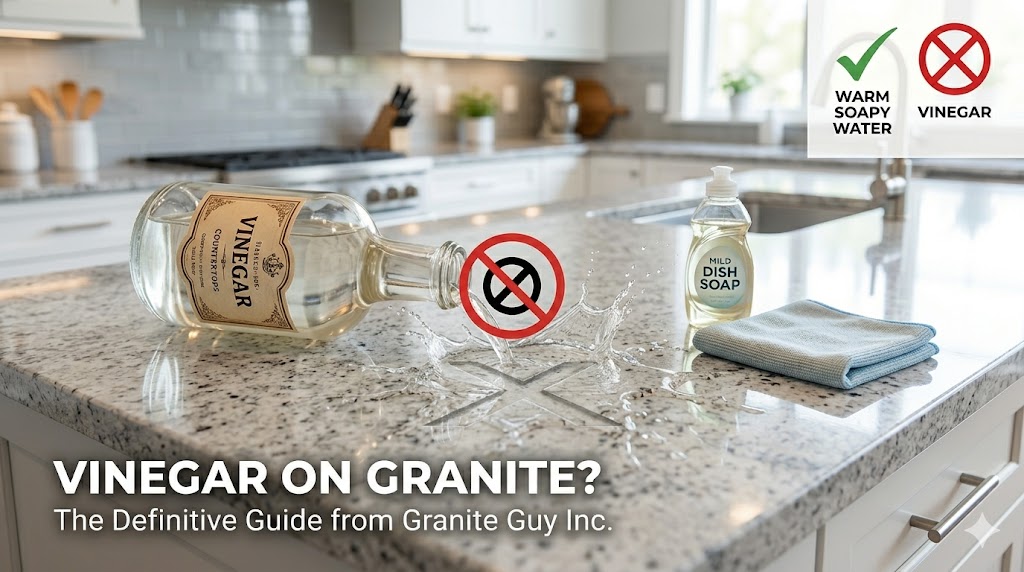
Vinegar and cleaning solution crossed out on granite kitchen countertops, showing why acidic cleaners should not be used on granite by Granite Guy Inc.

Once the sealer breaks down, your countertops become more porous and vulnerable to staining. Over time, you'll notice the surface looking dull and losing its natural sheen. That's etching — and it's not something you can just wipe away.

Factors Impacting Granite Durability

The longevity and resilience of your granite countertop depend on several important factors. First, the type of granite you choose is very important. Some types of granite cost more because they are denser. They are also more resistant to damage because of their special mineral makeup.

Using a granite sealer is an important step. It protects the stone from stains and scratches. This helps keep its beauty over time.

Professional installation and expert fabrication are also key to ensuring your granite countertops stand the test of time. A well-installed countertop is less likely to crack and have other problems. Professional fabrication makes sure it fits and looks great.

Homeowners should remember to do regular maintenance. This includes polishing and sealing to keep their countertops looking great.

Applying granite sealer to kitchen countertops with microfiber cloths, showing proper care and maintenance by Granite Guy Inc.

🧪 How to Tell If Your Sealer Is Damaged

Drop a few water droplets on the surface and wait 5-10 minutes.

  • Water beads up: Sealer is intact. No action needed.
  • Water slowly darkens the stone: Sealer is wearing thin. Plan to reseal soon.
  • Water absorbs immediately: Sealer is gone. Reseal right away.

Granite is strong and durable, but like all natural stone, it still needs proper care. A Natural Stone Countertops and Backsplash Maintenance Guide can help homeowners keep their surfaces looking great for decades.

Homeowners can enjoy the beauty and usefulness of their granite countertops for many years. They can achieve this by learning about different types of granite.

They should also understand the importance of proper installation. Regular maintenance is necessary as well.

There's a Safer Way

Fortunately, there are other safer ways you can clean your granite countertopsIf you want to know how to care for your countertops after installation, it’s easy. Just use warm water, mild dish soap, and a soft cloth.

Clean it daily with a clean damp cloth to wipe up spills and crumbs. All you need is a cotton or microfiber cloth with warm water and dish soap to clear away debris. Mop up beverage and pasta sauce spills immediately so the stains don't set.

Cleaning granite kitchen countertops with a stone-safe cleaner and microfiber cloth for proper daily care by Granite Guy Inc.

There are also slab cleaners on the market that you can buy and that are safe for use with granite. You just spray them onto the surface and gently rub with a cloth. 

🚫 Other Cleaners to Avoid

Vinegar isn't the only culprit. These common household cleaners can also damage your granite sealer:

  • Lemon juice or citrus-based cleaners
  • Bleach
  • Ammonia-based products
  • Glass cleaners like Windex
  • All-purpose cleaners (most are too harsh)

One-time use won't destroy your countertops. But daily or weekly use will gradually wear down the protective coating.

✅ What to Use Instead

Daily cleaning is simple. You don't need special products.
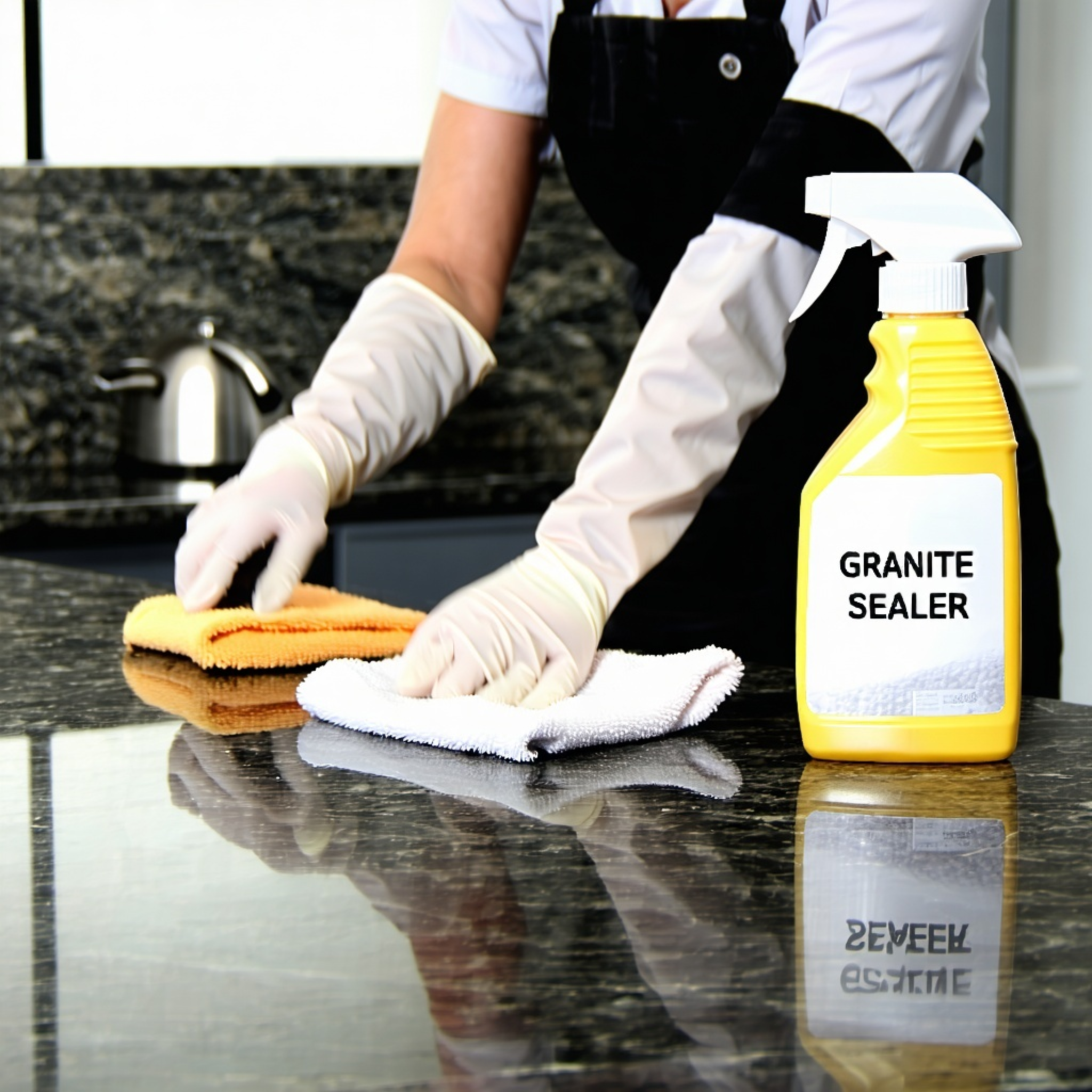
[KEEP IMAGE: Person wiping granite with microfiber cloth]

For everyday cleaning: Warm water, a few drops of mild dish soap, and a soft microfiber cloth. Wipe down the surface, rinse with clean water, and dry with a clean cloth to prevent water spots.

For disinfecting: Mix 50/50 isopropyl alcohol and water in a spray bottle. Spray, let sit for 3-5 minutes, then wipe clean.

For stubborn spots: A paste of baking soda and water works well for stuck-on debris.

For deep cleaning: If your countertops look dull or cloudy, it's usually residue buildup. Read our complete guide to cleaning granite countertops for step-by-step instructions.

Comparison: Granite vs. Quartz Countertops

Side-by-side comparison of marble and granite kitchen backsplashes, highlighting differences in pattern, color, and overall design by Granite Guy Inc.

Choosing between granite and quartz countertops is a common decision for homeowners looking to upgrade their kitchens. Granite is a natural stone known for its beauty and strength. Each slab has unique patterns that make it special.

Manufacturers create quartz countertops from natural quartz and resin. They have a more uniform look and come in many colors and styles.

Granite and quartz countertops usually cost between $60 and $1120 per square foot. The price depends on the quality, style, and source of the material.

Granite has a classic and elegant look. It is very heat resistant, which makes it great for kitchens where cooking happens often.

Quartz countertops are non-porous. They are more resistant to stains and scratches. This is a significant advantage for busy households.

Maintenance is another key factor: granite requires periodic sealing to protect against stains, while quartz is virtually maintenance-free. You can pair both materials with other stones like marble, quartzite, or soapstone. This creates a custom look that fits your style and needs.

Ultimately, the choice between granite and quartz countertops comes down to your personal preferences, budget, and lifestyle. Both provide durability and elegance. They also offer many design options, so you can find the perfect fit for your kitchen.

Homeowners can choose a good countertop by considering the benefits of each material. Each type of countertop has its own unique features.

🛠️ What If You Already Used Vinegar?

Don't panic. If vinegar splashed on your granite or you've been using it occasionally, your countertops are probably fine

Removing stains from granite kitchen countertops using a soft cloth and stone-safe cleaning method by Granite Guy Inc.

Vinegar can lead to long-lasting damage on granite counters if you don't treat it right away. If you inadvertently get vinegar on your granite surface:

If you notice dullness from repeated vinegar use:

  1. Blot the area with a clean cloth
  2. Spread baking soda on the spot
  3. Wipe gently with a soft cloth — don't scrub hard
  4. Rinse with water and dry with a towel
  5. Apply granite sealer to restore protection

If the damage is severe — visible etching or roughness you can feel — you may need professional restoration. But for most cases, resealing solves the problem.


❓ Frequently Asked Questions

Can I use vinegar on granite just once?

A single splash won't ruin your countertops. The problem is repeated use over time. If vinegar gets on your granite, just wipe it up promptly and rinse with water. No lasting damage from occasional contact.

What about apple cider vinegar or diluted vinegar?

Still acidic. Diluting vinegar reduces the concentration, but it's still not recommended for regular use on granite. Why risk it when soap and water work perfectly?

Is vinegar safe for other natural stones?

No. Vinegar can damage marble, limestone, travertine, and most natural stones. It's especially harsh on marble, which etches much more easily than granite. If you have multiple stone surfaces in your home, it's best to avoid vinegar entirely and stick to pH-neutral cleaners.

What's the best daily cleaner for granite?

Warm water with a few drops of mild dish soap. Simple, effective, and won't damage your sealer. Wipe with a microfiber cloth, rinse with clean water, and dry to prevent water spots. Read our full granite cleaning guide [INTERNAL LINK: /blog/how-to-clean-granite-countertops-a-step-by-step-guide] for more details.

How often should I seal my granite?

It depends on the granite type and how much use it gets. Light-colored granites typically need sealing once a year. Darker granites can often go 2-3 years between sealing. Use the water droplet test above to check if your sealer is still working.

What if my granite already looks dull?

Dullness is usually caused by one of two things: residue buildup or sealer damage. Try cleaning thoroughly with dish soap and water first. If that doesn't restore the shine, the sealer may need attention. For stubborn cloudiness, mineral spirits can remove buildup — then reseal the surface.

Can I use Windex on granite?

We don't recommend it for regular use. The ammonia in glass cleaners can break down your sealer over time. Occasional use won't cause immediate damage, but it shouldn't be your everyday cleaner.

What about "granite cleaners" sold in stores?

Many work fine, but they're not necessary. Mild dish soap and water does the same job for a fraction of the cost. If you prefer a commercial product, look for one specifically labeled as pH-neutral and safe for sealed natural stone.


🏠 30 Years of Granite Experience in Massachusetts

We've been fabricating and installing granite countertops across Greater Boston and MetroWest since 1995. After tens of thousands of installations, we've seen every cleaning mistake in the book — and helped homeowners fix them.

The good news? Granite is incredibly forgiving. Even if you've been using vinegar for years, the damage is usually reversible with proper cleaning and resealing.

If you have questions about caring for your granite countertops — or you're ready to install new ones — we're here to help.

📍 Visit our showroom: Route 9, Southborough, MA

📞 Call us: 508-460-7900

💬 Get a free quote: graniteguyinc.com/contact