Is Leathered Granite Right For You? A Pro's Guide to Pros, Cons & Cost

Updated: December 24, 2025
Introduction to Leathered Granite Countertops
After more than 30 years in the stone business and over 10,000 granite countertops installed across Greater Boston and MetroWest, I've handled just about every granite finish there is. Polished granite, honed granite, leathered granite you name it, I've cut it, shaped it, sealed it, and installed it.
And leathered granite countertops? It's the finish that always gets people asking questions because most homeowners have never actually run their hands across a good leathered granite slab. So here's the complete guide based on real experience not the oversimplified stuff you usually see online.
What Leathered Granite Actually Is
Leathered granite starts the same way as any other natural stone: it's quarried, cut into slabs, and sent to suppliers. The difference is what happens at the factory. Instead of creating a polished surface with that mirror shine or leaving it smooth and matte like a honed finish, they run a diamond-tipped brush across the stone. These diamond-tipped brushes work the textured surface, bringing out the natural texture while actually closing the pores.
The result? A warm, distinctive texture with a slightly pebbled feel that shows the real character of your granite.
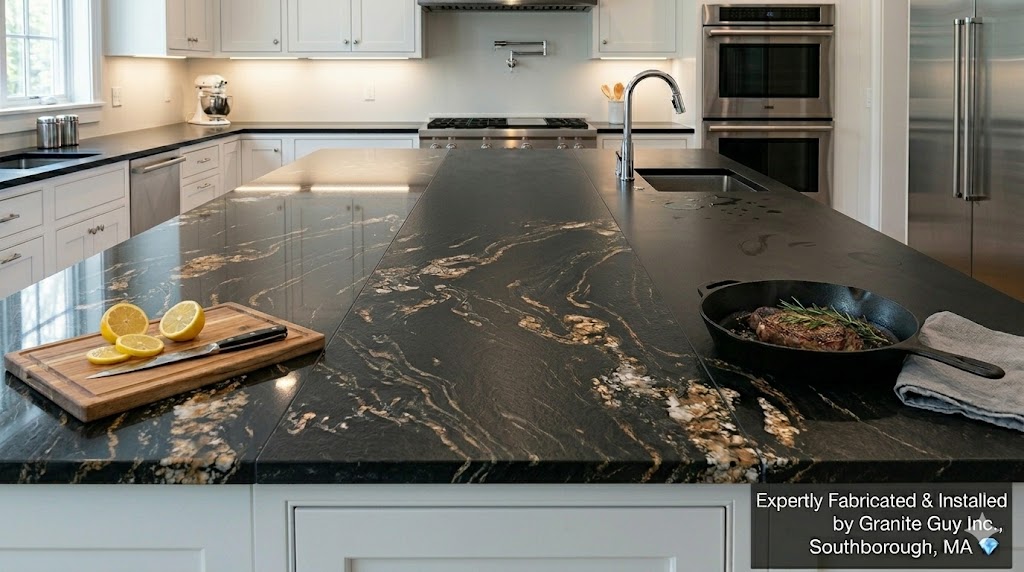
Unlike polished granite, which can hide the stone's natural beauty in bright lights, leathered granite enhances everything. The movement, the mineral deposits, and the subtle shifts in tone all become more dramatic. This textured appearance brings timeless beauty to any space.
Understanding Your Granite Finishes
Let me break down the real differences between the three main granite finishes:
Polished Granite: The shiny, reflective surface everyone knows. Polished surfaces reflect light like a mirror and wipe clean easily. The downside? That polished finish shows everything — fingerprints, water spots, even minor scratches catch the light on polished granite.
Honed Granite: Completely matte finish and smooth texture. Honed granite looks modern and soft with muted tones, but depending on the stone, honed surfaces can show handprints and marks pretty easily.
Leathered Granite: A matte finish like honed granite, but with distinctive texture that hides the everyday stuff. Fingerprints disappear on the textured surface. Water spots blend into the texture.
Minor marks? You won't even notice them. The leathered finish makes the stone's natural colors become deeper and more dramatic.
Think of it this way: polished granite is formal and bright because of its shiny surface. Honed granite is subtle and modern. Leathered granite, on the other hand, has a warm, natural look. It adds rustic charm and sophistication.
Why Homeowners Choose Leathered Granite Countertops
The Texture Works Harder in Real Kitchens
That textured surface isn't just for looks — the texture of leathered granite hides fingerprints, smudges, and water rings better than any polished surface. Got kids? Busy household? Active kitchen?
Leathered granite countertops give you more forgiveness than polished stone ever could. The distinctive texture makes it a practical choice for high-use areas.
Natural Beauty Without the Glare
The leathering process doesn't add color, but it brings out the stone's natural beauty. Black Pearl granite becomes deeper and richer. Absolute Black develops stunning depth.
Even lighter granite stones like Silver Waves show subtle natural beauty you just don't see with a polished finish. This sophisticated appearance adds timeless elegance to any kitchen.
Low Maintenance and Stain Resistant Over Time
Here's something about making leathered granite that most articles won't tell you: the diamond-tipped brush process actually closes the granite's pores, making the surface more stain resistant to moisture. You still seal natural stone (all granite needs it), but leathered surfaces typically need sealing less often than polished granite. The texture naturally resists stains better, making it truly low maintenance.
Creating the Perfect Focal Point
The matte finish absorbs light instead of bouncing it around your kitchen countertops like a polished surface would. That creates a softer, more inviting focal point in your space — especially important if you're going for that warm, lived-in kitchen feel with rustic charm rather than a showroom look. The texture adds elegance without the formality.
Where Leathered Granite Really Shines
After thousands of installations, I've seen leathered granite work beautifully as a focal point almost everywhere:
Indoor Living Spaces:
- Kitchen countertops and islands (especially in busy family kitchens)
- Bathroom vanities (the texture adds spa-like elegance and warmth)
- Fireplace surrounds (heat-resistant granite with sophisticated appearance)
- Wet bars and butler's pantries
- Accent walls in modern living spaces
Outdoor Applications (where granite texture is absolutely perfect):
- Outdoor kitchens — the durable stone handles weather like a champion
- Pool areas — that textured surface is naturally slip-resistant
- Patio bars — no reflective surface glare in direct sunlight
- BBQ stations — heat-resistant natural stone with low maintenance
The leathered finish looks fantastic outside because granite blends naturally with the environment instead of looking like you dropped a shiny polished surface in your backyard.
Real Cost Breakdown for Leathered Granite (No Games)
Here's the truth about granite costs: the finish almost never changes the price. You're paying for the stone itself. Leathered Black Pearl granite costs the same as polished Black Pearl when you buy it from the supplier.
Current Market Pricing (2024)
Leathered granite countertops installed: $60 to $150 per square foot
What affects granite prices:
- The specific stone (common vs. exotic granite)
- Slab thickness (3cm standard vs. 5cm for waterfall edges)
- Edge details and complexity
- Number of cutouts and seams
Real Kitchen Countertop Examples
Standard Kitchen Countertops (40-50 sq ft):
- Basic granite stones: $2,400 to $3,000
- Premium stone selections: $6,000 to $7,500
Large Kitchen Countertops (60-75 sq ft):
- Basic granite: $3,600 to $4,500
- Premium stones: $9,000 to $11,250
The Exception: If you fall in love with polished granite that you want leathered, we can do that in-shop. The leathering process adds about $10-20 per square foot depending on the stone's durability and hardness. Honestly though? With so many beautiful pre-leathered granite options available, most clients don't go this route.
Long-Term Value of Natural Stone
Leathered granite countertops can actually save money over time:
- The texture hides wear = fewer repairs or refinishing
- Stain resistant surface = less frequent sealing
- Disguises minor damage = longer before replacement
- Low maintenance texture = less daily cleaning
The Honest Drawbacks of Leathered Surfaces (Because You Should Know)
Cleaning the Textured Surface Is Different, Not Harder
The texture means crumbs and dust can settle into the textured surface instead of sliding off polished surfaces. You don't need special products — just a soft brush or microfiber cloth for cleaning instead of a single swipe. Takes maybe 10 seconds longer. If cleaning bothers you, ask for a lighter brushed texture that's smoother but still has that matte finish.
Texture Varies by Stone
Some granite develops deep, pronounced texture with rough texture feel. Other stones stay relatively smooth with just subtle texture variation. The granite's mineral content affects how the texture develops. Always touch the actual granite slab before buying — photos don't capture the true texture.
Light Absorption in Living Spaces
In a dark kitchen with low light, leathered granite can make the room feel like a cave. The matte finish does not reflect light. But with decent lighting (natural or artificial), the texture creates beautiful warmth and sophistication that polished granite can't match.
Scratch Resistance Considerations
While the textured surface hides minor imperfections better than polished surfaces, deep scratches can still occur. However, the texture makes scratches less noticeable than on polished granite. Apply a quality sealer to enhance durability and scratch resistance.
What Actually Matters During Installation
The leathered finish comes from the factory already done — we're not doing the leathering process in your kitchen. But proper installation of granite countertops still matters:
- Seam placement: Must respect the texture and natural stone pattern
- Edge finishing: Should match the leathered surface texture
- Support structure: Proper reinforcement for the durable stone
- Handling: Keeping that distinctive texture consistent from shop to home
- Final sealing: Using the right sealer for stain resistant protection
Get these details right, and leathered granite looks incredible from day one with timeless beauty that lasts decades.
Your Most Common Questions About Leathered Granite Answered
Q: Is leathered granite hard to clean?
A: Leathered granite requires slightly more attention than polished surfaces because of its textured surface where dust can collect. However, regular cleaning with soap and warm water is typically sufficient. The texture actually helps hide smudges and fingerprints better than polished granite, making day-to-day maintenance easier.
Q: Is leathered granite more expensive than polished granite?
A: When you order slabs that have a leathered texture, you usually pay the same price as for polished granite. The cost variation usually comes from the specific granite color and quality, not the finish. However, if the team needs to do leathering in-shop (which is rare), they will add labor costs.
Q: What are the main pros and cons of leathered granite?
A: Pros: Enhanced natural colors, unique texture, better stain resistance, hides fingerprints, requires less frequent sealing. Cons: Requires more thorough cleaning, works best in larger spaces with good lighting.
Q: What exactly is leathered granite?
A: Workers brush natural granite with diamond-tipped tools to create a textured, matte finish, resulting in leathered granite. Unlike polished granite's smooth, glossy surface, leathered granite has a rippled texture while maintaining all granite's durability.
Q: Does leathered granite need to be sealed?
A: Yes, you should seal leathered granite like all natural granite. However, the leathering process affects the stone's porosity, typically allowing for less frequent sealing compared to polished granite surfaces.
Q: What's the difference between honed and leathered granite?
A: Honed granite has a smooth, matte finish, while leathered granite has a subtle textured surface. Both are non-reflective, but leathered provides a tactile quality that enhances the stone's natural patterns.
Q: Can I change my granite finish from polished to leathered after ordering?
A: You can change finishes, but it's cheaper to order slabs that already have the finish you want. Pre-finished slabs do not cost more. However, changing a finish in the shop needs extra labor and equipment, which can raise the price significantly.
Q: What should I consider with leathered granite?
A: Leathered granite is an excellent choice that offers unique benefits. The textured surface is easy to maintain with regular cleaning and actually hides everyday smudges better than polished surfaces. It works well in any space and brings out the rich natural colors and elegant matte finish of the stone.
Making Your Decision About Granite Finishes
After 30 years of installing stone countertops, I can tell you this: the right granite finish can completely transform your space. Leathered granite brings warmth and natural character that polished stone just can't match. It's a practical choice for busy families, gorgeous in any light, and the texture actually gets better-looking with age as it softens slightly with use.
The captivating blend of durability, natural beauty, and low maintenance makes it perfect for modern living. The best part?
Leathered granite works with any style. I've installed these countertops in ultra-modern Boston condos and 1790s farmhouses in Concord. In both cases, the timeless elegance and sophisticated appearance looked like it belonged there.
See Leathered Granite In Person at Granite Guy
Here's the thing about leathered granite — you need to touch that textured surface to really understand it. Photos don't capture the warmth of the texture or how light plays across the distinctive texture of the stone.
Stop by our Southborough showroom. We've got dozens of leathered granite samples you can actually run your hands over — Black Pearl, Absolute Black, and many other granite varieties. Bring your cabinet doors, your paint chips, whatever helps you envision it. We'll show you different stones, different texture depths, and give you honest advice about what granite finish works with your specific situation.
No high-pressure sales tactics — that's not how we've stayed in business for 30 years working with natural stone. Just straight talk about what works, what doesn't, and what fits your budget for granite countertops.
Call us at 508-460-7900 or just drop by. We're here Monday through Saturday, and we actually enjoy talking about stone (maybe too much, my wife would say).
, Granite Guy Inc.
Fabricating and installing granite and natural stone in Greater Boston since 1995