Quartz vs Granite Countertops: A Ma Fabricator's Honest Comparison

-
Written by Granite Guy Inc., Southborough, Massachusetts
Updated: March 2026Granite is natural stone mined from the earth. Quartz is engineered stone made from ground quartz mixed with resins. That single difference drives everything else, from heat resistance and maintenance to how they perform in a Massachusetts kitchen.
💎 The Quick Answer: If you cook seriously or want outdoor countertops in New England, granite wins. If you want zero maintenance indoors, quartz wins. Both cost roughly the same and both look great when properly fabricated. The right choice depends on how you actually use your kitchen.After 30 years fabricating and installing both materials across MetroWest and Greater Boston, I've put in over 10,000 countertops. Here's what I tell customers who ask me this question every single day.
⚖️ Quartz vs Granite Countertops: The Real Difference
Think of quartz like a commodity. It's manufactured using the same process regardless of who makes it, with different pricing tiers based on brand and color. Consistent, predictable, engineered.
Natural granite is more like an artisanal product. Each slab comes from a different quarry somewhere in the world, with unique mining conditions, transport costs, and availability. The pricing reflects that rarity and character.
Granite is 100% natural stone formed by volcanic heat over millions of years. Quartz countertops are about 90% ground quartz crystals mixed with polymer resins and pigments.
With granite, you're working with nature's palette. With quartz, manufacturers can create virtually any color or pattern, constantly trying to replicate what granite, marble, and other natural stones achieve on their own.
→ Which One Looks Better?
That depends entirely on what you're after. Granite gives you depth, movement, and visible mineral crystals that catch light differently depending on the angle. No two slabs are identical.
Quartz gives you consistency. If you want a specific white marble look without marble's maintenance issues, quartz can deliver that. The technology has improved significantly, but side by side with real stone, you'll notice the difference.
🔥 Heat Resistance: What Cooks Actually Need to Know
This matters if you use your kitchen for more than reheating takeout.
Granite was formed by volcanic heat and handles temperatures up to 1,200°F. You can set a hot pot directly on the surface without damage. We still recommend trivets out of habit, but granite won't scorch or discolor.
Quartz contains polymer resins that begin to melt or scorch at temperatures as low as 300°F. A hot pan pulled straight from the stovetop can leave permanent burn marks, discoloration, and even cracks.
Trivets aren't optional with quartz. They're mandatory.
This isn't a minor difference. It's the single biggest performance gap between these two materials.
If you cook regularly, this deserves serious consideration. Learn more about the causes and prevention of cracking in quartz countertops.
🌨️ Why Massachusetts Weather Changes This Decision
Most comparison articles are written by national content teams who've never sealed a countertop during a New England July. Here's what they miss.
→ Sealing Timing Matters Here
Granite requires periodic sealing, and when you seal matters in Massachusetts. Humid summer days can prevent sealers from curing properly.
We recommend sealing in spring or fall when humidity drops. It's a simple process that takes a few minutes, but timing it right makes a real difference. Here's our complete granite sealer guide.
→ Outdoor Countertops: Granite Only
More Massachusetts homeowners are adding outdoor kitchens, grill surrounds, and patio bars. These installations need to handle our freeze-thaw cycles, UV exposure, and occasional coastal salt air.
UV rays, freezing temperatures, and salt air will destroy quartz resins over time. We've replaced outdoor quartz installations that homeowners chose against our advice.
Granite handles all of it without complaint. For any outdoor countertop application in Massachusetts, granite is the only option between these two materials.
🧽 Maintenance: The Sealing Question
Quartz is non-porous. Liquids can't penetrate the surface, it never needs sealing, and soap and water handle daily cleaning.
It resists wine, coffee, and oil stains exceptionally well. Here's our guide on how to clean quartz countertops.
Granite is porous and needs periodic sealing. The word "porous" scares people, but the reality is far less dramatic than it sounds.
→ What We Actually See in Our Shop
Homeowners who forget to seal their granite for years usually still have counters that look fine, especially darker granites. But proper sealing protects your investment and takes just minutes. Skip the sealing, and you risk permanent stains from oils and acids over time.
If maintenance is your top concern and you don't cook with high heat, quartz makes your life easier. If you're the type who already wipes down counters daily and doesn't mind a quick seal once or twice a year, granite's maintenance is a non-issue.
💰 Why Stone Pricing Isn't One-Size-Fits-All
How much is it per square foot? That's the most asked question. Unfortunately, it's not that simple. Let me explain why.
Most people think there's a ladder: granite is cheap, quartz is medium, marble is expensive. That's completely false. I can find you a quartz cheaper than granite. I can find you a granite that costs more than high-end marble. Both materials overlap in price across every tier.
Total installed pricing for both granite and quartz typically ranges from $55 to $150 per square foot in the Greater Boston area. This covers about 95% of available options. The exceptions are super exotics like Blue Bahia granite or Calacatta marble, which always command premium pricing.If you choose anything from our in-house inventory, it's a set price per square foot no matter the size of the job. If we need to special order material for your project, the pricing changes because in this industry, you can only order whole slabs at a time.
Here's what else drives the price:
- Sourcing: Not all suppliers price the same material equally. We shop around to find the best value for your project.
- Complexity: Curves, waterfall edges, and integrated sinks add fabrication time and labor.
- Waste: Every project is like a puzzle. How efficiently we can fit your pieces on the slab affects the final cost. Intricate shapes mean less efficient cuts.
Don't shop by material name. Shop by color and look. Come to the showroom, and you might find a granite and a quartz sitting in the same price group because that's where the market put them today.
📊 What Massachusetts Homeowners Are Actually Choosing
Until late 2024, quartz dominated more than half the countertop market nationally. Bigger than all other materials combined.
But we're seeing preferences shift. More Massachusetts homeowners are returning to granite and other natural stones for kitchens, especially those who cook seriously or want authentic natural materials. Based on conversations with suppliers and others in the business, this trend is real and growing across the state.
→ The Pattern After 10,000+ Installations
After three decades of work across Greater Boston and MetroWest, clear patterns emerge.
Quartz dominates in bathrooms and laundry rooms where the zero-maintenance appeal matters most and heat isn't a concern.
Granite remains the top choice for homeowners who cook regularly or want a natural slab with unique character that no one else has.
For outdoor kitchens and bars throughout Massachusetts, granite is the only choice between these two materials.
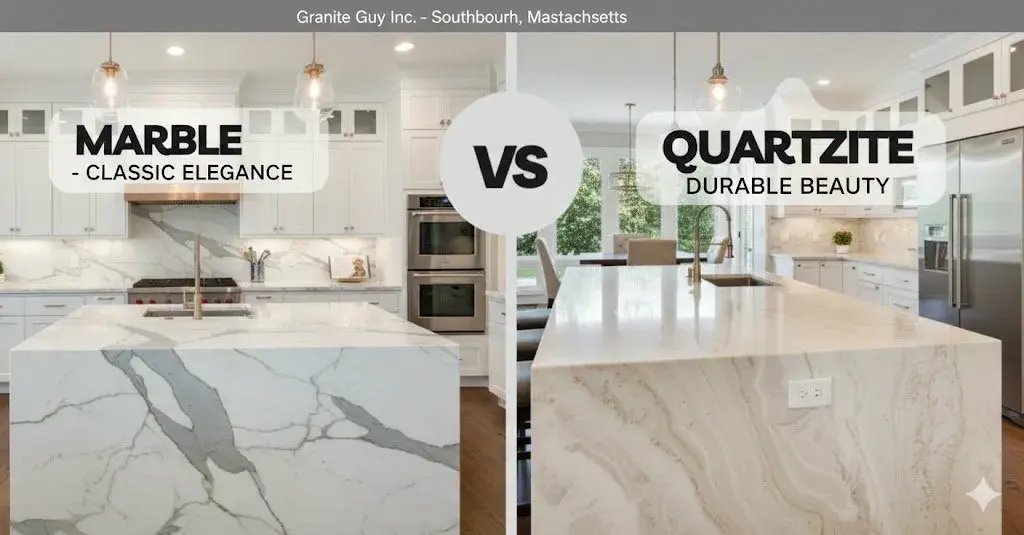
Some homeowners also compare quartz vs porcelain countertops, both engineered options with different strengths. And don't confuse quartz with quartzite, which is a completely different natural stone.
✅ Choose Granite If...
- You cook regularly and don't want to worry about hot pans
- You're building an outdoor kitchen or bar in New England
- You want a natural slab that's one of a kind
- You appreciate depth, mineral crystals, and natural movement in the stone
- You don't mind a quick seal once or twice a year
✅ Choose Quartz If...
- You want zero maintenance with no sealing ever
- You prefer a consistent, uniform look across your countertops
- Your countertops are indoors only
- You want a specific color or pattern that natural stone can't provide
- You're putting it in a bathroom or laundry room where heat isn't a factor
❓ Frequently Asked Questions
Q. Is granite or quartz better for Massachusetts kitchens?
A. For serious cooks, granite wins on heat resistance and outdoor versatility. For low-maintenance indoor kitchens, quartz works well.
Q. Can I use quartz countertops outdoors in Massachusetts?
A. No. UV exposure and New England freeze-thaw cycles will damage quartz resins over time. Granite is your only option for outdoor kitchens and bars here.
Q. How much do granite and quartz countertops cost in Massachusetts?
A. Both typically range from $55 to $150 per square foot installed in the Greater Boston area. Rare exotic granites can go higher.
Q. Does granite really need to be sealed every year?
A. Granite needs periodic sealing, but frequency depends on the specific stone and usage. It's a simple process that takes minutes.
Q. Can you put hot pans on quartz countertops?
A. No. Quartz resins can melt, discolor, and crack at temperatures as low as 300°F, so trivets are mandatory. Granite handles heat up to 1,200°F without damage.
Q. Which material adds more value to my Massachusetts home?
A. Both add significant value when properly installed. Quality fabrication and installation matter more than which material you pick.
Q. Is quartz or granite better for busy families?
A. Quartz requires less maintenance, but busy families who cook a lot benefit from granite's heat resistance. Consider your actual cooking habits, not just maintenance preferences.
Q. What's the difference between quartz and quartzite?
A. Completely different materials. Quartz is engineered stone made with resins, while quartzite is 100% natural stone that's harder than granite and requires sealing. Learn the difference.
📚 Related Articles
- Quartzite vs Granite Countertops: Honest Comparison
- The Difference Between Marble and Granite
- How to Choose an Edge Profile for Your Kitchen Countertop
🏠 Visit Our Southborough Showroom
Still figuring out which stone is right for you? Come see us. Nothing beats standing in front of the actual slabs, comparing colors, patterns, and finishes in person. That's how you make the right decision.
Stop by our countertop store at 43 Turnpike Road (Route 9), Southborough, MA 01772 during business hours. We keep a large inventory in our heated warehouse, so there's always plenty to see.
Already done your homework and know what you want? Email us or give us a call.
📞 508-460-7900
📧 info@graniteguyinc.com