Written by Granite Guy Inc., Southborough, Massachusetts
Updated: October 7, 2026
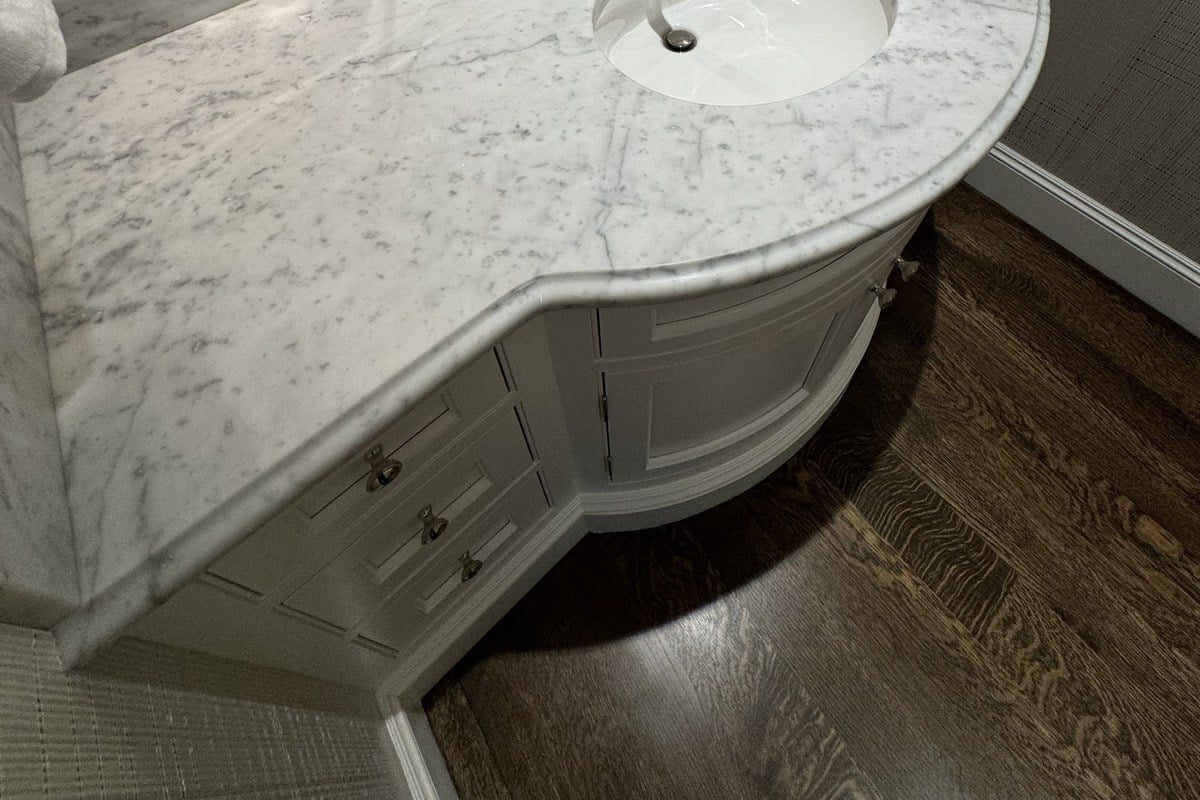
An eased edge countertop has a straight, flat edge with the top and bottom corners rounded about 1/8 inch, just enough to take the sharpness off.
The quick answer: Choose an eased edge unless the piece is traditional or decorative, where a profile edge fits better. If a quote says pencil edge, in my shop that is the same thing.
After 30+ years of experience and 10,000+ projects completed in Massachusetts, it is the edge on the vast majority of our work, on granite countertops and every other stone. Below is how it compares with the edges it gets confused with.
What Is an Eased Edge Countertop?
It goes by more than one name. You may see it written as a pencil edge or a 1/8 inch radius edge, and on a quote they mean the same corner detail.
It is also the simplest finished edge a countertop can have, which is a big part of why it is so common.
How Big Is the Radius?
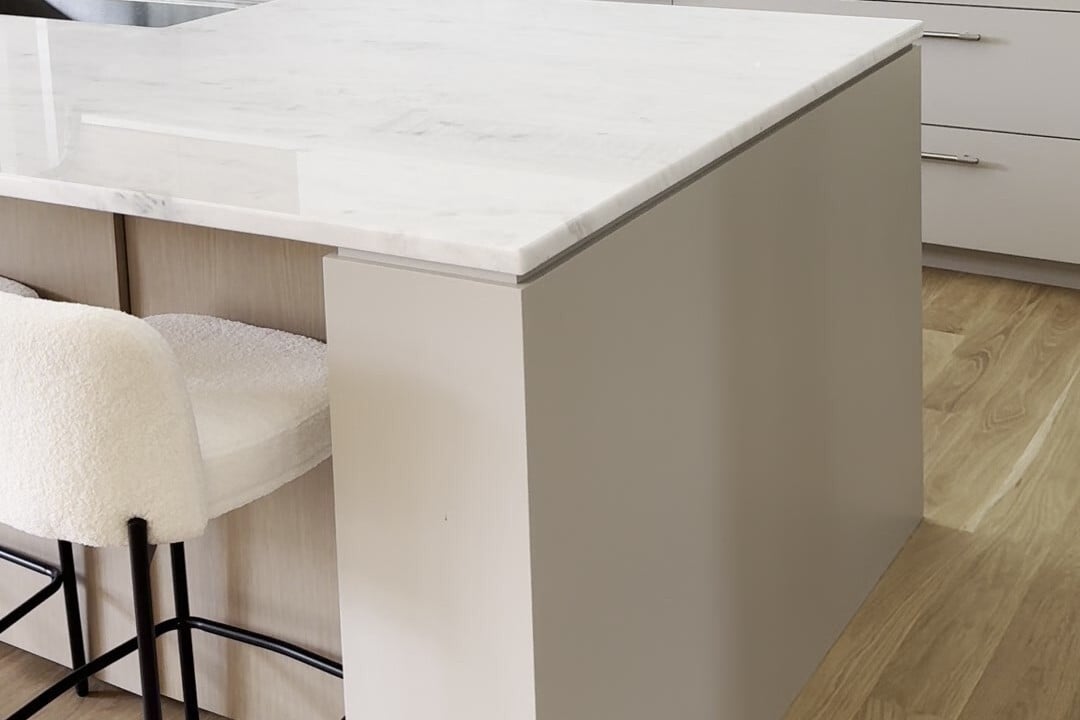
About 3 millimeters, which is roughly 1/8 inch. That is the size today's tooling is built for.
In real work it varies a little. The material matters, the tooling matters, and if a small chip has to be cleaned out, the radius ends up slightly larger.
We are talking about half a millimeter. That matters in a machine shop, not on a countertop.
When I started, every edge was ground and polished by hand, so no two came out exactly alike. Today's tooling makes the same radius every time.
The Bottom Corner Gets Eased Too
We ease the bottom corner as well as the top, sometimes a little less. On some brittle stones the bottom is the one that chips first, so easing both protects the edge.
It matters less on quartz, but we do it anyway. When the piece goes through the CNC, the tool already shapes both corners.
What an Eased Edge Looks Like
From across the room, an eased edge reads as a straight, square edge. You see the full thickness of the stone and a flat face.
Up close, the corners are rounded just enough that they are not sharp to the touch.
Eased Edge vs Pencil Edge vs Straight Edge
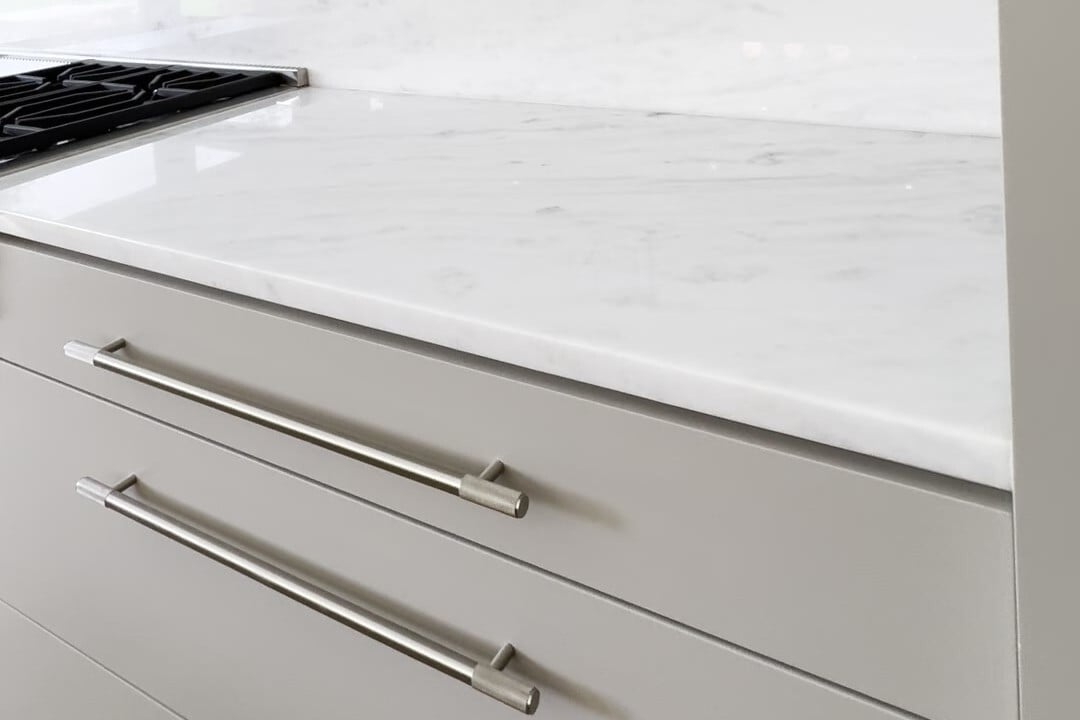
Eased edge and pencil edge are the same thing in my shop. The name depends on who you are talking to: a cabinet dealer, a designer or a home center may use one word or the other. If you ask me for a pencil edge, you get the edge described above.
The name does come from a pencil. A pencil is about 1/4 inch thick, so its radius is about 1/8 inch. A pencil edge is rounded to that radius, not to the full thickness of the pencil, which is the same 1/8 inch as an eased edge.
A straight edge, in the true sense, is something else. It is what we put at the stove or the fridge, and we call it an appliance edge. It is very flat, with very little rounding at the corners, which keeps the stone tight against the appliance.
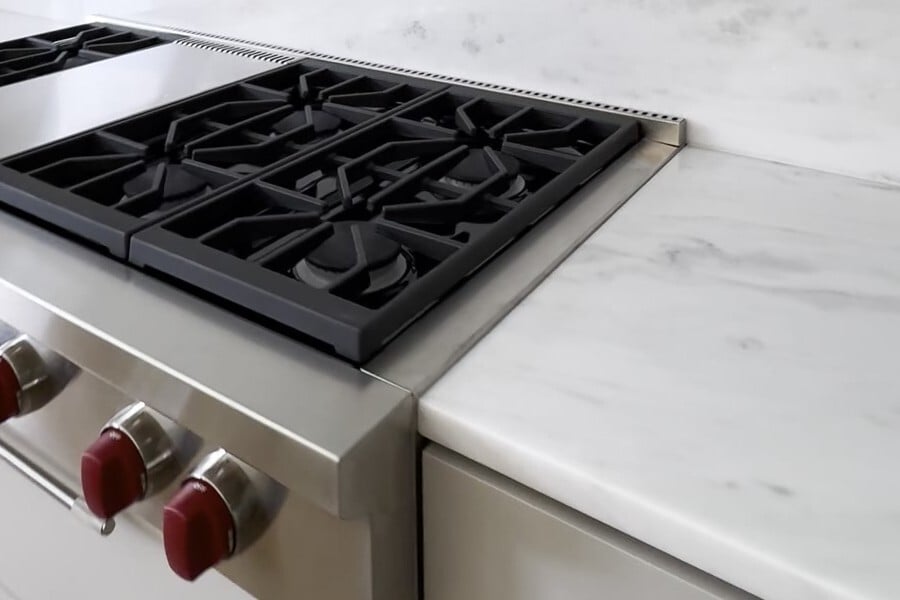
Pro tip: If two quotes use different names for the edge, ask for the radius. About 1/8 inch, or 3 millimeters, is an eased edge whatever the quote calls it.
Eased Edge vs Mitered Edge
These two are not rivals. Eased is the shape of the corner. Mitered is a way to build thickness: two pieces of stone are joined at a 45 degree angle so the edge looks thicker than the slab is.
You can have both, and most mitered work does. The mitered face gives the thick look, and the corners still get eased.
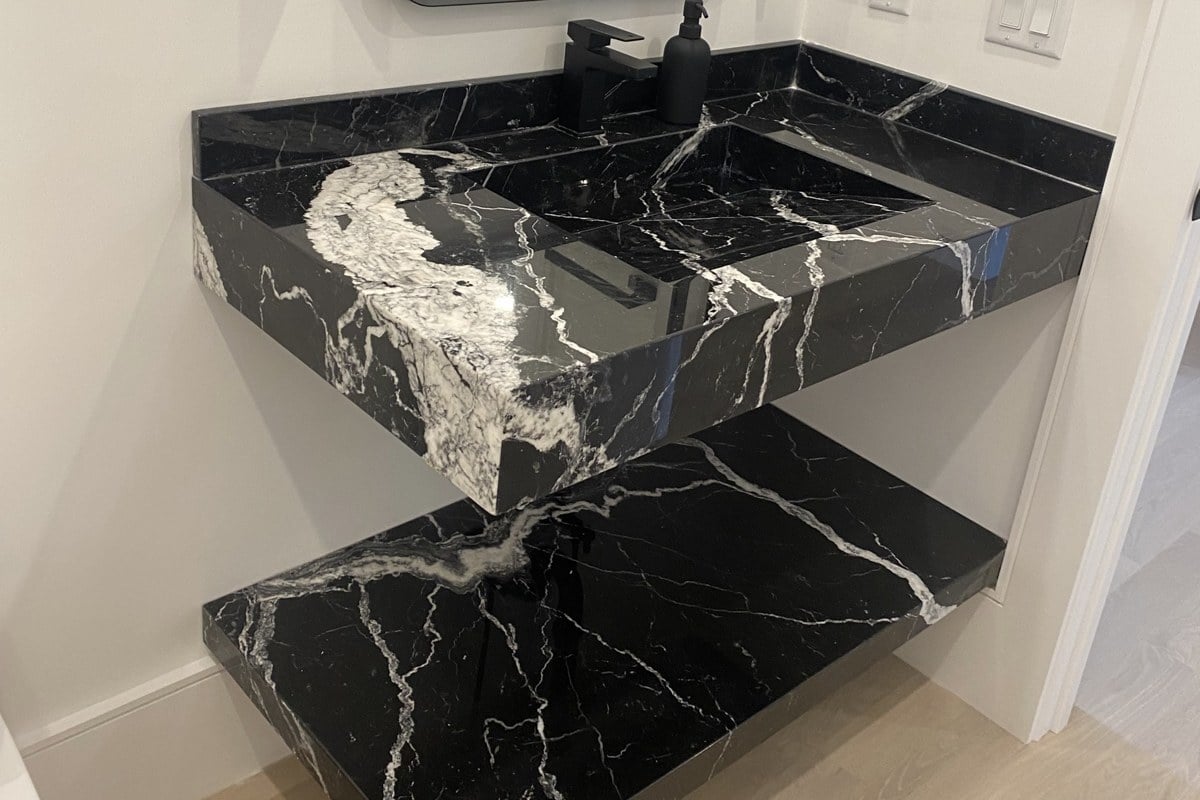
Mitered edges are very popular with our clients too, most of all on islands.
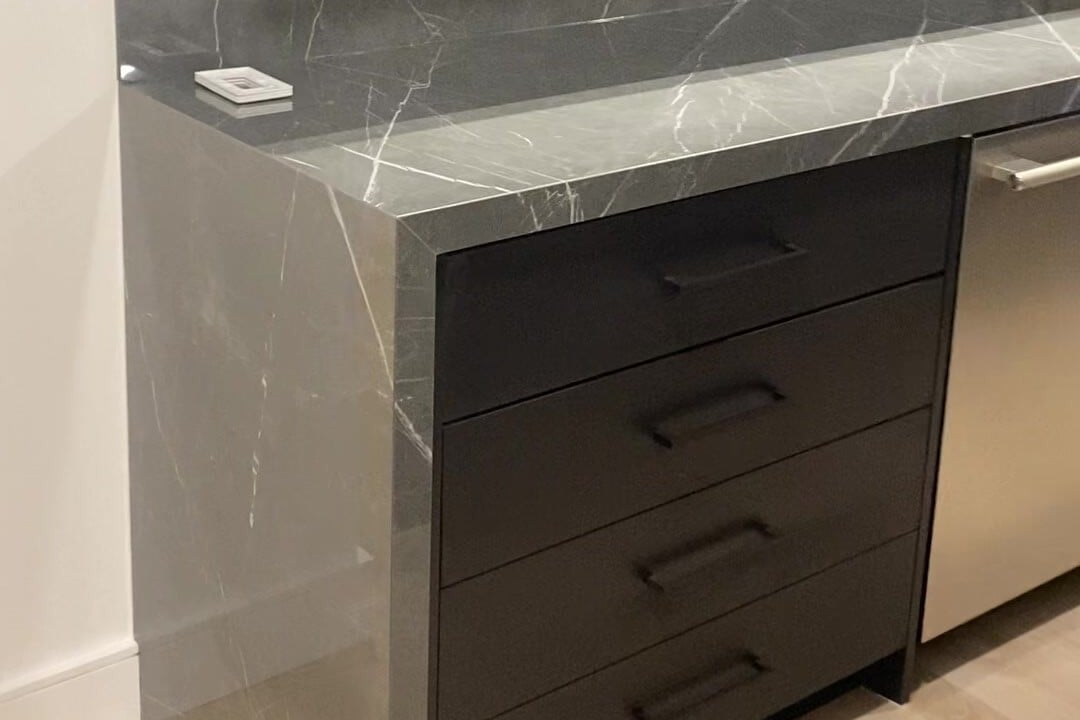
The same goes for a waterfall. Where the vertical panel comes up and meets the horizontal top, that joint usually gets an eased edge as well. Our waterfall island countertops page shows the look.
Eased Edge vs Bullnose
A full bullnose rounds the whole edge into a half circle. It feels soft, and that same curve is the problem.
When something spills, the liquid follows the curve all the way under the edge instead of dripping straight down. It can end up in the cabinets below.
An eased edge gives you corners that are not sharp, without that. A rounded edge also makes the slab look thinner, where an eased edge shows the full thickness.
Eased Edge vs Bevel and Ogee
A bevel is a flat, angled face on the top corner where an eased edge has a small curve. It adds a visible line along the edge.
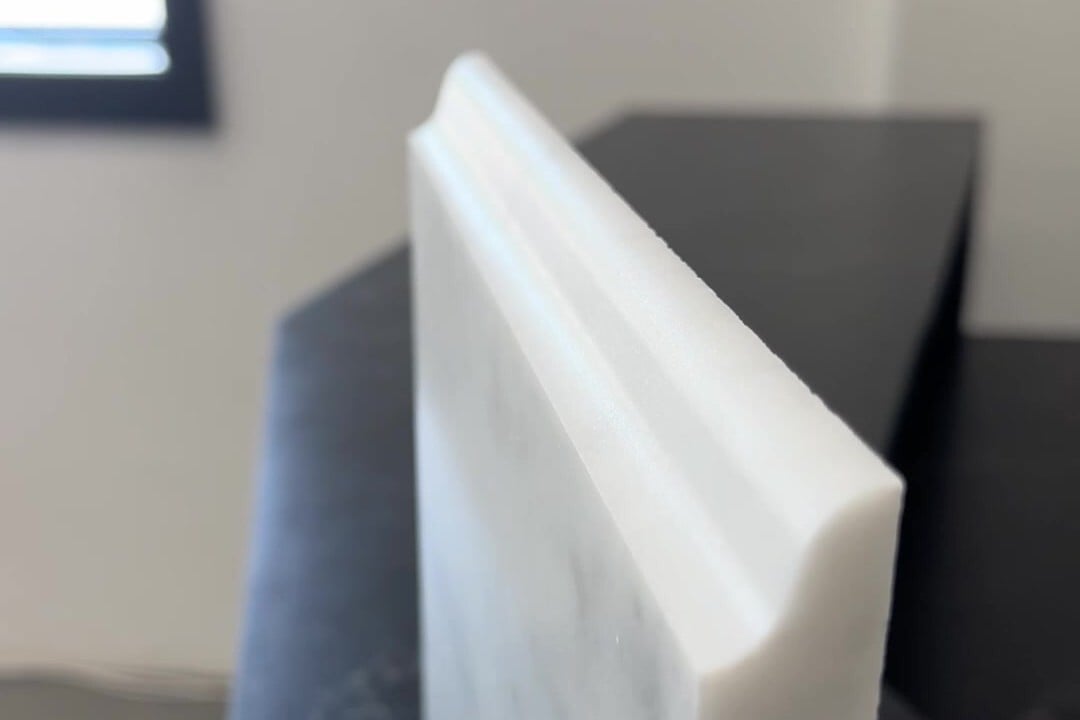
An ogee is a decorative S-curve. It suits a traditional kitchen with detailed woodwork.
Eased Edge on Quartz, Granite and Other Materials
- Granite: it takes an eased edge well, and it is the combination I fabricate most.
- Quartz: you can go lighter than a standard eased edge on quartz if you want a sharper look.
- Quartzite and marble: some are more brittle than others, so the eased corners matter more. Our quartzite edge profiles guide and marble edge profiles guide go deeper on each stone.
- Soapstone: soapstone is a softer stone, but an eased edge holds up on it. In my experience, it takes a solid hit to chip the edge.
- Porcelain: we aim for a slightly lighter ease on porcelain. It can chip like glass, so most of the time it ends up as a standard eased edge.
For the full picture on a kitchen, from materials to layout, see our kitchen countertops page.
Does an Eased Edge Cost More?
No. It is the simplest profile, so it takes the least work. A decorative profile such as an ogee, or a mitered edge, takes more work and costs more.
The edge is its own line on our quote, so you can see which edge you are getting before fabrication. Everything else that goes into a quote is on our pricing page.
When I Recommend a Different Edge
Almost never. The eased edge is our favorite edge to fabricate, and it looks good.
The one time I steer a client elsewhere is a really traditional piece or a decorative counter. There, a profile edge makes the stone look more like a piece of furniture.
My Recommendation
If you are not sure which edge to pick, pick the eased edge. It suits most kitchens in MetroWest, and it works on every stone we fabricate.
Then come see it on a real piece of stone. An edge is hard to judge from a screen.
Frequently Asked Questions About Eased Edges
Q. What is the most popular countertop edge?
A. In our shop it is the eased edge, on the vast majority of our work. Mitered edges are very popular too.
Q. Is an eased edge the same as a pencil edge?
A. In my shop, yes. Both are rounded to about 1/8 inch, which is the radius of a pencil, not its full thickness.
Q. What is a 1/8 eased edge?
A. It is the same edge named by its measurement. The corners are rounded to a radius of about 1/8 inch, or 3 millimeters.
Q. Is an eased edge sharp?
A. No. The corners are rounded, so it is comfortable to lean on and to run your hand along.
Q. Can a mitered edge also be eased?
A. Yes. The miter builds the thickness, and the corners still get eased.
Q. Does an eased edge work on quartz?
A. Yes. Quartz can even take a lighter ease if you want a sharper look.
Q. Is an eased edge easy to clean?
A. Yes. The face is flat, so a wipe with a cloth covers the whole edge.
Related Articles
- Undermount Kitchen Sink Guide: What Every Homeowner Should Know
- Is a 4 Inch Backsplash Still Worth It? A Fabricator's Honest Guide
- How to Save Money on Granite Countertops: A Fabricator's Insider Guide
Visit Our Southborough Showroom
Still figuring out which stone is right for you? Come see us. Nothing beats standing in front of the actual slabs, comparing colors, patterns, and finishes in person. That's how you make the right decision.
Stop by our countertop store at 43 Turnpike Road (Route 9), Southborough, MA 01772 during business hours. We keep a large inventory in our heated warehouse, so there's always plenty to see.
Already done your homework and know what you want? Email us or give us a call.
Phone: 508-460-7900
Email: info@graniteguyinc.com