How to Choose Kitchen Countertops: A 30-Year Fabricator's Guide
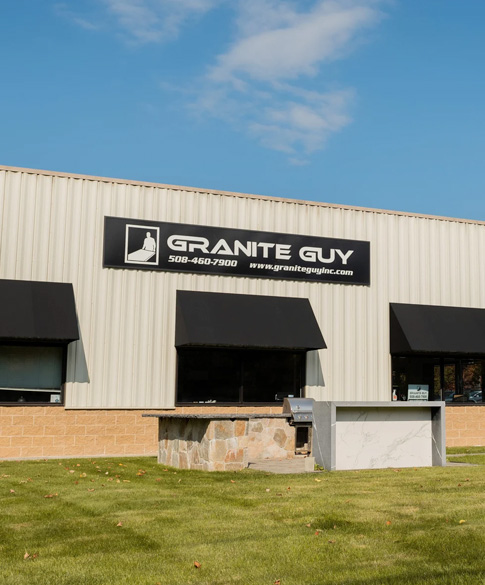
Written by Granite Guy Inc., Southborough, Massachusetts
Updated: March 2026
Choosing kitchen countertops comes down to three things: how you use your kitchen, how much maintenance you'll actually do, and your real budget. Everything else, the colors, the patterns, the edge profiles, falls into place once you answer those questions honestly.
💎 The Quick Answer: There's no single "best" countertop material. Granite and quartzite are best for heavy cooks. Quartz is best for low maintenance. Marble is best for bakers and classic aesthetics. Soapstone is best for New England character. Porcelain is best for modern, zero-maintenance kitchens.
After 30 years of fabricating and installing over 10,000 countertops across MetroWest and Greater Boston, this is exactly what I walk through with every homeowner who visits our Southborough showroom.
❓ How to Choose Kitchen Countertops: Start With Three Questions
Before you look at a single slab, answer these three questions. They'll eliminate half your options immediately and save you weeks of overthinking.
✦ How Do You Actually Use Your Kitchen?
Do you cook daily? Bake on weekends? Have kids who spill juice and leave it there for hours? Or is your kitchen mostly for coffee and takeout?
Your real-life habits matter more than any design trend. Heavy cooks need heat resistance and scratch resistance. Light-use kitchens can prioritize aesthetics.
✦ How Much Maintenance Are You Willing to Do?
Some materials need periodic sealing. Others you can forget about entirely. Be honest with yourself here.
If you know you're never going to seal your countertops, that rules out certain stones right away. There's nothing wrong with that. It just narrows your options.
✦ What's Your Real Budget?
Budget isn't just the slab. It's material + fabrication + installation + edge profiles.
A "cheap" material with complex fabrication can cost more than a premium stone with a simple layout. Know the full picture before you fall in love with something.
📊 Six Kitchen Countertop Materials Compared
Here's a quick overview of the six materials we fabricate most for Massachusetts kitchens. Each has its strengths, and each has tradeoffs I'll be honest about.
💎 At a Glance:
Granite: Heat resistant, needs periodic sealing, every slab unique
Quartz: Zero maintenance, not heat-friendly, consistent patterns
Quartzite: Hardest natural stone, needs sealing, marble-like veining
Marble: Cool surface, needs regular care, classic aesthetics
Soapstone: Non-porous, heat-proof, develops patina over time
Porcelain: Zero maintenance, UV resistant, specialized fabrication
Each material has a different price range depending on the specific stone, your layout, and fabrication complexity. We cover pricing in detail further down.
🗻 Granite Countertops: The Workhorse
Granite countertops put natural stone in American kitchens, and for good reason. It's tough, heat-resistant, and every slab is one of a kind.
You can pull a pan straight off the burner and set it down without thinking twice. Those swirls and flecks you see are minerals that crystallized over millions of years. No factory can replicate that.
✦ Why Massachusetts Homeowners Choose Granite
In New England, granite holds up exceptionally well. It handles our freeze-thaw cycles, works in semi-heated spaces, and is the only real option (alongside porcelain) for outdoor kitchens that face Massachusetts winters.
It also adds genuine resale value. In Greater Boston's competitive housing market, granite countertops signal "quality kitchen" to buyers walking through an open house.
✦ The Tradeoff
Granite needs periodic sealing to stay stain-resistant. Some dense granites rarely need it, others need it more often. We test your specific stone and tell you exactly what to expect.
You also need to select your exact slab. Patterns vary wildly between slabs, even from the same quarry. Never buy granite from a sample chip alone.
✨ Quartz Countertops: The Low-Maintenance Choice
Quartz countertops are engineered stone, made from crushed natural quartz mixed with resin and pigment. Because it's manufactured, it solves many of the maintenance concerns that come with natural stone.
It's non-porous, meaning spills don't seep in. Red wine, raw chicken, coffee: just wipe and move on. For families with young kids in MetroWest, quartz is often the first choice.
✦ The Consistency Factor
Unlike natural stone, every slab from the same batch looks the same. You know exactly what you're getting. That's a plus for homeowners who want predictability in their design.
The color and pattern options are enormous. Marble-look quartz has become incredibly popular for homeowners who want that white-and-gray veining without any of the maintenance.
✦ The Tradeoff
Quartz resins can scorch around 300°F, so you need trivets. Always. It can also look "too perfect" compared to natural stone, which bothers some homeowners who want that organic, one-of-a-kind feel.
Direct sunlight can cause yellowing over time, which matters if you have a sun-drenched kitchen or are considering it for outdoor use. For outdoor kitchens in Massachusetts, quartz is not an option.
⚡ Quartzite Countertops: Marble's Look, Granite's Strength
Quartzite countertops are the material clients choose when they want marble's beauty but need granite's durability. It's 100% natural stone: sandstone transformed by extreme heat and pressure deep in the earth.
Despite the similar name, quartzite has nothing to do with quartz. I can't tell you how many times clients use the names interchangeably in my showroom, but they're completely different materials.
✦ Why It's Gaining Popularity in MetroWest
Quartzite gives you the white-and-gray veining people love about marble, but it's harder than granite. You can set hot pans on it. It resists scratches. It holds up to heavy daily use without the etching concerns that come with marble.
For New England homes that value quality and longevity, quartzite fits the mentality of buying something once and having it last decades.
✦ The Tradeoff
Price. Quartzite is often the most expensive option in the showroom. It requires sealing, and it's extremely dense, which makes fabrication more demanding.
But for homeowners who want both the look and the performance, nothing else comes close.
🏛️ Marble Countertops: Cool, Classic, Worth the Care
Marble countertops are the stone people picture first when they imagine their ideal kitchen. Cool to the touch, naturally beautiful, and instantly recognizable.
Bakers love it because the cool surface is perfect for rolling dough. Historic homes in Greater Boston often use marble to maintain period-correct aesthetics.
✦ The Maintenance Reality
Yes, marble requires more care than other materials. It can etch from acids like lemon juice or wine, and it needs regular sealing.
But here's what I tell every client: a honed or leathered finish hides etching dramatically better than polished marble. Most of the "marble horror stories" come from polished surfaces and homeowners who weren't told what to expect upfront.
✦ The Tradeoff
If you're someone who will stress over every ring mark, marble might not be for you. But if you understand the material, choose the right finish, and embrace a surface that develops character over time, it's absolutely manageable for everyday kitchens.
🪨 Soapstone Countertops: The New England Heritage Stone
Soapstone countertops have been in New England kitchens for centuries. This isn't a trend. You see it in farmhouses from Vermont to the Cape, and there's a reason it's still here.
I grew up around soapstone in Brazil, where it's called pedra-sabão. My grandmother still cooks with soapstone pots. I have a deep connection to this material and know it better than most fabricators in the country.
✦ What Makes Soapstone Different
It's non-porous, so it never needs sealing. It's completely heat-proof: take a pan right off the stove and set it down without a second thought. It's naturally antibacterial.
Scratches happen easily, but you can sand them out yourself with fine-grit sandpaper in about 30 seconds. Over time, soapstone develops a dark patina that tells the story of your kitchen.
✦ The Tradeoff
The color range is limited. Soapstone comes in shades of gray and green. If you want bright white or bold patterns, this isn't your stone.
But if you want warmth, character, and a material with deep New England roots, nothing else feels quite like it.
🔲 Porcelain Countertops: The Modern Option
Porcelain countertops are newer to the countertop world, but we're fabricating more of them every year. Made from refined clay fired at extreme temperatures, porcelain is dense, lightweight, and surprisingly versatile.
It can mimic marble, concrete, or wood with accuracy that surprises most homeowners when they see it in person.
✦ Where Porcelain Excels
It's non-porous (no sealing, ever), UV-resistant (won't yellow in sunlight), and handles heat well. For outdoor kitchens, shower walls without grout lines, or ultra-modern kitchen designs, porcelain is worth a serious look.
Massachusetts homeowners with sun-drenched kitchens or outdoor entertaining spaces should have porcelain on their shortlist.
✦ The Tradeoff
Porcelain requires specialized fabrication. Not every shop can work with it properly. Edges can chip if not handled correctly, and repair options are more limited than natural stone because of the printed surface layer.
🎯 Which Material Matches Your Lifestyle?
Here's the cheat sheet I walk through with every client in the showroom.
You cook daily and entertain often: Granite or quartzite. You need heat resistance and durability that doesn't require you to think before setting something down.
You have kids and a busy household: Quartz. It's forgiving, hygienic, and you'll never worry about sealing or staining.
You want the marble look without the stress: Quartzite gives you the veining without the etching. High-end marble-look quartz is the budget-friendly alternative.
You bake regularly: Marble is the traditional choice. That cool surface isn't just aesthetic; it genuinely helps with pastry work.
You want zero maintenance, full stop: Porcelain or quartz. No sealing. No special cleaners. Just soap and water.
You want character and heritage: Soapstone. Nothing else develops a patina quite like it.
You're budget-conscious: Granite in simpler patterns, quartz from mid-tier lines, or ask us about remnants (more on that in the FAQ below).
🏝️ Choosing Stone for Your Kitchen Island
The island is usually the most visible surface in the kitchen and takes the most daily abuse. A few strategies worth considering.
✦ The Mix-and-Match Approach
Many homeowners choose a neutral material for the perimeter counters and go bold on the island. A dramatic quartzite or a leathered granite with heavy movement becomes the centerpiece of the room.
This is one of the most popular approaches we see in MetroWest remodels. It also lets you split your budget: practical material around the sink and stove, showpiece material on the island.
✦ Bookmatching for Large Islands
If your island is large enough to require a seam, we can often bookmatch two slabs so the veining mirrors itself like an open book. This turns the seam into a deliberate design feature rather than something you're trying to hide.
✦ Waterfall Edges
We're seeing huge demand for waterfall islands in Massachusetts, where the stone flows down the side of the cabinetry to the floor. This looks incredible with quartz or quartzite but requires precise fabrication to ensure the veins align at the corner.
🔧 Edges and Finishes: The Details That Make It Custom
Choosing the material is half the decision. The edge profile and surface finish determine how the whole thing feels in your space.
✦ Edge Profiles
A simple eased edge is standard and timeless. An ogee edge adds traditional curves. For a modern, thick look, a mitered or laminated edge creates the appearance of a heavier slab.
We cut all of these in-house on our CNC equipment. Your fabricator's capabilities matter here. Not every shop can do every profile.
✦ Surface Finishes
You're not stuck with shiny. Polished is the standard glossy look that brings out the stone's depth. Honed is matte, softer to the touch, and hides water spots and minor etching. Leathered has a textured, slightly bumpy feel that's incredible for hiding fingerprints on dark stones.
I recommend leathered finishes more and more, especially for granite and quartzite. It adds character and is far more forgiving day to day.
💰 Why Stone Pricing Isn't One-Size-Fits-All
How much is it per square foot? That's the most asked question. Unfortunately, it's not that simple. Let me explain why.
If you choose anything from our in-house inventory, it's a set price per square foot no matter the size of the job. If we need to special order material for your job, the pricing changes because in this industry, you can only order whole slabs at a time.
💎 Total installed pricing typically ranges from $55-150 per square foot. This covers about 95% of available options.
Some rare and exotic stones fall outside this range. Rare blues like Azul Macaúbas and Blue Bahia. Translucent stones like the Cristallo family. And high-end Italian marbles like Calacatta and Statuario.
Why pricing varies:
- Sourcing: We work with various suppliers to find the best value for your project. Stock material from our yard offers the best pricing, while special orders from specific suppliers may cost more.
- Complexity: Customization like waterfalls and integrated sinks require more fabrication time.
- Waste: Every project is like a puzzle. How efficiently we can fit your pieces on the slab affects the final cost. Intricate shapes mean less efficient cuts.
That's why visiting our showroom is the best way to decide. You'll see our materials in person in our indoor heated warehouse, compare finishes, and get expert guidance to make the right choice.
🛠️ What to Expect During Installation
Good installation starts with precise digital templating. We measure every corner, outlet, and cutout using laser-accurate equipment.
We then overlay the digital template onto high-resolution photos of your actual slabs. You see exactly where the veins will flow and where seams will fall before we cut a single piece of stone.
Most kitchen installations take a few hours. We arrive, secure the stone, mount the sink, drill faucet holes, and seal the surface. Full timeline from selection to install is typically one to two weeks.
💡 Pro Tip: Always work with a fabricator who has their own showroom and fabrication shop. You want to see the actual slabs you're buying, not just a sample chip.
🧹 Care and Maintenance: Keep It Simple
Don't overcomplicate this. Every material has a straightforward care routine.
✦ Zero-Maintenance Materials
Quartz and porcelain: Wipe with mild soap and water. They never need sealing. That's it.
✦ Seal Periodically
Granite and quartzite: Seal periodically. How often depends on the specific stone. Test by sprinkling water on the surface. If it beads up, you're good. If it soaks in, time to seal. Read our full sealing guide.
✦ Handle With Care
Marble: Wipe up acidic spills (lemon, wine, vinegar) promptly to prevent etching. A honed or leathered finish makes this much less stressful day to day.
✦ Optional Maintenance
Soapstone: You don't have to do anything. Many people oil it periodically to keep the dark patina consistent, but it's purely cosmetic and completely optional.
❓ Frequently Asked Questions
Q. How long does kitchen countertop installation take?
A. Most kitchens take a few hours for installation. Full timeline from selection to install is typically one to two weeks.
Q. Can I install countertops myself?
A. For most kitchen projects, no. Slabs can weigh hundreds of pounds and require specialized equipment for cutting, finishing, and safe handling.
Q. What's the most durable countertop material?
A. Quartzite wins for pure hardness. For everyday durability without any maintenance, quartz is the easiest to live with.
Q. Which countertop material adds the most resale value?
A. Granite and quartz. They photograph well for listings and signal "updated kitchen" to every buyer walking through a MetroWest open house.
Q. I chipped my stone countertop. Is it ruined?
A. Almost never. We fill chips with color-matched resin that makes the damage virtually invisible. The one exception is porcelain, which is harder to patch seamlessly because of its printed surface.
Q. I'm on a tight budget. Do I have to settle for laminate?
A. Ask us about remnants. These are leftover pieces from large projects, and you can often get a high-end quartzite or marble for a fraction of full-slab pricing.
Q. What's the difference between quartz and quartzite?
A. Completely different materials despite similar names. Quartz is engineered (man-made, non-porous, no sealing). Quartzite is natural stone (quarried, needs sealing, harder than granite).
Q. Do I need to seal quartz?
A. No. Never. Quartz is engineered to be non-porous.
Q. How often should I seal granite?
A. It depends on the specific stone. Test periodically: if water soaks in instead of beading up, it's time.
Q. Can I use quartz countertops outdoors in Massachusetts?
A. No. UV exposure and New England weather will damage the resins over time. For outdoor kitchens, granite or porcelain are your options.
📚 Related Articles
🏠 Visit Our Southborough Showroom
Still figuring out which stone is right for you? Come see us. Nothing beats standing in front of the actual slabs, comparing colors, patterns, and finishes in person. That's how you make the right decision.
Stop by our countertop store at 43 Turnpike Road (Route 9), Southborough, MA 01772 during business hours. We keep a large inventory in our heated warehouse, so there's always plenty to see.
Already done your homework and know what you want? Email us or give us a call.
📞 508-460-7900
📧 info@graniteguyinc.com