Waterfall Countertop Cost & Installation in Massachusetts | 2025 Guide
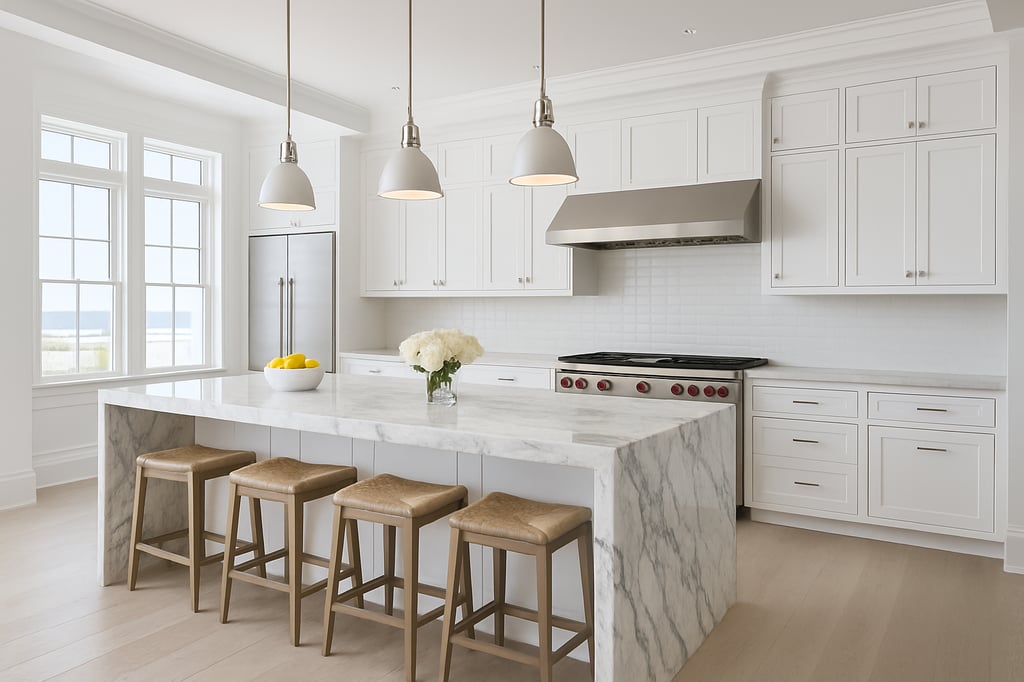
A waterfall countertop transforms ordinary kitchens into stunning showpieces with its dramatic cascading design. Imagine walking into your kitchen.
You see your beautiful stone countertop flowing down to the floor. It looks like a frozen waterfall. This creates one smooth surface that grabs your attention.
This eye-catching design is transforming kitchens in Newton, Weston, and Greater Boston. It creates beautiful focal points that combine style and usefulness.
Whether you are renovating your home in Southborough or updating a condo in Boston, this guide has what you need. It covers waterfall countertops, including costs, materials, and how to find the right fabricator for your project.
What Is a Waterfall Countertop?
A waterfall countertop runs down the sides of your island or peninsula. It flows from the top surface straight to the floor. The main feature that makes a real waterfall edge is the exact 45-degree mitered joint. This joint is where the two pieces meet, making them look like one continuous piece of stone.
Waterfall designs are different from regular countertops. They extend down to the floor, giving your kitchen a stylish look.
The typical waterfall is 36 inches tall, which is the same as standard counter height. It is usually 36 to 50 inches wide. However, custom sizes are becoming more popular in luxury homes in the area.
Why Choose a Waterfall Countertop?
One cannot overstate the visual impact of a waterfall countertop. It quickly becomes the main focus of your kitchen. The smooth flow of material, especially with bold veining in marble or granite, adds an artistic touch. This design element catches the eye and sparks conversations.
In the open floor plans found in many MetroWest homes, a waterfall island acts as a lovely room divider. It keeps the visual flow while creating separate spaces.
But the appeal goes beyond pure aesthetics. Waterfall edges protect your cabinet sides from kicks, spills, and the everyday wear that comes with active kitchens. That vertical stone surface shields your cabinetry, potentially saving thousands in future repairs or replacements.
Many homeowners in Greater Boston say their waterfall edges still look great years after installation. This is true even in homes with children and pets.
There's also the value consideration. In competitive Massachusetts real estate markets, distinctive features matter more than ever. A professionally installed waterfall countertop signals attention to detail and quality that buyers immediately notice. This investment typically returns value, especially in upscale neighborhoods where buyers expect modern kitchen updates.
Choosing Your Material
The material you select for your waterfall countertop fundamentally affects both the final look and your investment. Each option brings distinct advantages and considerations that go beyond simple aesthetics.
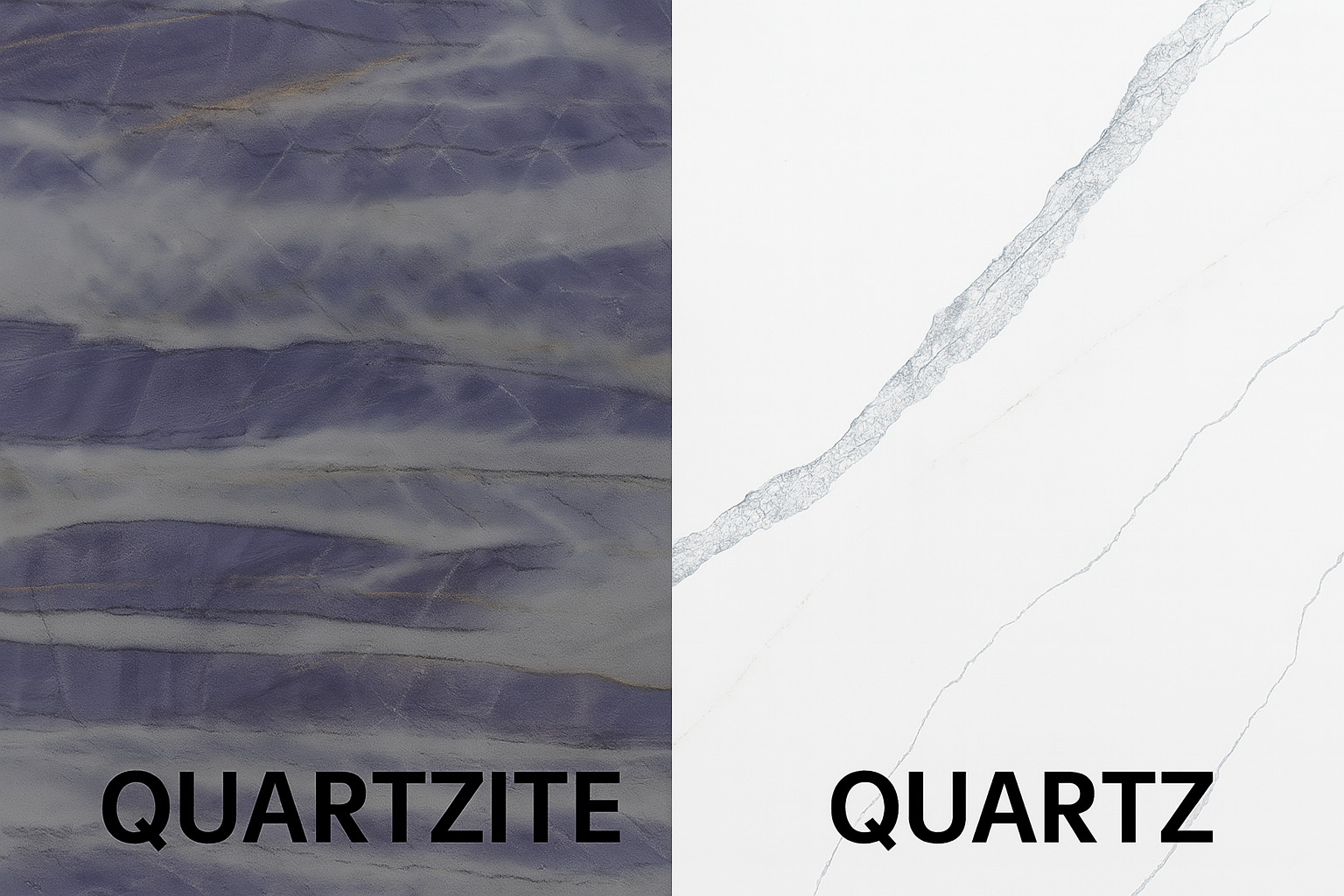
Quartz has emerged as the practical favorite for good reason. Its consistent patterns make those critical seamless edges achievable without the guesswork that comes with natural stone. The non-porous surface does not need sealing. This is a significant advantage for busy families who want to avoid maintenance.
Quartz comes in many colors and patterns. You can find pure whites and dramatic blacks with veining like natural marble. It gives the look of natural stone but is more durable. Expect to invest $75 to $150 per square foot for quality quartz.
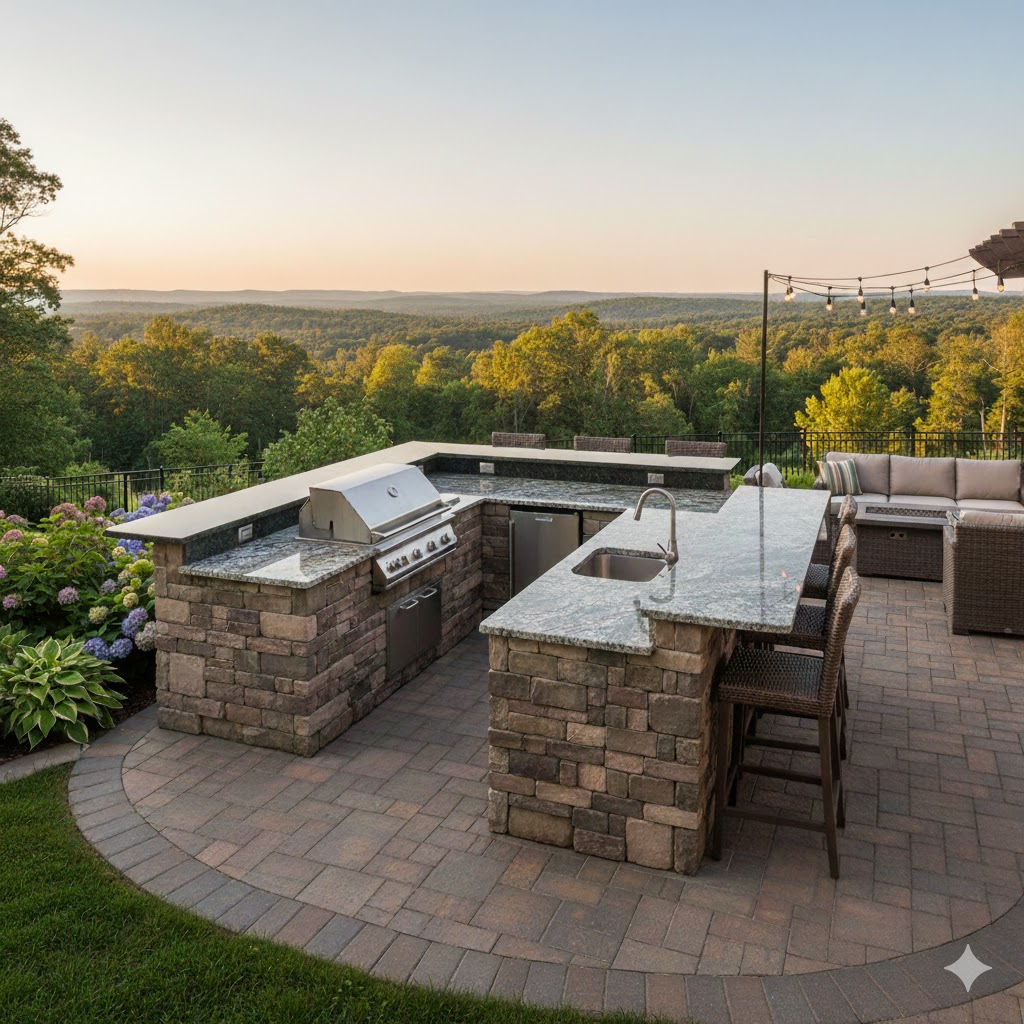
Granite brings something engineered stones can't replicate: true uniqueness. Each slab is one-of-a-kind, meaning your waterfall will be genuinely unique.
You need to seal granite every year to keep it looking good. Its strength and heat resistance make it perfect for serious cooks. They can place hot pans directly on the counters.
The natural patterns in granite, from small speckles to strong lines, create visual interest. This interest changes with the light during the day. Granite runs $60 to $140 per square foot, depending on the rarity of the stone.
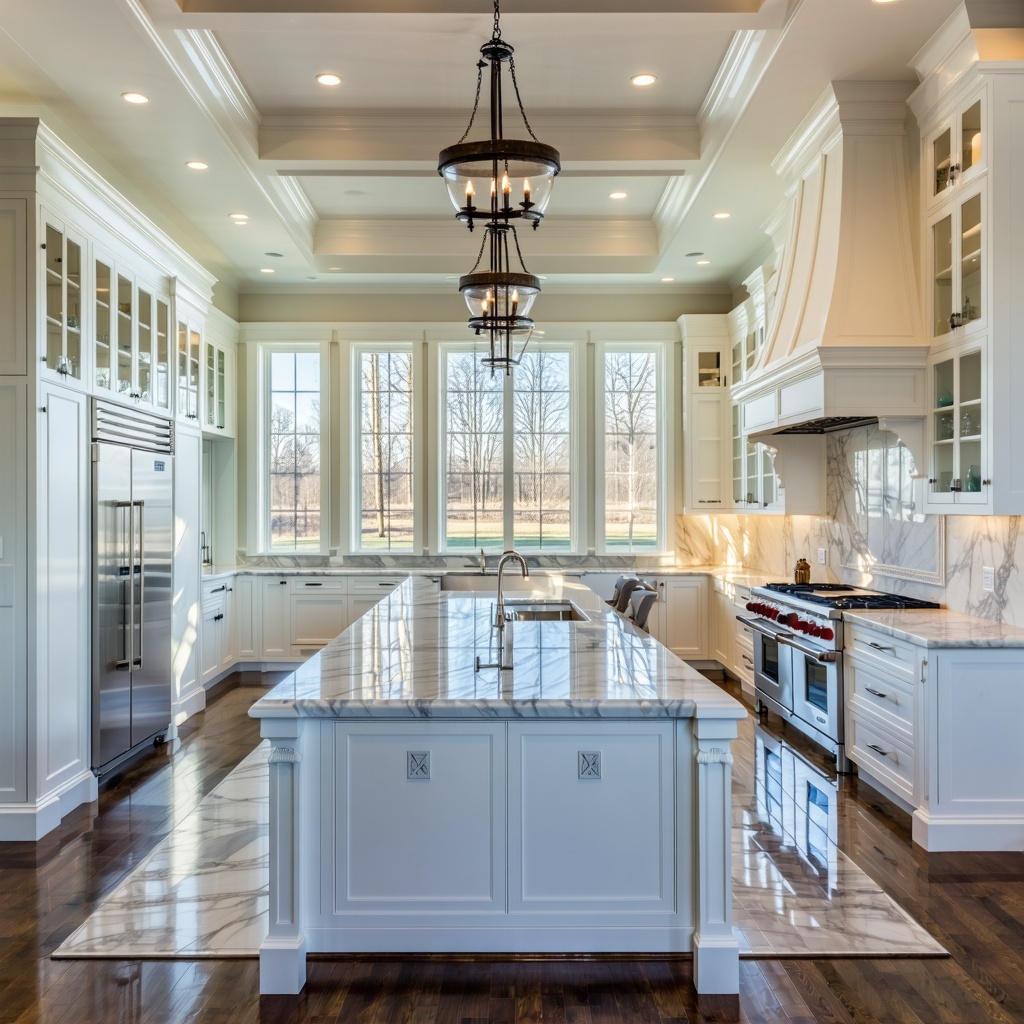
For those seeking ultimate luxury, marble remains unmatched. Nothing captures elegance like the natural veining of marble. This is why it is the top choice in Weston and Newton's finest homes.Yes, marble needs more care. Acidic foods can damage it, and you need to seal it regularly.
However, many homeowners feel its unique beauty is worth the extra effort. Marble waterfall countertops range from $85 to $200 per square foot.Still deciding between engineered and natural stone? Read our detailed quartz vs quartzite comparison.
Quartzite represents the premium choice, combining marble's stunning appearance with granite's durability. This natural stone is extremely hard, making it hard to work with.
Not every fabricator has the tools or skills to handle quartzite well. However, the results are spectacular, with patterns and colors that make each installation a work of art. Plan on $90 to $200 per square foot for quartzite.If you're interested in premium quartzite options, see our complete guide to Taj Mahal quartzite countertops.
The newest material in waterfall design is porcelain. This modern material was hard to use for waterfall edges until recent technology improved. These ultra-thin slabs create incredibly contemporary looks perfect for minimalist designs popular in Boston's luxury condos. Porcelain offers exceptional durability and virtually no maintenance, with costs ranging from $55 to $120 per square foot.Some materials like soapstone offer unique benefits for specific design styles.
Understanding Real Costs in Massachusetts
Let's address what everyone wants to know: actual costs for waterfall countertops in the Greater Boston market. While prices vary based on material choice and project complexity, these ranges give you realistic expectations.
For a single waterfall side, add $1,500 to $2,500 to your standard countertop project. Double waterfall islands, where both ends cascade to the floor, typically add $3,000 to $5,000 or more. These figures include material, precision fabrication, and professional installation.
Several factors can push costs higher. Pattern matching for natural stone with bold veining can add $500 to $1,500 in material costs. This is because getting the perfect flow may need more of the slab than you first planned.
Older homes in Massachusetts often need floor leveling. This helps the waterfall sit correctly and costs an extra $500 to $1,000. Custom dimensions beyond standard sizes and premium materials with book-matched patterns will also increase your investment.
A standard 3-by-5-foot island with one waterfall usually costs between $4,000 and $6,000. This price includes the flat surface and the waterfall edge. This is a substantial investment, but it changes your whole kitchen. It usually adds value when you sell your home.
For detailed pricing information, visit our pricing and quotes page.
Is a Waterfall Right for Your Kitchen?
Not every kitchen benefits from a waterfall edge, and honest assessment saves disappointment and wasted investment. The design works beautifully in modern and contemporary kitchens where clean lines and dramatic elements feel at home.
Transitional designs mix traditional and modern styles. They also show off waterfalls nicely. Open floor plans need visual anchors to define spaces.
Your island should be at least 3 by 5 feet for the right proportions. Anything smaller makes the waterfall feel too vast.
You'll also need budget flexibility, as unexpected factors like pattern matching or structural modifications can add to base costs. Most importantly, you should appreciate design impact. Be open to a statement piece that will define your kitchen's style.
On the other hand, waterfall edges often do not fit well in traditional or colonial kitchens. In these kitchens, ornate moldings and raised-panel cabinets set the design style. If your kitchen leans heavily traditional, the sharp, modern lines of a waterfall will seem forced rather than natural. A simple 4 Inch Backsplash might be the better choice here.
Here's a simple style test: look at your cabinet doors. Flat panels with sleek hardware suggest a kitchen ready for a waterfall's modern impact. Raised panels with decorative molding indicate a traditional space where a waterfall would disrupt the visual harmony.
This is why homes in Wellesley's historic district often look better without modern features. In contrast, Newton's updated properties welcome them with enthusiasm.
The Pros and Cons
Advantages:
- Creates an unmistakable focal point that elevates your entire kitchen
- Protects vulnerable cabinet sides from damage
- Adds measurable value to your home
- Conceals appliances, outlets, or storage
- Makes a sophisticated design statement
Considerations:
- Higher cost than standard edge treatments
- Requires expert fabrication and installation
- Won't suit every design style
- Material selection is critical to success
- Can't be modified after installation
Why Professional Installation Is Critical
Creating invisible seams at the waterfall's mitered edge isn't something that happens by accident. It requires computer-controlled cutting accuracy down to fractions of an inch.
A gap of just 1/8 inch ruins the whole effect. It makes the waterfall look like two stones awkwardly meeting instead of one smooth flow. This is why CNC technology has become essential for quality waterfall installations.
The challenge intensifies with natural stones featuring dramatic veining. To achieve a smooth pattern flow from horizontal to vertical surfaces, you need precise cutting and artistic vision. This helps you see how the pattern will look when you install the piece. Digital layout technology allows us to visualize the final result before making any cuts, but interpreting that visualization requires years of experience.
Massachusetts homes present their own unique challenges. New England's older homes often have uneven floors. What seems fine at first becomes clear when you install a straight waterfall edge. Professional installers know how to compensate for these irregularities without compromising the design.
Then there's the logistics of installation day. Waterfall pieces can weigh 600 pounds or more.
You may need to remove windows or take down doors to get them into your home. For upper-floor installations, you might even need to use cranes. The placement needs many skilled workers to coordinate well. One wrong move can damage thousands of dollars in stone.
Finding the Right Installer
Not every countertop company can execute a proper waterfall installation. When evaluating installers, ask about their specific experience with waterfall edges.
Request to see portfolios of completed projects, particularly those using your chosen material. Understand their fabrication process—do they use CNC technology for precision cutting? How do they handle pattern matching for natural stones?
Be wary of quotes significantly lower than others you receive. Waterfall installation is not a place to save money.
Low prices often mean a lack of experience or poor techniques. This will show in the final product. Similarly, if an installer can't clearly explain their process or seems unfamiliar with your chosen material, keep looking.
The Granite Guy Difference
Competitors like Onyx Marble and Granite in Framingham and The Vine Kitchens in Ashland provide waterfall installation. However, Granite Guy was the first to use CNC digital fabrication in Massachusetts. We were using computer-controlled precision while others were still measuring by hand, and that head start shows in our work.
Our 2024 investment in water jet technology allows us to work with any material. This includes ultra-hard quartzites and modern porcelain that other shops cannot handle. We have over 200 five-star reviews and many years of experience with New England's installation challenges. We know what works in homes in Greater Boston.
We've completed installations throughout Southborough, Newton, Weston, and beyond, including an entire residential building featuring waterfall edges throughout. But most importantly, we will give you honest advice about whether a waterfall fits your space. We would rather lose a sale than create an installation you will regret.
Living with Your Waterfall Countertop
Once installed, maintaining your waterfall countertop is surprisingly straightforward. Daily care is simple.
Just wipe surfaces with a soft cloth and mild soap. Clean spills right away to avoid stains. Regularly dust vertical surfaces, as they show dust more than horizontal counters.
Natural stone requires annual sealing—a simple process that maintains the stone's resistance to staining and moisture. Quartz requires no sealing at all, which explains its popularity among busy households. After winter, check the seams where temperature changes might have caused slight movement in the stone. Every few years, schedule a professional inspection to ensure everything stays properly sealed and aligned.
The good news is that vertical surfaces show dust more easily. However, they are less likely to stain or scratch than horizontal counters that get daily use. Many clients report their waterfall edges look as perfect years later as they did on installation day.
Making Your Decision
Waterfall countertops represent a significant investment in both beauty and function. When executed properly, they transform ordinary kitchens into extraordinary spaces that bring daily joy and long-term value. The key is to honestly assess if this dramatic feature fits your kitchen's style, your lifestyle needs, and your budget.
To see waterfall countertops for your home in Greater Boston, visit our showroom in Southborough. You can also call us at 508-460-7900 for a consultation. We will examine your space and explain your options clearly. Learn more about our fabrication and installation process.. Homeowners in Massachusetts have trusted us for over 30 years with their important design features.
No matter if you're in Framingham, Marlborough, Westborough, or anywhere from Cape Cod to the Berkshires, we can help you make your dream kitchen. At Granite Guy Inc, we believe that if a project is worth doing, we should do it right the first time.
- Granite Guy Inc. | Southborough, MA | Massachusetts' stone fabricator serving Greater Boston, MetroWest, and all New England.