Silestone Quartz Countertops: A Fabricator's Honest Guide

Written by The Granite Guy | December 29, 2025
If you're shopping for quartz countertops, you've probably come across Silestone Quartz. It's one of the most recognized names in engineered stone—and for good reason.
After 30 years of fabricating countertops in Massachusetts and installing thousands of Silestone projects, here's what I think you should know before making your decision.
What Is Silestone Quartz? 🪨
Silestone Quartz is manufactured by Cosentino, a Spanish company that's been in the stone business for decades.
Cosentino operates massive facilities around the world. I actually had the opportunity to visit their state-of-the-art operation in Espírito Santo, Brazil. The scale is impressive.
They've also invited me to their headquarters in Spain, which I hear is an incredible campus—though I haven't made that trip yet.
Beyond Silestone, Cosentino also manufactures Dekton (their ultra-compact sintered stone—in the industry, we just call it porcelain and Sensa (a specially treated natural granite that Home Depot carried for years).
Why Silestone Quartz Became So Popular 📈
Silestone Quartz was a pioneer in the engineered quartz countertops market. They entered the game early and built a reputation for consistency and quality.
When quartz kitchen countertops started gaining traction in the late 2000s, Silestone was already established while other brands were just getting started.
What sets them apart is their N-Boost technology, which provides antimicrobial protection and enhanced stain resistance.
💡 Fabricator's Take: Does N-Boost make a dramatic difference in everyday use? Honestly, most quality quartz brands perform well today. But Silestone has invested heavily in research and development, and it shows in their product consistency.
Popular Silestone Quartz Colors in 2025 🎨
Over the years, I've fabricated just about every color Silestone offers.
A few years back, I was one of the largest sellers of Silestone Calacatta Gold in Massachusetts. It was extremely popular then, and marble-look quartz patterns remain in high demand today.
Here are the colors I see customers gravitating toward right now:
Silestone Calacatta Gold remains a favorite for anyone wanting that classic marble aesthetic without marble's maintenance requirements. The veining is dramatic and the warm gold tones work beautifully in both traditional and contemporary kitchens.
Silestone Ethereal Glow has gained serious traction recently. It offers a softer, more subtle marble look that appeals to homeowners wanting something elegant but not overpowering.
Silestone Charcoal Soapstone deserves special mention. As someone with deep roots in the soapstone world—my grandmother in Minas Gerais, Brazil still cooks with traditional soapstone pots—I can tell you this color looks remarkably authentic. You get that genuine soapstone appearance without the oiling, the maintenance, or the softness concerns.
Silestone Miami White & Miami Vena continue to be popular choices for clean, contemporary kitchens.
Silestone Lusso, Pietra & Lagoon round out the other colors I frequently see customers selecting.
Silestone Quartz Cost: What to Expect 💰
One of the most common questions I get is about Silestone Quartz pricing.
Silestone typically falls in the mid-to-premium range for quartz countertops. You're paying for a well-established brand with consistent quality control and warranty support.
Standard colors offer a more affordable entry point. Premium series like Ethereal or Calacatta come at a higher price due to the complexity of the veining patterns.
Exact pricing varies based on color selection, edge profile, cutouts, and the complexity of your project. The best way to get accurate pricing is to work directly with a local fabricator who can assess your specific project. Visit our pricing & quotes page to learn more.
Comparing brands? Check out our MSI Quartz Countertops Guide to see how Silestone Quartz and MSI Quartz stack up against each other.
Silestone Quartz Warranty: The Fine Print 📋
Silestone offers a 25-year warranty for residential applications. That's solid coverage in the industry.
Like most warranties, it covers manufacturing defects but does NOT cover damage from misuse, improper care, or normal wear.
⚠️ Crucial Note: The warranty typically requires installation by an authorized fabricator. Working with an experienced professional ensures both quality installation and that your warranty is actually valid.
How to Clean Quartz Countertops 🧽
One of the biggest advantages of Silestone Quartz is how easy it is to maintain.
For daily cleaning, warm water and a soft cloth work perfectly. Use mild dish soap for tougher spots. For stubborn stains, a non-abrasive household cleaner does the trick.
Avoid harsh chemicals like bleach or oven cleaner, abrasive scrubbers, and leaving spills sitting for extended periods. Unlike natural stone, quartz doesn't require sealing—ever. That's one less thing to worry about.
⚠️ Heat Warning: Quartz is heat-resistant, not heat-proof. I've seen enough scorch marks over the years to always recommend using trivets. Don't put hot pans directly on the surface.
Causes and Prevention of Cracking in Quartz Countertops 🔨
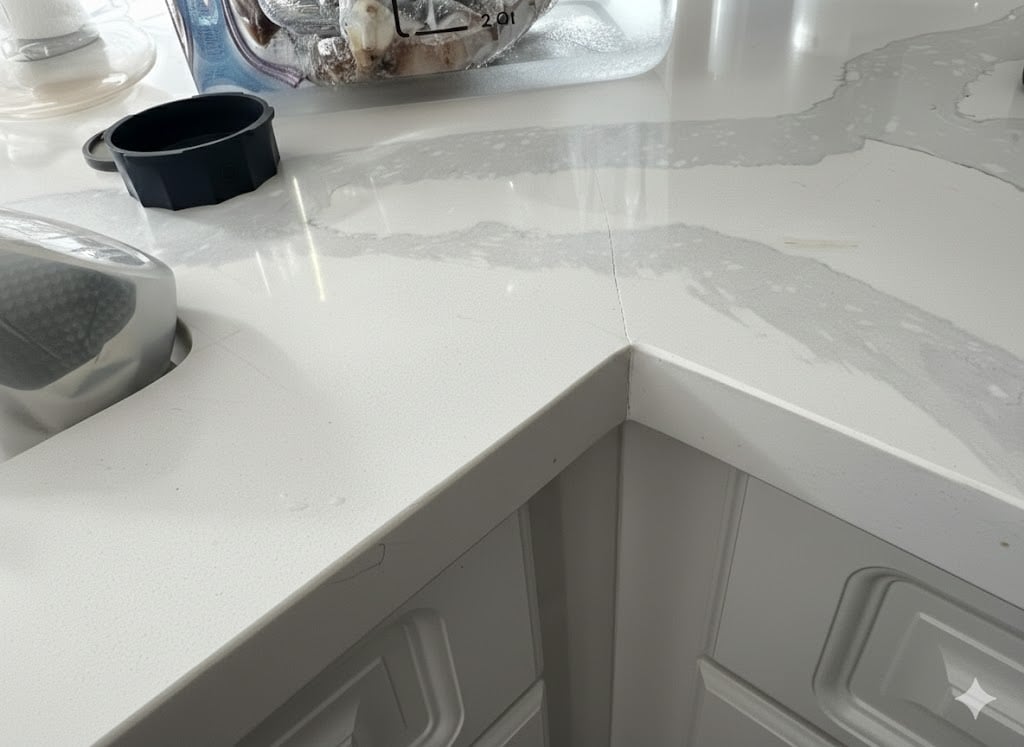
One concern homeowners have is whether Silestone Quartz can crack. The truth is, any quartz countertop can crack if improperly installed or subjected to extreme stress.
Common causes include lack of proper support around cutouts for sinks and cooktops, excessive heat causing thermal shock, and impact from heavy objects dropped on edges.
The good news? Proper installation prevents most of these issues. Work with an experienced fabricator who knows proper support requirements, always use trivets for hot pans, and avoid sitting or standing on your countertops.
This is why choosing the right fabricator matters as much as choosing the right slab. Learn more about our process to see how we ensure quality on every installation.
Quartz vs Granite: Which Is Right for You? ⚖️
This is one of the most common questions I get from homeowners deciding between Silestone Quartz and natural granite.
Choose Silestone Quartz if you want consistent color and pattern, zero maintenance with no sealing required, a non-porous stain-resistant surface, and a wide variety of marble-look options.
Choose granite if you want one-of-a-kind natural stone patterns, superior heat resistance, natural material with unique character, and proven durability over decades.
Both are excellent choices. It really comes down to your lifestyle and design preferences. I've installed thousands of both—happy to help you decide what's right for your home.
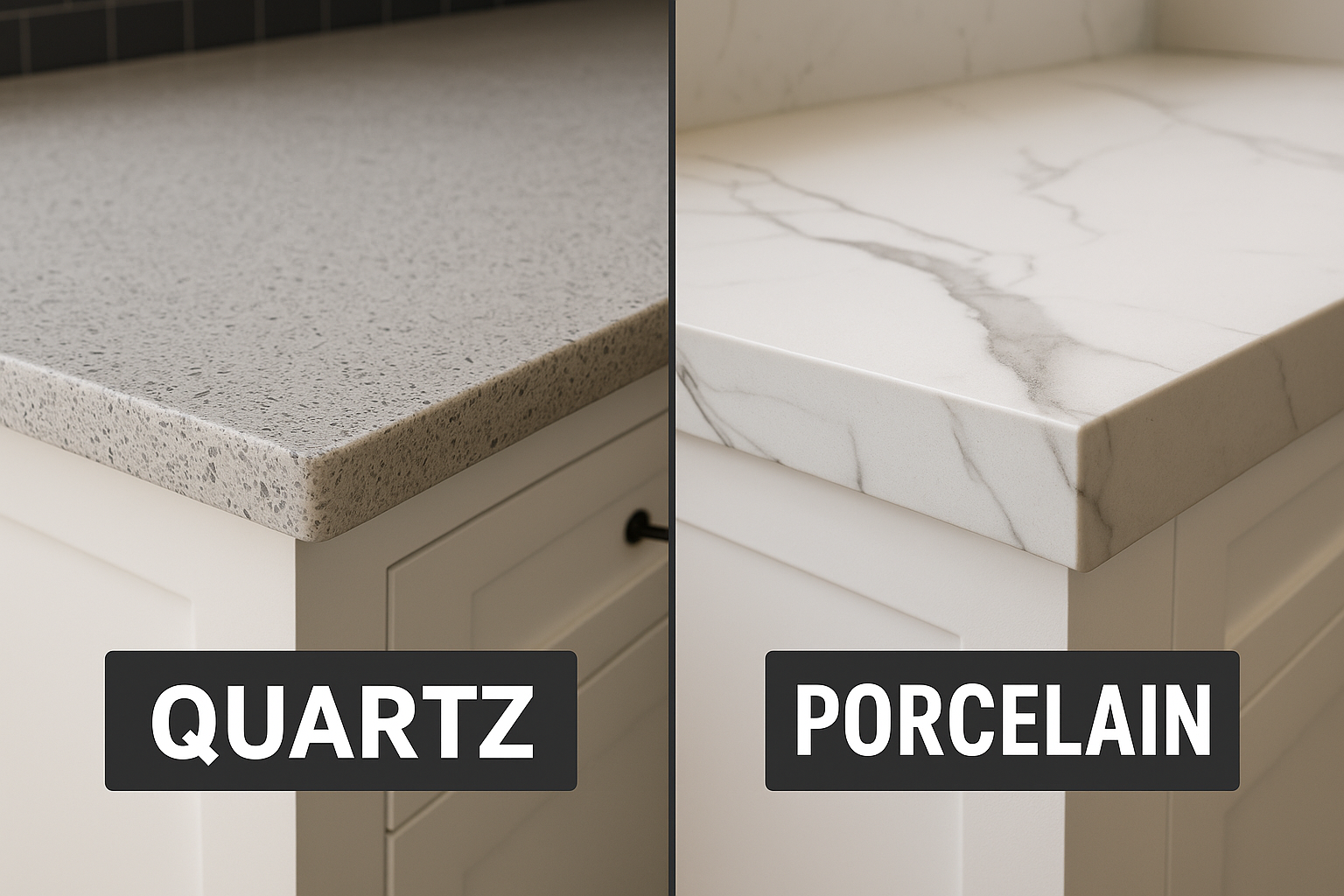
Quartz vs Porcelain Countertops 🤔
Porcelain countertops like Dekton and Neolith have gained popularity recently, so homeowners often ask how they compare to Silestone Quartz.
Silestone Quartz offers a warmer feel underhand, easier fabrication with more edge profile options, and is generally more affordable. Porcelain offers superior heat resistance, UV resistance so it won't fade in sunlight, and is extremely scratch resistant.
For most quartz kitchen countertops applications, Silestone remains the more popular choice. Porcelain is great for outdoor kitchens or areas with direct sunlight.
Silestone Quartz vs Quartzite 🪨
Homeowners often confuse Silestone Quartz (engineered quartz) with quartzite (natural stone). They sound similar but are completely different materials.
Silestone is manufactured and engineered for consistency. Quartzite is a natural metamorphic rock quarried from the earth with unique patterns in every slab.
Silestone offers zero maintenance and never needs sealing. Quartzite requires periodic sealing like granite but offers superior heat resistance.
If you love natural stone character and don't mind maintenance, quartzite is stunning. If you want worry-free durability with consistent patterns, Silestone Quartz wins.
Why Fabrication Matters More Than the Brand 🔧
Here's something that often gets overlooked in these discussions.
The material is only part of the equation.
You can buy the most expensive Silestone Quartz slab in their lineup, but if it's poorly templated, badly cut, or incorrectly installed, you won't be happy with the result.
That's where fabrication quality comes in. At Granite Guy Inc., we use digital templating with Slabsmith software, CNC cutting, and waterjet technology.
We photograph your specific slab and lay it out digitally so you can see exactly where the veins will flow before we ever make a cut. This isn't about fancy equipment for its own sake—it's about executing your vision perfectly.
A Fabricator's Perspective 💬
I'm not a salesman pushing any particular brand.
Customers pick the material based on their taste, their budget, and their lifestyle. My expertise is fabrication—turning that raw slab into the dream kitchen countertop, bathroom vanity, or fireplace surround they're envisioning.
Whether you choose Silestone Quartz, MSI Quartz, natural granite, or marble, the quality of the templating, cutting, and installation is what you'll live with every day.
That's the difference between working with a big box store and working with an experienced fabricator. We're not selling you a product. We're executing your vision.
Frequently Asked Questions About Silestone Quartz ❓
Is Silestone Quartz better than granite?
It depends on your lifestyle. Silestone Quartz is non-porous and never needs sealing, which makes it easier to maintain. Granite offers higher heat resistance and a unique, natural look. Both are excellent choices.
How much does Silestone Quartz cost per square foot?
Silestone generally costs between $60 and $120 per square foot installed, depending on the color group and the complexity of the layout.
Can Silestone Quartz crack?
It's rare, but yes. Cracks usually happen due to improper installation (lack of support on overhangs) or thermal shock (putting a hot pot directly on a cold seam). This is why hiring an experienced local fabricator is critical.
Where is Silestone Quartz made?
Silestone is manufactured by Cosentino, headquartered in Spain. They have manufacturing facilities in Spain and Brazil.
Does Silestone Quartz stain?
Silestone Quartz is non-porous and highly stain-resistant. However, leaving certain substances like coffee, wine, or oil sitting for extended periods can cause discoloration. Wipe up spills promptly and you shouldn't have issues.
Can you put hot pans on Silestone Quartz?
No. While Silestone is heat-resistant, it's not heat-proof. Direct contact with hot pans can cause thermal shock and leave scorch marks. Always use trivets or hot pads.
Does Silestone Quartz need to be sealed?
No. Unlike granite and marble, Silestone Quartz is non-porous and never requires sealing. That's one of its biggest advantages.
What's the difference between Silestone Quartz and MSI Quartz?
Both are engineered quartz countertops. Silestone Quartz is made by Cosentino, a single manufacturer with consistent quality control. MSI Quartz sources from multiple global suppliers, which can mean more variation but also more competitive pricing. Both are good options—it depends on your budget and priorities.
Final Thoughts ✅
Silestone Quartz has earned its reputation over decades of consistent performance.
Is it the only good quartz out there? No. But it's a solid choice backed by a company with deep resources and a commitment to innovation.
If you're considering Silestone Quartz for your Massachusetts home, come visit us. We can show you samples of Calacatta Gold or Charcoal Soapstone side-by-side so you can feel the difference.
Ready to start your project? We have Silestone Quartz samples right here in our shop. Stop by Granite Guy Inc. in Southborough, and let's find the perfect slab for your home.
📞 Contact us or visit our showroom to get started.