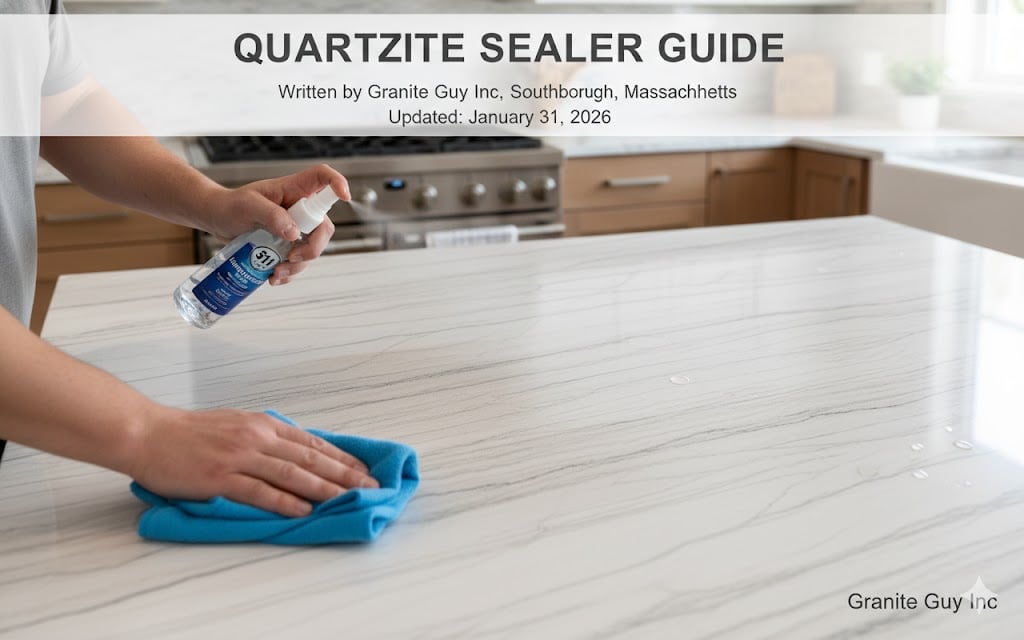
Written by Granite Guy Inc., Southborough, Massachusetts
Updated: April 2026
Quartzite is a natural metamorphic stone formed when sandstone is subjected to intense heat and pressure deep within the earth. The result is an extremely hard, durable rock (7 on the Mohs scale) with elegant veining and patterns.
⚡ Quick Answer: Quartzite is natural, extremely durable (harder than granite), heat-resistant, and requires periodic sealing. It's ideal for kitchens, bathrooms, and outdoor applications where you want the look of marble with far better performance.
🪨 What Is Quartzite?
Quartzite is a natural metamorphic rock that begins its life as ordinary sandstone. When that sandstone gets buried deep underground and subjected to extreme heat and tectonic pressure over millions of years, the individual sand grains fuse together into a dense, incredibly hard stone.
The result is a material composed of 90% to 99% quartz crystals, silicon dioxide (SiO₂), locked together in an interlocking crystalline structure. This geological transformation is what gives quartzite its defining characteristics.
Exceptional hardness (around 7 on the Mohs scale), a subtle crystalline sparkle when light hits the surface, and flowing patterns that resemble marble but perform far better in a working kitchen. The quartzite durability that results from this process is why fabricators and designers prize it as a premium countertop material.
Pure quartzite is typically white or light gray. The stunning colors you see in showroom slabs (soft golds, warm taupes, subtle blues, rosy pinks) come from trace minerals present during the stone's formation.
Iron oxides create reds and yellows. Chlorite adds green tones. Dumortierite produces rare blues. These mineral inclusions also create the veining and movement that make every natural quartzite slab one of a kind.
Key Quartzite Characteristics
-
🌍 Natural stone formed from sandstone through metamorphism
-
💎 Extremely hard, rates 7 on the Mohs hardness scale
-
🔥 Excellent heat resistance (hot pans won't damage it)
-
✨ Unique natural veining and movement in every slab
-
🛡️ Requires periodic sealing (usually once a year)
-
🎨 Available in polished, honed, or leathered finishes
📐 Understanding Quartzite Slabs and Dimensions
A quartzite slab is a large, flat piece of natural stone cut from the quarried block. Slabs are the raw material used for countertops, islands, and vanities.
-
Typical Slab Size: Quartzite slabs typically measure around 120 inches by 75 inches (roughly 10 feet by 6 feet), though sizes can vary widely. Larger slabs mean fewer seams in your finished countertops.
-
Thickness: The thickness is usually 2cm or 3cm (about 1.25 inches). The thicker 3cm option is the industry standard for countertops and does not require additional support.
-
Finishes: Quartzite is available in several popular finishes:
-
Polished: High-gloss, reflective finish that shows off the stone's depth.
-
Honed: Matte, velvety finish without the shine.
-
Leathered: Textured finish with a soft sheen, popular for hiding imperfections.
-
🏭 Is Quartzite Man Made?
No. Quartzite is 100% natural stone, formed entirely by geological processes. No factory, no resins, no pigments.
It gets confused with engineered quartz countertops, which are factory-made products combining ground quartz with polymer resins. They look similar on paper, but they're completely different materials with different performance, heat resistance, and repairability.
⚖️ How Does Quartzite Compare to Other Materials?
Quartzite holds its own against every major countertop material. Here's the short version, and we've written detailed guides if you want the full breakdown:
Quartzite vs. Engineered Quartz: One is natural stone, the other is factory-made with resins. The key differences come down to heat resistance, repairability, and maintenance. Read the full comparison: Quartz vs Quartzite
Quartzite vs. Granite: Both are natural stone powerhouses. Quartzite is slightly harder and offers a more marble-like look, while granite gives you more color options at a wider price range. Read the full comparison: Quartzite vs Granite
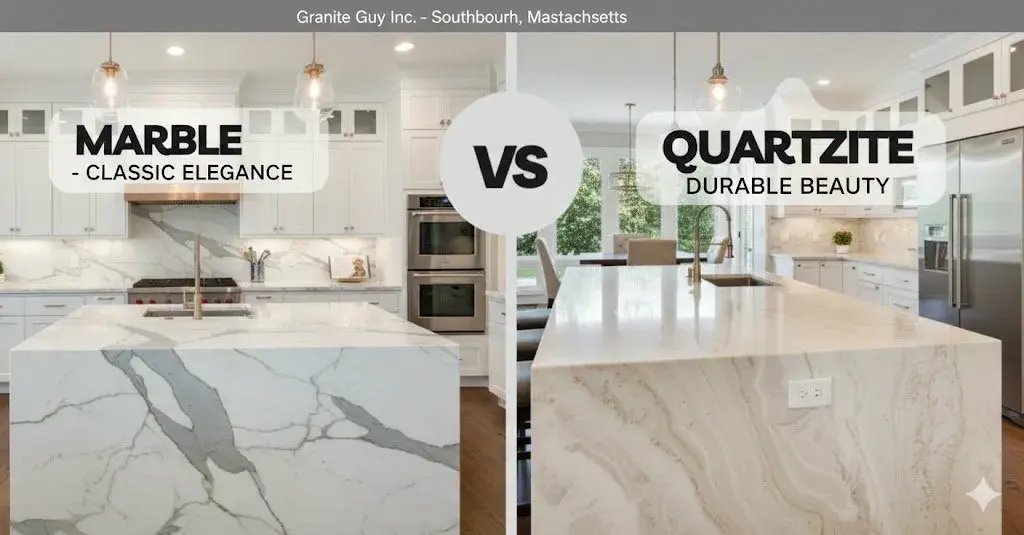
Quartzite vs. Marble: Quartzite gives you marble's elegant veining without the etching headaches. If you love the marble look but need a kitchen that handles real life, quartzite is the answer. Read the full comparison: Quartzite vs Marble
🚫 Common Myths About Quartzite
After three decades in this business, I hear the same misconceptions over and over. Let's clear them up:
❌ Myth: Quartzite and quartz are the same thing. False. Quartzite is natural stone quarried from the earth. Quartz countertops are engineered products made in factories. Completely different materials with different properties.
❌ Myth: Quartzite never needs sealing. False. Most quartzite benefits from annual sealing. Some denser varieties like Taj Mahal can go longer between applications, but sealing is still recommended for proper quartzite care.
❌ Myth: All white stone with veining is quartzite. False, and this is a big one. Marble, dolomite, and even some soft calcite-based stones get mislabeled as quartzite. Always test before buying.
❌ Myth: Quartzite can't stain. Partially false. While quartzite won't etch like marble, it can absorb staining agents if left unsealed. Oil, wine, and colored liquids can penetrate porous varieties.
⚠️ Myth: Fantasy Brown is true quartzite. Complicated. Fantasy Brown is classified differently by different suppliers, some call it marble, some quartzite, some dolomite. It often contains calcite and can etch. Always do the acid test with this stone.
🔍 How to Identify Real Quartzite (The Mislabeling Problem)
Here's something most countertop articles won't tell you: not everything labeled "quartzite" in showrooms is actually quartzite. Some slabs are marble or dolomitic marble that's been mislabeled, either through honest confusion or intentional misrepresentation.
This matters because marble and quartzite behave very differently. If you buy what you think is quartzite and it turns out to be marble, you'll discover the hard way that it etches from acidic foods.
Two simple tests can protect you:
🧪 Test #1: The Scratch Test (Glass Test)
Real quartzite will easily scratch glass. Take a piece of the stone's broken edge (or ask the showroom for a sample chip) and drag it across a glass tile or old mirror. You should hear it grind and feel it bite into the glass. The resulting scratch will be obvious and permanent.
If the stone slides without scratching, or leaves only a faint powdery mark that wipes away, it's probably not true quartzite. It's likely marble or dolomite.
🧪 Test #2: The Acid Test (Lemon Test)
Place a few drops of lemon juice or white vinegar on an inconspicuous area of the slab. Wait 10-15 minutes, then wipe it off and examine the spot. If the surface is etched (dulled, roughened, or lighter), the stone contains calcite and isn't true quartzite.
Real quartzite will show no reaction at all. A reputable fabricator should be willing to demonstrate these tests or explain exactly what stone you're buying.
💧 Why Some Quartzites Darken from Moisture (Fabricator Insight)
This is something you won't read in most articles because it takes real fabrication experience to understand. Some quartzites temporarily darken when they absorb moisture, and this behavior catches homeowners off guard.
Quartzites have varying porosity depending on how intensely they were metamorphosed.
Highly metamorphosed varieties like Sea Pearl and Taj Mahal have extremely tight crystal structures. Moisture barely penetrates. But less metamorphosed quartzites like White Macaubas or certain lighter-colored stones are more porous.
When water sits on them, it can wick into the surface and temporarily darken the stone. This isn't damage. The stone dries out and returns to normal, usually within hours to a day.
If you're not expecting it, that dark spot around your sink can be alarming. Proper sealing minimizes this behavior significantly.
I once had a customer call in a panic because their new white quartzite island had dark blotches. Turned out someone had cleaned it with a soaking wet rag and the water was wicking through. Twenty-four hours later, completely gone.
Understanding your specific stone's characteristics is why working with an experienced fabricator matters.
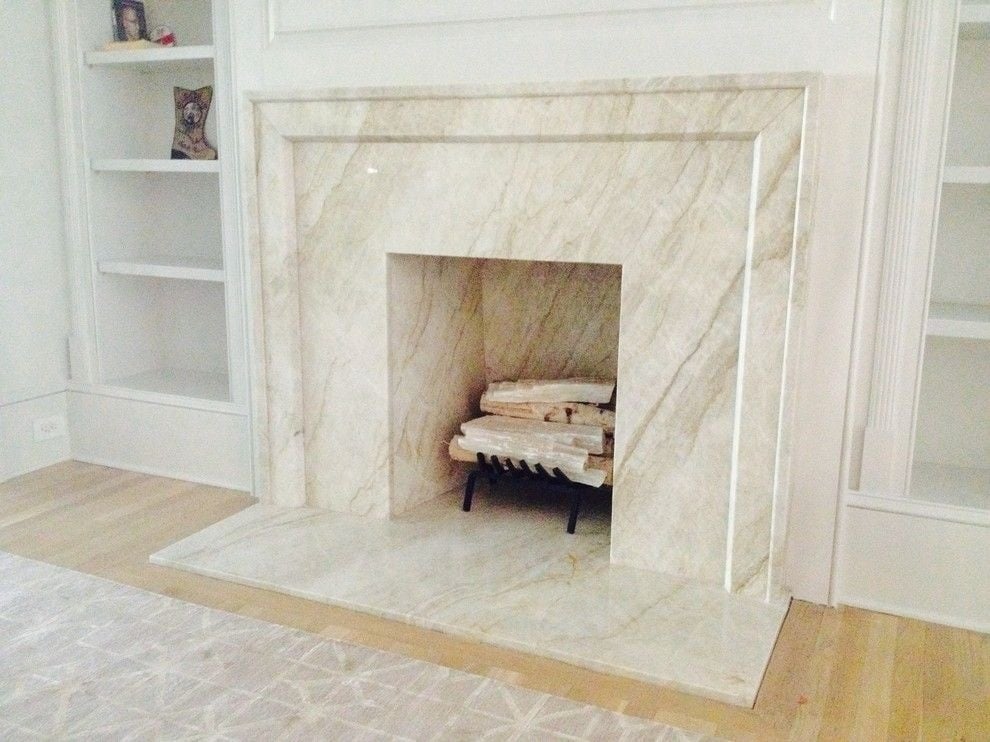
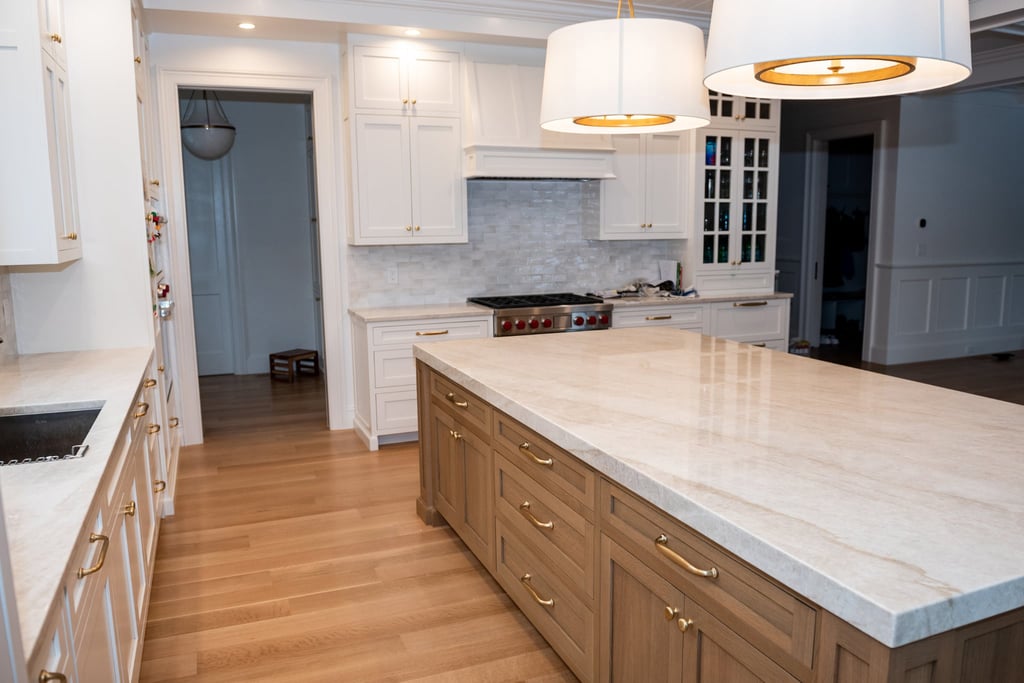
🏠 Real Projects: Quartzite in Action
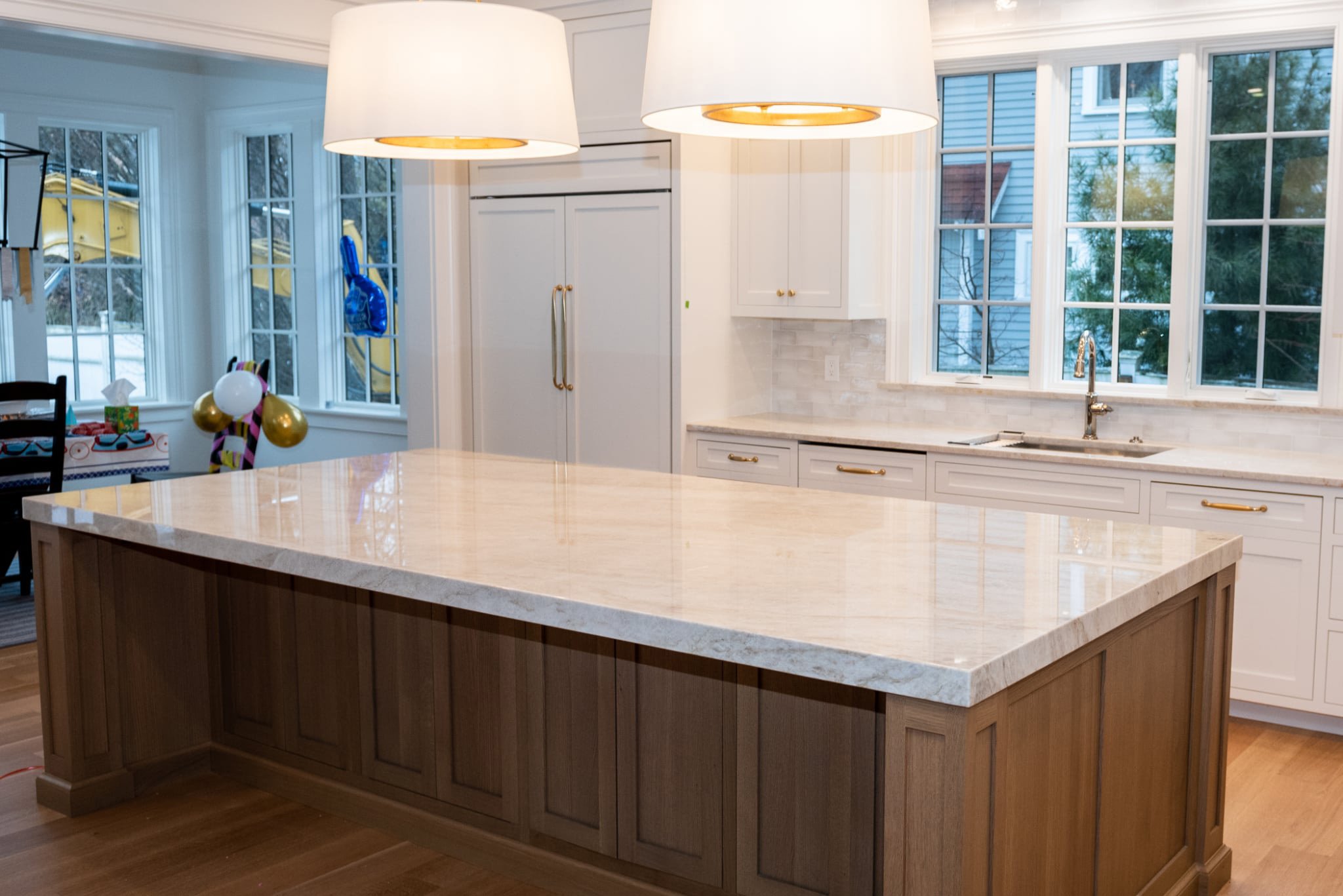
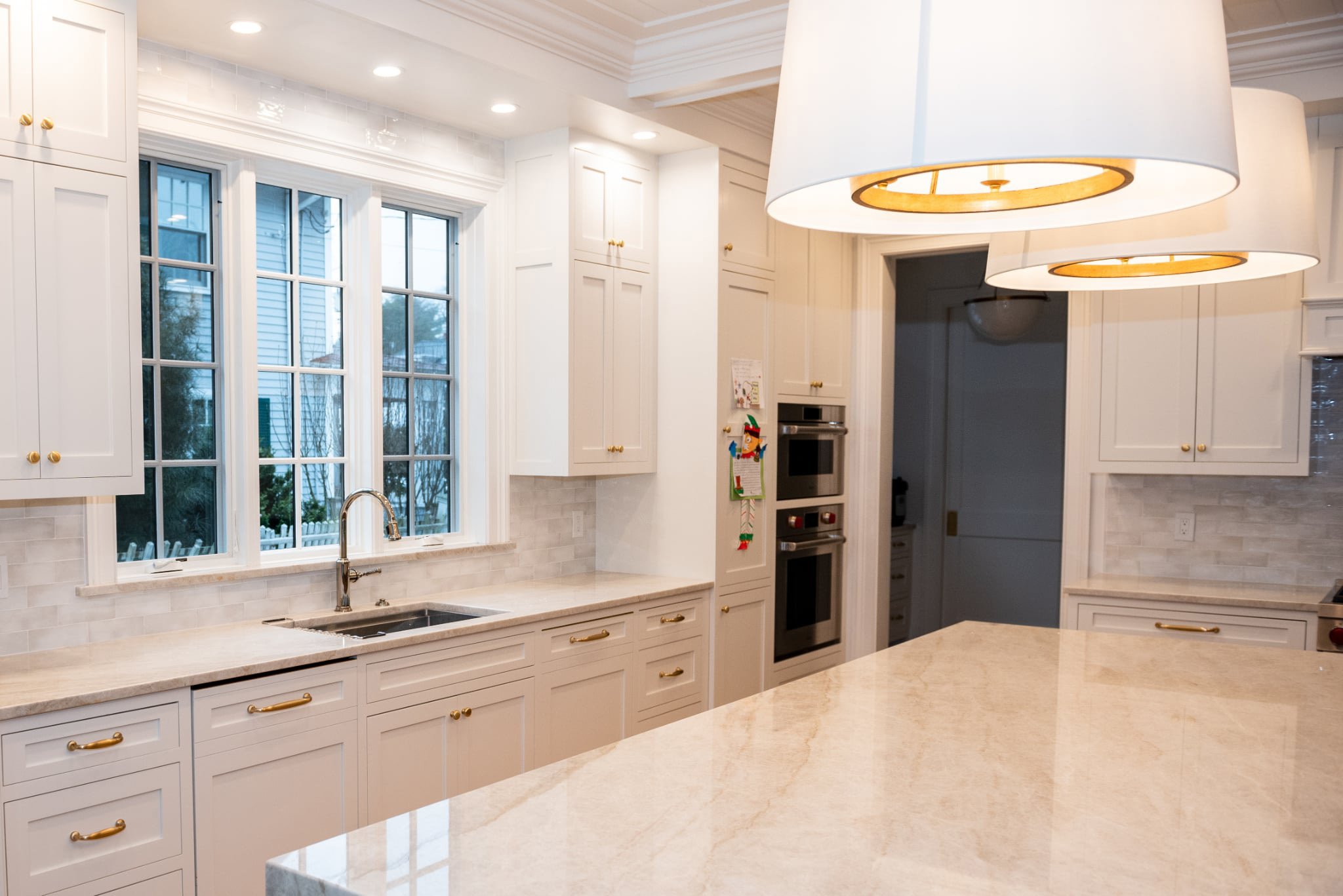
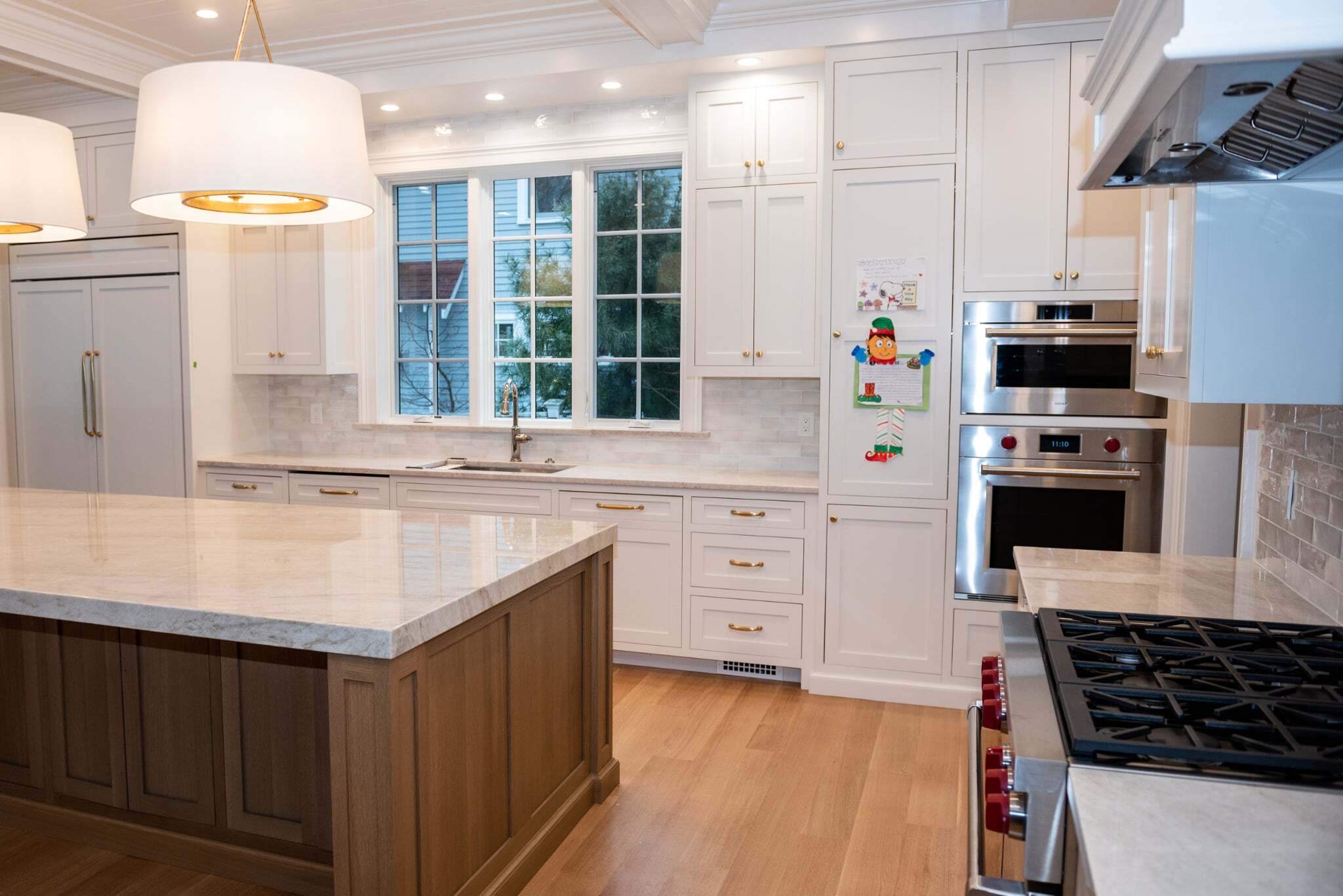
�� Popular Quartzite Varieties
Every natural quartzite slab is unique, but certain varieties (such as the elegant white and warm-toned options) have become favorites for their beauty and proven performance.
The most requested and well-known variety is Taj Mahal Quartzite. For its specific look, pricing, and all the details on White Macaubas, Mont Blanc, and Cristallo, read our full Quartzite Slab Guide.
🖌️ Quartzite Finishes: Polished, Honed, and Leathered
Quartzite can be finished in several ways, and the finish you choose affects both appearance and maintenance:
Polished: High-gloss, reflective finish that shows off the stone's depth and color. Most popular choice. Easiest to clean and most stain-resistant because the polishing process closes surface pores.
Honed: Matte, velvety finish without the shine. Very popular right now for contemporary and transitional kitchens. Shows fewer fingerprints and water spots than polished, but slightly more porous and requires more attention to sealing.
Leathered: Textured finish with a soft sheen. Hides fingerprints and imperfections well. Adds tactile interest. Increasingly requested for islands and casual kitchens. For a deep dive, read our leathered quartzite guide.
⚙️ Quartzite Properties: Heat, Porosity, and Staining
🔥 Can You Put Hot Pans on Quartzite?
Yes. Quartzite formed under geological conditions far more extreme than anything in your kitchen. A hot pan from the stove or a dish straight from a 500-degree oven won't damage the stone.
That said, I still recommend trivets, not because the quartzite can't handle it, but because repeated thermal shock in the same spot over many years could theoretically stress the stone. It's also easier on your cookware. But if you set a hot pan down without thinking, you won't have a problem.
💧 Is Quartzite Porous?
Quartzite has varying porosity depending on the specific variety and metamorphic intensity. Highly metamorphosed quartzites like Sea Pearl have very tight crystal structures and minimal porosity. Less metamorphosed varieties like White Macaubas are more porous.
Compared to marble and many granites, quartzite generally has lower porosity. But it's not non-porous like engineered quartz, which is why sealing matters.
🍷 Does Quartzite Stain?
Quartzite can stain if liquids sit on an unsealed surface for extended periods. Oil, red wine, and deeply colored liquids are the usual culprits. With proper sealing and reasonable quartzite care, staining is rarely a problem in normal kitchen use.
The critical difference from marble: quartzite doesn't etch. Acidic substances won't leave permanent dull marks. Any discoloration is surface-level staining that can often be addressed, not chemical damage into the stone itself.
🛡️ Does Quartzite Need to Be Sealed?
Most quartzite countertops should be sealed, though frequency depends on the specific stone. I recommend sealing once a year for most varieties. Denser quartzites like Taj Mahal might stretch to 18 months. More porous varieties might need attention every 6-8 months.
💡 The water test tells you when to reseal: Sprinkle a few drops of water on the surface. If it beads up, your seal is working. If it soaks in and darkens the stone within a few minutes, it's time to reseal.
For the complete step-by-step sealing process, product recommendations, and stone-specific guidance, read our full guide: How to Seal Quartzite Countertops
🧽 Cleaning and Daily Care
Daily cleaning is simple: warm water and mild dish soap on a soft cloth. That's really all you need for day-to-day maintenance.
For the full cleaning guide including disinfecting, products to avoid, and tips for keeping your sealer intact, read our detailed guide: How to Clean Quartzite Countertops
💰 Quartzite Cost Factors
Quartzite falls into the premium tier of countertop materials due to its rarity and the specialized labor required for fabrication. The factors affecting your total installed cost include:
- Rarity of the stone (exotic varieties cost more)
- Slab thickness (3cm vs 2cm)
- Edge profile selection (elaborate profiles increase labor cost)
- Complexity of the layout (more cutouts, waterfall edges, or challenging access increases installation difficulty)
For a detailed cost breakdown, including price per square foot ranges for specific varieties and installation factors, see our dedicated quartzite countertop pricing guide.
👷 Why Fabricator Experience Matters With Quartzite
Quartzite isn't a beginner stone. Its hardness, the same quality that makes it so durable in your kitchen, demands the right equipment, the right blades, and the right experience to fabricate properly.
I've seen what happens when shops treat quartzite like granite. Edges chip because the blade feed rate is wrong. Seams don't close tight because the cuts aren't precise. Corners get micro-fractures that show up months later.
These mistakes don't happen to fabricators who work with quartzite regularly.
At our shop, we use specialized diamond blades designed for quartzite's hardness. We cut slower, polish in more stages, and take extra care with inside corners and cutouts. The result is chip-free edges, tight seams, and a finish that shows off the stone's natural beauty.
When you're choosing a fabricator for your quartzite project, ask how often they work with quartzite specifically, not just natural stone in general. Ask to see completed quartzite projects. A shop that does quartzite regularly will understand the stone's quirks and deliver better results.
🤔 Is Quartzite Right for Your Project?
✅ Choose quartzite if you want:
- Natural stone with unique character and movement
- A marble-like appearance without etching concerns
- Excellent heat resistance for a working kitchen
- Long-term durability and the ability to refinish if needed
- A countertop material that works indoors and outdoors
⚠️ Consider a different material if you prefer:
- Zero sealing maintenance → Choose engineered quartz
- Wider color options → Choose engineered quartz
- Lower budget → Consider granite
- Uniform appearance with no variation → Choose engineered quartz
📝 Quartzite Buyer's Checklist
Before purchasing quartzite for your project, work through this checklist:
✓ Verify it's real quartzite. Do the scratch test and acid test, or ask your fabricator to demonstrate.
✓ View the actual slab. Never buy from a sample alone. Quartzite varies dramatically slab to slab. Visit the warehouse or showroom to see and approve your specific slab.
✓ Check for fissures and repairs. Natural fissures are normal and usually not a problem. Heavy resining or mesh backing might indicate a fragile slab.
✓ Choose the right thickness. 3cm (1.25") is standard for countertops and doesn't require plywood support. 2cm works for backsplashes and some vanities.
✓ Consider the edge profile. Quartzite's hardness means crisp, clean edges hold up well. Simple profiles (eased, beveled) are most popular; elaborate profiles increase cost and fabrication time.
✓ Discuss sealing expectations. Understand your stone's porosity and maintenance requirements before installation.
✓ Get references. Quartzite fabrication is demanding. Work with a fabricator who has specific experience with quartzite, not just granite.
🏡 Where to Use Quartzite
Kitchen Countertops: Quartzite excels here. Heat resistance, scratch resistance, and beauty make it an ideal countertop material for working kitchens.
Bathroom Vanities: Humidity and water are no problem for sealed quartzite. White varieties create a spa-like atmosphere.
Outdoor Kitchens: Unlike engineered quartz, quartzite handles outdoor installation well. UV-stable, heat-resistant, and durable through freeze-thaw cycles.
Flooring and Wall Cladding: Quartzite tile works for high-traffic floors and feature walls. The hardness that makes fabrication challenging also makes it extremely durable underfoot.
⚖️ Quartzite Pros and Cons: Honest Assessment
✅ Advantages:
- Natural beauty with unique, one-of-a-kind patterns
- Exceptional hardness and scratch resistance
- Heat resistant (hot pans cause no damage)
- UV resistant for outdoor use
- Marble-like appearance without acid sensitivity
- Can be honed and re-polished if damaged
- Long-lasting investment that adds home value
⚠️ Disadvantages:
- Requires periodic sealing
- Higher cost than many alternatives
- Limited color palette compared to engineered products
- Heavy, requires professional installation
- Natural variation means you must select your specific slab
- Some varieties darken temporarily from moisture
- Hardness increases fabrication costs
❓ Frequently Asked Questions
Q. Is Taj Mahal quartzite outdated?
A. No. Taj Mahal remains one of the most requested quartzites because its warm, neutral tones work with virtually any design style. Classic natural stone doesn't go "out of style" the way trendy manufactured colors can.
Q. What color is Taj Mahal quartzite?
A. Warm white to soft gold background with subtle gray and taupe veining. The overall effect is elegant and warm rather than stark white.
Q. Is quartzite cheaper than granite?
A. Usually no. Quartzite typically costs more than granite due to material costs and more demanding fabrication. However, there's pricing overlap, some common quartzites cost less than exotic granites.
Q. Is quartz a natural stone?
A. No. Quartz countertops are engineered products made from ground quartz mixed with resins. Quartzite is the natural stone.
Q. Can quartzite be used outdoors?
A. Yes. Quartzite is UV-stable and weather-resistant, making it excellent for outdoor kitchens and exterior applications.
Q. Does quartzite chip on the edges?
A. Quartzite is very hard, which makes it resistant to chipping in normal use. However, sharp impacts on corners or edges can cause small chips. Choosing a slightly eased or beveled edge rather than a sharp square edge reduces this risk.
Q. Is quartzite high maintenance?
A. Not really. Daily quartzite care is just soap and water. The main maintenance task is resealing once a year, which takes about 30 minutes. Compared to marble, quartzite is relatively low maintenance for a natural stone.
Q. Can quartzite crack?
A. Quartzite is extremely strong, but any natural stone can crack from severe impact, improper installation, or inadequate support. Proper installation with correct cabinet support and avoiding standing or sitting on overhangs prevents cracking in normal use.
📚 Related Articles
🏠 Visit Our Southborough Showroom
Still figuring out which stone is right for you? Come see us. Nothing beats standing in front of the actual slabs, comparing colors, patterns, and finishes in person. That's how you make the right decision.
Stop by our countertop store at 43 Turnpike Road (Route 9), Southborough, MA 01772 during business hours. We keep a large inventory in our heated warehouse, so there's always plenty to see.
Already done your homework and know what you want? Email us or give us a call.
📞 508-460-7900
📧 info@graniteguyinc.com